




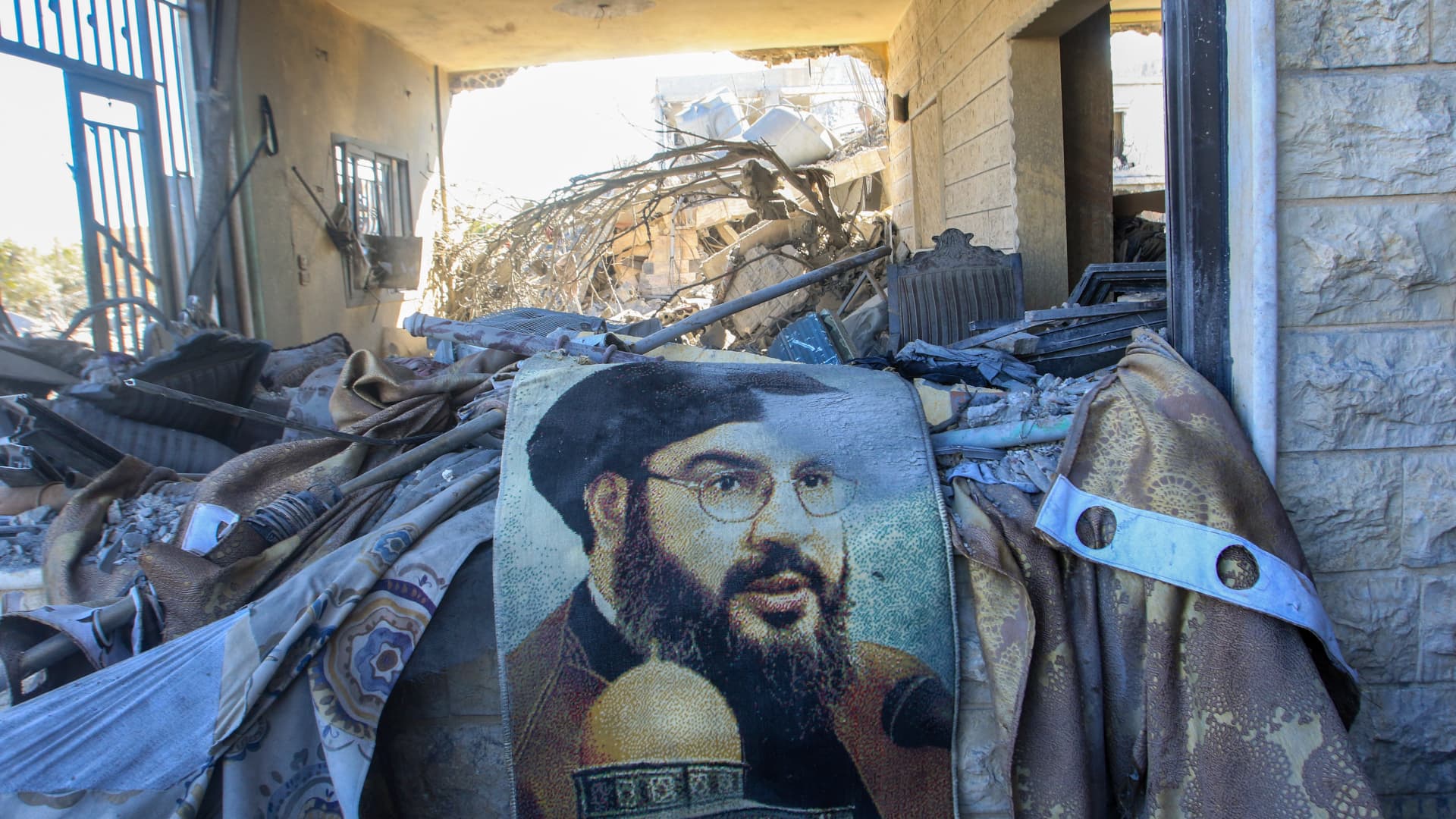
The Israeli army officially announced the killing of Hezbollah’s leader Hassan Nasrallah after carrying out a large-scale attack on Lebanon. The Israeli Defense Forces (IDF) said Nasrallah, who had led the Iran-backed militant group for over three decades, was killed in a targeted strike on Hezbollah’s headquarters in Beirut. The IDF also reported that Ali Karki, the commander of Hezbollah’s southern front, was also killed in the attack. This news would be a monumental blow to Hezbollah after months of conflict, as Nasrallah was considered the group’s central decision-maker and strategic leader. Lebanese political analyst Ronnie Chatah stated that if Nasrallah’s death is confirmed, it would signify the end of the powerful Hezbollah organization as it had been known.
Hezbollah, established in 1992 after the assassination of its former leader Abbas al-Musawi by Israel, has grown to become a major military and political force in the Middle East under Nasrallah’s leadership. The group is recognized as a terrorist organization by the U.S., Britain, and other nations due to its violent opposition to Israel and resistance to Western influence in the region. Firas Maksad, a senior fellow at the Middle East Institute, highlighted the significant regional ramifications of Nasrallah’s killing, noting that he was a key figure in Iran’s regional axis and a powerful leader within Lebanon’s Shia community. Maksad predicted that Nasrallah’s assassination would lead to a head-on confrontation between Israel and Iran over Lebanon’s future, exacerbating political polarization and adding to the country’s fragility.
The death of Hassan Nasrallah, a prominent and influential figure in the Middle East, is expected to have a profound impact on Hezbollah and the regional dynamics in the Middle East. Nasrallah had been at the helm of Hezbollah for nearly three decades and played a crucial role in transforming the group into a major military and political force. With his demise, there are concerns about the future of Hezbollah, Lebanon’s Shia community, and the stability of the region as a whole. The void left by Nasrallah’s assassination raises questions about the organization’s leadership and its role within Lebanon’s sectarian system, potentially leading to further unrest and instability in the short term.
The killing of Nasrallah by the Israeli army signifies a significant escalation in the ongoing conflict between Israel and Hezbollah, as well as the broader power struggle in the Middle East involving Iran and other regional actors. Nasrallah’s role as a key ally of Iran and a powerful leader within Lebanon’s Shia community made him a central figure in the region’s geopolitics. His death is likely to have long-lasting implications for the balance of power in the region, as well as the future direction of Hezbollah and Lebanon as a whole. The consequences of this event are expected to reverberate throughout the Middle East, potentially leading to further instability and unrest in the region.
The IDF’s announcement of Nasrallah’s death as a result of a targeted strike on Hezbollah’s headquarters in Beirut marks a significant milestone in the conflict between Israel and the militant group. Nasrallah’s removal from the leadership of Hezbollah is seen as a major blow to the organization, which has been a key player in the region’s complex geopolitical landscape. The loss of Nasrallah, who was considered Hezbollah’s central decision-maker and strategic leader, raises questions about the group’s future direction and its ability to maintain its military and political influence in the region. The aftermath of Nasrallah’s death is likely to be characterized by heightened tensions, political polarization, and increased instability in Lebanon and the wider Middle East.
The death of Hassan Nasrallah and the subsequent announcement by the Israeli army have set off a wave of speculation and analysis about the potential consequences of this event on the dynamics of power and conflict in the Middle East. Nasrallah’s role as the leader of Hezbollah and a significant player in the region had far-reaching implications for the ongoing conflicts in the Middle East, particularly the rivalry between Israel and Iran. The void left by his death is expected to have a profound impact on Hezbollah’s future trajectory, as well as the broader regional dynamics. The coming months and years are likely to see a reconfiguration of power relationships and alliances in the Middle East, with potentially significant implications for regional stability and security.