





Close Menu
West TimelinesWest Timelines
  • News
  • Politics
  • World
    • Africa
    • Asia
    • Australia
    • Europe
      • United Kingdom
      • Germany
      • France
      • Italy
      • Russia
      • Spain
      • Turkey
      • Ukraine
    • North America
      • United States
      • Canada
    • South America
  • Business
    • Finance
    • Markets
    • Investing
    • Small Business
    • Crypto
  • Elections
  • Entertainment
  • Health
  • Lifestyle
    • Fashion
    • Food & Drink
    • Travel
    • Astrology
  • Weird News
  • Science
  • Sports
    • Soccer
  • Technology
  • Viral Trends
Trending Now

Dubai Spotlight: Analyzing the Evolving Audience Tastes with AI Social Listening Tools in the UAE

2 weeks ago

مرآة التاريخ: تحليل البناء السردي للدروس الخالدة في قصص الأنبياء والإسلام

3 weeks ago

السندات الحكومية والشركات: أساسيات الاستثمار الآمن والدخل الثابت

4 weeks ago

UAE Ranks Among Top Rugby Markets on TOD as British & Irish Lions Tour Kicks Off

5 months ago

Darven: A New Leap in AI-Powered Legal Technology Launching from the UAE to the World

5 months ago
Facebook X (Twitter) Instagram
West TimelinesWest Timelines
  • News
  • US
  • #Elections
  • World
    • North America
      • United States
      • Canada
    • Europe
      • United Kingdom
      • Germany
      • France
      • Italy
      • Spain
      • Ukraine
      • Russia
      • Turkey
    • Asia
    • Australia
    • Africa
    • South America
  • Politics
  • Business
    • Finance
    • Investing
    • Markets
    • Small Business
    • Crypto
  • Lifestyle
    • Astrology
    • Fashion
    • Food & Drink
    • Travel
  • Health
  • Sports
    • Soccer
  • More
    • Entertainment
    • Technology
    • Science
    • Viral Trends
    • Weird News
Subscribe
  • Israel War
  • Ukraine War
  • United Kingdom
  • Canada
  • Germany
  • France
  • Italy
  • Russia
  • Spain
  • Turkey
  • Ukraine
West TimelinesWest Timelines
Home»Science
Science

Ancient teeth suggest humans began long childhoods earlier than previously thought

November 14, 2024No Comments2 Mins Read
Facebook Twitter Pinterest LinkedIn Telegram Email WhatsApp Copy Link

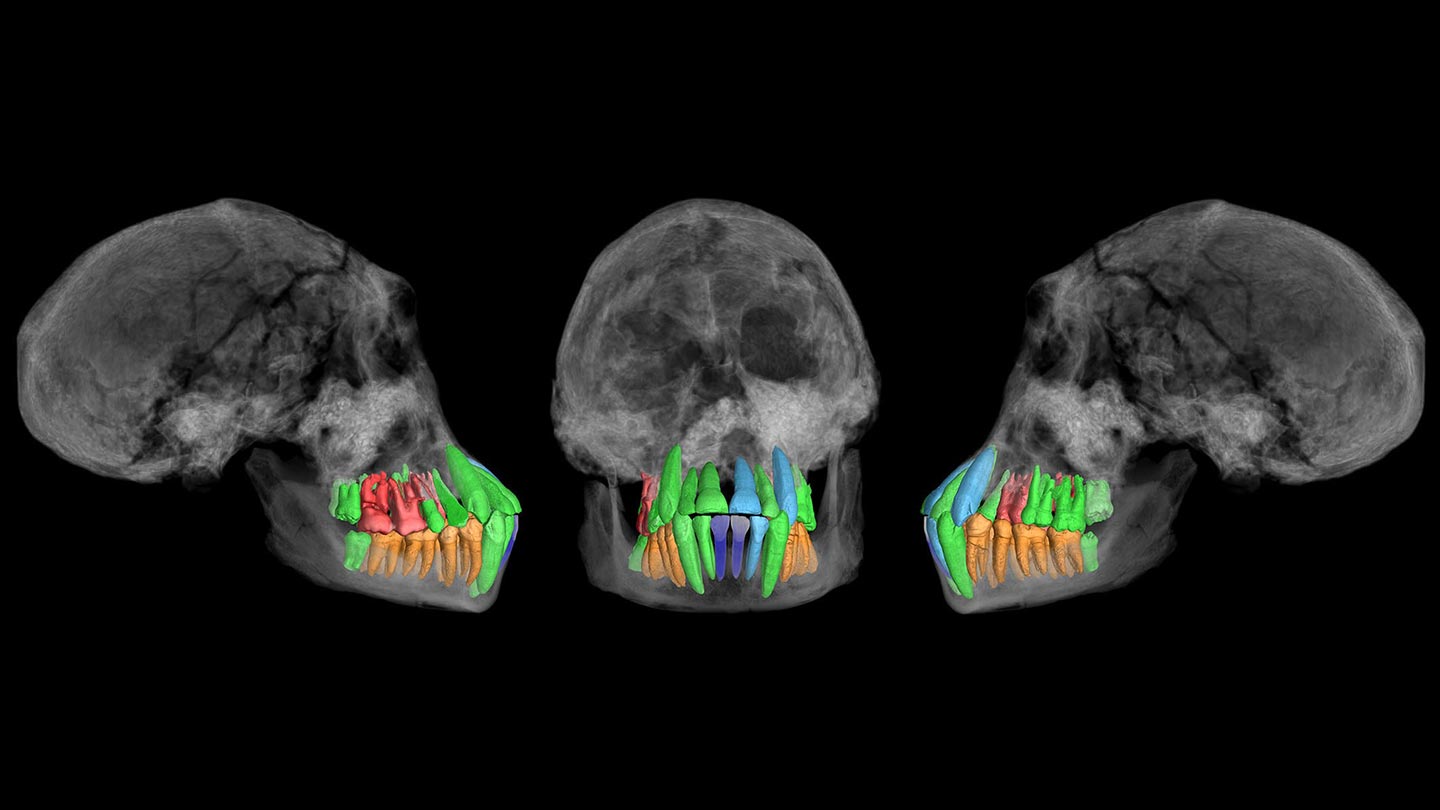
A recent study has shed light on the dental development of an early member of the Homo genus, revealing a unique pattern of growth that suggests an extended childhood may have been present. The fossil teeth of an 11-year-old individual from the Dmanisi site in Georgia show a slowed development of premolar and molar teeth up to age 5, followed by a rapid growth spurt. This slowed start indicates an initial step towards extending growth during childhood, different from the chimplike pattern observed in other species.

The researchers used X-ray imaging technology to examine microscopic growth lines inside the fossil teeth, providing a detailed insight into the dental development of the ancient individual. The Dmanisi specimens are dated to around 1.77 million to 1.85 million years ago and are classified as an undetermined Homo species by the researchers, rather than Homo erectus. This species had only slightly larger brains than modern chimps, challenging the idea that an extended childhood evolved alongside brain expansion in Homo sapiens.

The study offers the first comprehensive reconstruction of an ancient hominid’s dental development, highlighting the different growth patterns observed in early Homo species. The prolonged childhood observed in the Dmanisi youth could be attributed to shared childcare practices, including grandmothers and unrelated helpers. This extended childhood may have been an evolutionary experiment within the Homo lineage, leading to further changes in childhood growth as brain size increased in later Homo species.

While the study suggests a possible link between extended childhood and dental development in early Homo species, some experts caution against drawing definitive conclusions. Variations in available foods, age at weaning, and other factors could have influenced tooth development in ancient hominids, leading to diverse growth patterns even within the same species. Additionally, the timing of the first molar eruption in the Dmanisi youth suggests a chimplike trajectory, indicating rapid overall development rather than an extended childhood.

Paleoanthropologists have differing opinions on the implications of the study’s findings. While some argue that the chimplike dental features of the Dmanisi youth align with their small brain size, indicating rapid development, others suggest that shared childcare practices may have played a role in shaping the extended childhood observed in early Homo species. Further research and discoveries are needed to fully understand the evolutionary significance of extended childhood in the Homo lineage and its relation to dental development and brain expansion.


Follow on Google News Follow on Flipboard
Share. Facebook Twitter Pinterest Email Telegram WhatsApp Copy Link

You Might Like

Array

Array

Array

Array

Array

Array

Editors Picks

مرآة التاريخ: تحليل البناء السردي للدروس الخالدة في قصص الأنبياء والإسلام

3 weeks ago

السندات الحكومية والشركات: أساسيات الاستثمار الآمن والدخل الثابت

4 weeks ago

UAE Ranks Among Top Rugby Markets on TOD as British & Irish Lions Tour Kicks Off

5 months ago

Darven: A New Leap in AI-Powered Legal Technology Launching from the UAE to the World

5 months ago

Jordan to Host Iraq in the Final Round of the Asian World Cup Qualifiers After Securing Historic Spot

6 months ago

Latest News

فلسطين: قلبٌ ينبض بالصمود والأمل

6 months ago

Roland Garros 2025: A New Era of Viewing, A Tribute to Legends, and Moments to Remember

7 months ago

Array

7 months ago
Advertisement
Facebook X (Twitter) TikTok Instagram Threads
© 2025 West Timelines. All Rights Reserved. Developed By: Sawah Solutions
  • Privacy Policy
  • Terms
  • Contact

Type above and press Enter to search. Press Esc to cancel.