




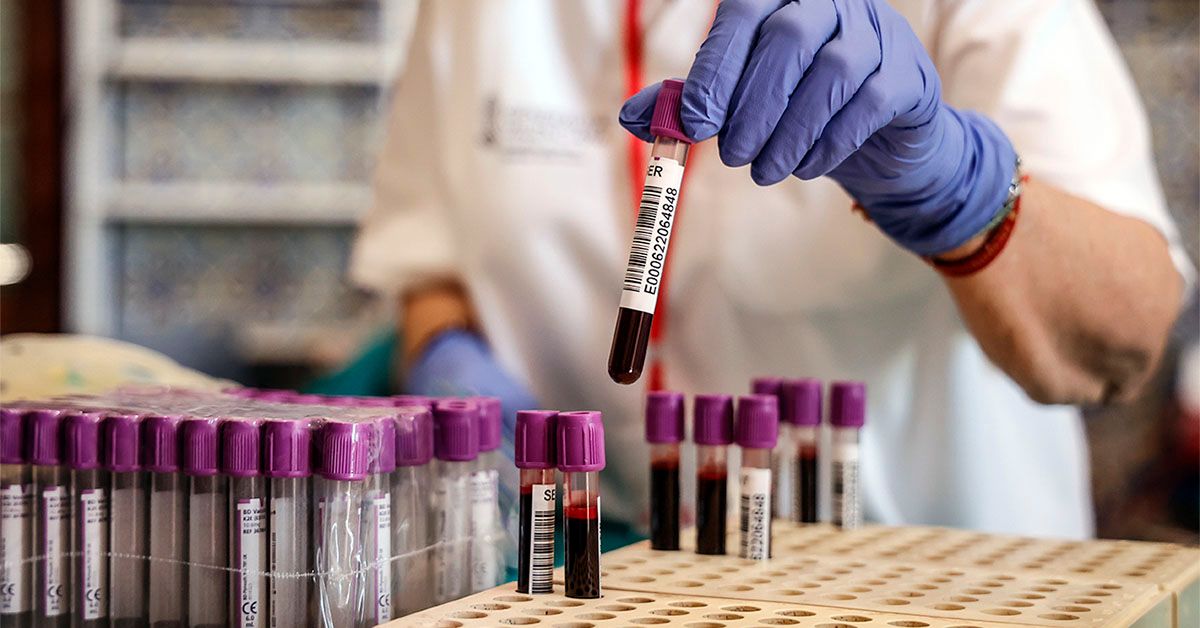
The early diagnosis of Alzheimer’s disease is crucial as there is currently no cure for the condition, but there are medications available for managing symptoms and potentially slowing progression. Researchers are focusing on finding new ways to better diagnose early Alzheimer’s disease, such as through blood tests. Lund University researchers have found that the PrecivityAD2 blood test is about 90% accurate in identifying Alzheimer’s disease in individuals with cognitive symptoms. This new test could be vital for facilitating research into new treatments and provide patients with timely interventions for better outcomes. The use of blood tests for early detection of Alzheimer’s disease is important because they offer a less invasive, more cost-effective, and accessible alternative to current diagnostic methods like cerebrospinal fluid tests and amyloid PET scans.
The clinical study of the PrecivityAD2 blood test involved 1,200 participants with an average age of 74 years old. Of these participants, 23% had subjective cognitive decline, 33% had dementia, and 44% had mild cognitive impairment. About 50% of participants showed Alzheimer’s disease pathology through primary and secondary care testing. The test was found to be about 90% accurate in diagnosing Alzheimer’s disease in participants seen by both memory clinic specialists and primary care physicians. The study revealed that primary care physicians were only correct 61% of the time in identifying Alzheimer’s disease, highlighting the need for more cost-effective diagnostic tools, particularly in primary care settings, and showing the potential for improvement in diagnosis with the adoption of this blood test in healthcare settings.
After reviewing the study, Dr. Verna Porter, a board-certified neurologist, stated that the high diagnostic accuracy and robustness of the blood biomarkers in identifying Alzheimer’s disease in both primary and secondary care settings are promising. She suggested further validation of the blood biomarkers in diverse international cohorts and the development of fully automated immunoassays for easier implementation in clinical labs. Additionally, studies comparing the diagnostic performance of different biomarkers were recommended, along with an investigation into clinical settings or patient subgroups where particular biomarkers may offer greater diagnostic accuracy or utility. Understanding these nuances could help tailor the use of biomarkers to maximize diagnostic accuracy and clinical benefit.
Karen D. Sullivan, a board-certified neuropsychologist, expressed caution regarding reducing brain health diagnosis to lab tests alone and emphasized the importance of comprehensive neuropsychological evaluations in diagnosing Alzheimer’s disease. She warned of the risk of false positive dementia diagnoses and unnecessary treatments if detailed clinical interviews and human-to-human assessments are overlooked. Sullivan stressed the need to view biomarkers as part of a person-centered assessment model and to remember that the brain is a unique and complex biopsychosocial system that requires an individualized approach. She highlighted the importance of considering mixed causes for dementia symptoms and not solely focusing on Alzheimer’s-related pathologies. Sullivan urged healthcare professionals not to overlook the human aspect in diagnosing dementia and to maintain a person-centered, multi-faceted approach that respects the complexity of brain health and individual differences.
In conclusion, the development of new blood tests like the PrecivityAD2 test offers promising possibilities for early diagnosis and improved patient management of Alzheimer’s disease. These tests provide a less invasive and more accessible alternative to current diagnostic methods, potentially leading to earlier access to treatment and better patient outcomes. However, it is crucial to continue research on the validation and implementation of these biomarkers in diverse clinical settings and patient populations to ensure accurate and effective diagnosis and treatment of Alzheimer’s disease. Healthcare professionals should approach brain health diagnosis with a person-centered, comprehensive evaluation that incorporates both biomarkers and detailed clinical assessments to ensure the most accurate and individualized care for patients with dementia.