




Close Menu
West TimelinesWest Timelines
  • News
  • Politics
  • World
    • Africa
    • Asia
    • Australia
    • Europe
      • United Kingdom
      • Germany
      • France
      • Italy
      • Russia
      • Spain
      • Turkey
      • Ukraine
    • North America
      • United States
      • Canada
    • South America
  • Business
    • Finance
    • Markets
    • Investing
    • Small Business
    • Crypto
  • Elections
  • Entertainment
  • Health
  • Lifestyle
    • Fashion
    • Food & Drink
    • Travel
    • Astrology
  • Weird News
  • Science
  • Sports
    • Soccer
  • Technology
  • Viral Trends
Trending Now

Dubai Spotlight: Analyzing the Evolving Audience Tastes with AI Social Listening Tools in the UAE

2 weeks ago

مرآة التاريخ: تحليل البناء السردي للدروس الخالدة في قصص الأنبياء والإسلام

3 weeks ago

السندات الحكومية والشركات: أساسيات الاستثمار الآمن والدخل الثابت

4 weeks ago

UAE Ranks Among Top Rugby Markets on TOD as British & Irish Lions Tour Kicks Off

5 months ago

Darven: A New Leap in AI-Powered Legal Technology Launching from the UAE to the World

5 months ago
Facebook X (Twitter) Instagram
West TimelinesWest Timelines
  • News
  • US
  • #Elections
  • World
    • North America
      • United States
      • Canada
    • Europe
      • United Kingdom
      • Germany
      • France
      • Italy
      • Spain
      • Ukraine
      • Russia
      • Turkey
    • Asia
    • Australia
    • Africa
    • South America
  • Politics
  • Business
    • Finance
    • Investing
    • Markets
    • Small Business
    • Crypto
  • Lifestyle
    • Astrology
    • Fashion
    • Food & Drink
    • Travel
  • Health
  • Sports
    • Soccer
  • More
    • Entertainment
    • Technology
    • Science
    • Viral Trends
    • Weird News
Subscribe
  • Israel War
  • Ukraine War
  • United Kingdom
  • Canada
  • Germany
  • France
  • Italy
  • Russia
  • Spain
  • Turkey
  • Ukraine
West TimelinesWest Timelines
Home»Science
Science

12th Century Supernova Illuminated by Zombie Star’s Spiky Filaments

November 4, 2024No Comments3 Mins Read
Facebook Twitter Pinterest LinkedIn Telegram Email WhatsApp Copy Link

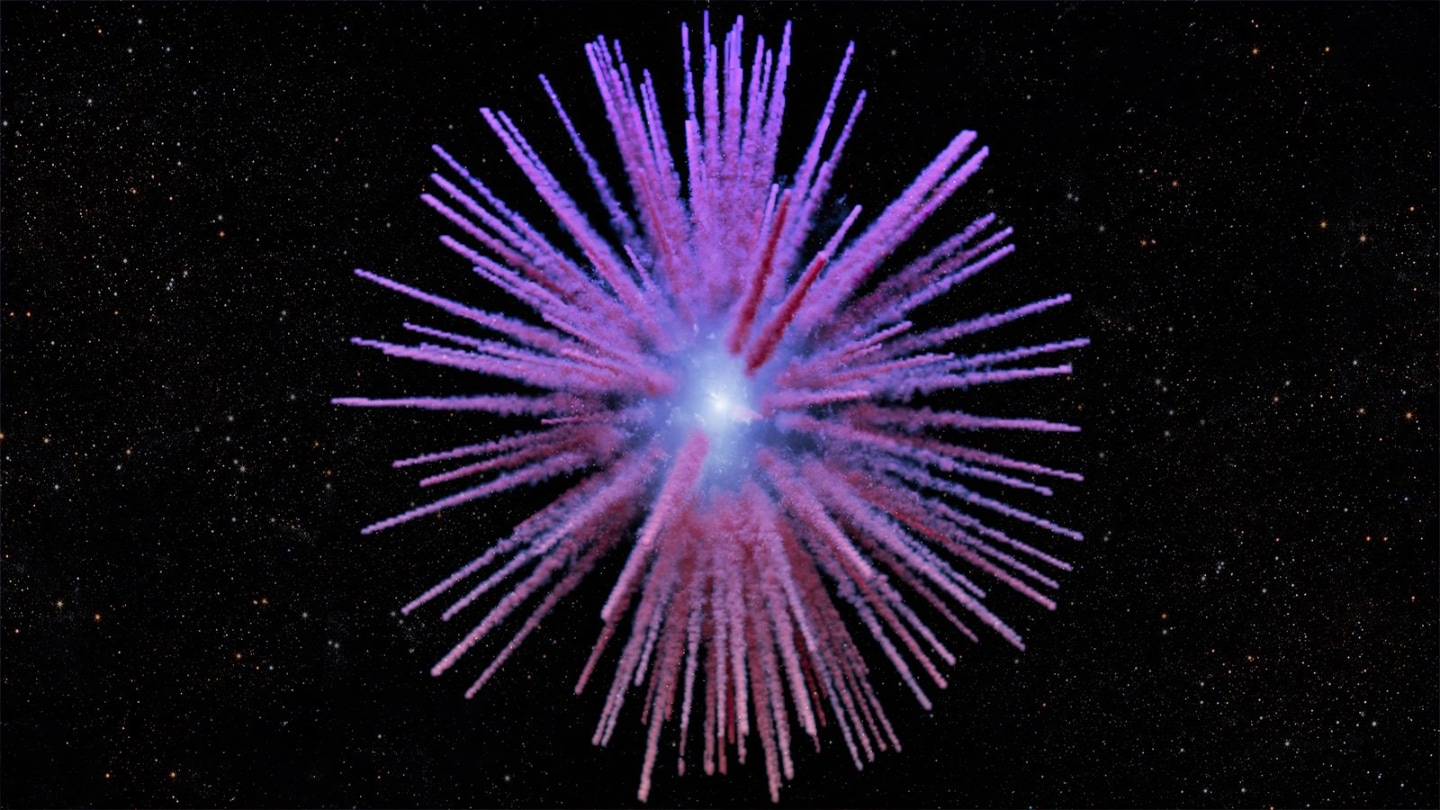
Astronomers have recently discovered a zombie star located 6,500 light-years away from Earth that is enveloped in long tendrils of hot sulfur. While the origin of these tendrils remains a mystery, new observations have shed light on the structure and movement of debris left behind by a supernova that occurred approximately 900 years ago. The findings, reported in the Astrophysical Journal Letters, provide valuable insights into this peculiar supernova remnant.

The supernova in question was first observed in 1181 by astronomers in ancient China and Japan, referred to as a “guest star.” However, the remains of this explosion, now known as the Pa 30 nebula, were not discovered until 2013. Upon closer examination, researchers found that the supernova appeared to be a type 1a event, where a white dwarf star explodes and self-destructs. Surprisingly, part of the star managed to survive, surrounded by spiky filaments that extend about three light-years in all directions, making this supernova remnant truly unique.

Using a telescope at the W.M. Keck Observatory in Hawaii, astronomers were able to determine the speed at which the filaments are moving relative to Earth. By creating a 3-D reconstruction of the filaments and their movements in space, they identified a three-layered structure consisting of the star, a gap of one or two light-years, a spherical shell of dust, and the filaments extending from the dust shell. The intricate arrangement of these layers poses a challenge in understanding how the filaments were formed and have maintained their shape for centuries.

One hypothesis suggests that a shock wave from the supernova explosion rebounded off the interstellar material, sculpting the material into the distinct filaments seen today. Conducting further theoretical studies utilizing the new observations could offer valuable insights into this phenomenon. The study confirmed that the remnant is likely associated with the guest star observed in 1181, as the speeds and positions of the filaments traced backward converge at a common point around the year 1152, with a margin of error of 75 years.

The discovery of this zombie star and its accompanying structures adds to the growing body of knowledge about supernova remnants and their dynamics. Understanding the formation and evolution of these remnants can provide crucial insights into the life cycle of stars and the processes involved in stellar explosions. Astronomers continue to probe the mysteries of the universe, unraveling the complexities of celestial phenomena and expanding our understanding of the cosmos. With further observations and analyses, researchers aim to unlock the secrets of this enigmatic supernova remnant and gain deeper insights into the mechanisms at play in stellar evolution.


Follow on Google News Follow on Flipboard
Share. Facebook Twitter Pinterest Email Telegram WhatsApp Copy Link

You Might Like

Array

Array

Array

Array

Array

Array

Editors Picks

مرآة التاريخ: تحليل البناء السردي للدروس الخالدة في قصص الأنبياء والإسلام

3 weeks ago

السندات الحكومية والشركات: أساسيات الاستثمار الآمن والدخل الثابت

4 weeks ago

UAE Ranks Among Top Rugby Markets on TOD as British & Irish Lions Tour Kicks Off

5 months ago

Darven: A New Leap in AI-Powered Legal Technology Launching from the UAE to the World

5 months ago

Jordan to Host Iraq in the Final Round of the Asian World Cup Qualifiers After Securing Historic Spot

6 months ago

Latest News

فلسطين: قلبٌ ينبض بالصمود والأمل

6 months ago

Roland Garros 2025: A New Era of Viewing, A Tribute to Legends, and Moments to Remember

7 months ago

Array

7 months ago
Advertisement
Facebook X (Twitter) TikTok Instagram Threads
© 2025 West Timelines. All Rights Reserved. Developed By: Sawah Solutions
  • Privacy Policy
  • Terms
  • Contact

Type above and press Enter to search. Press Esc to cancel.