






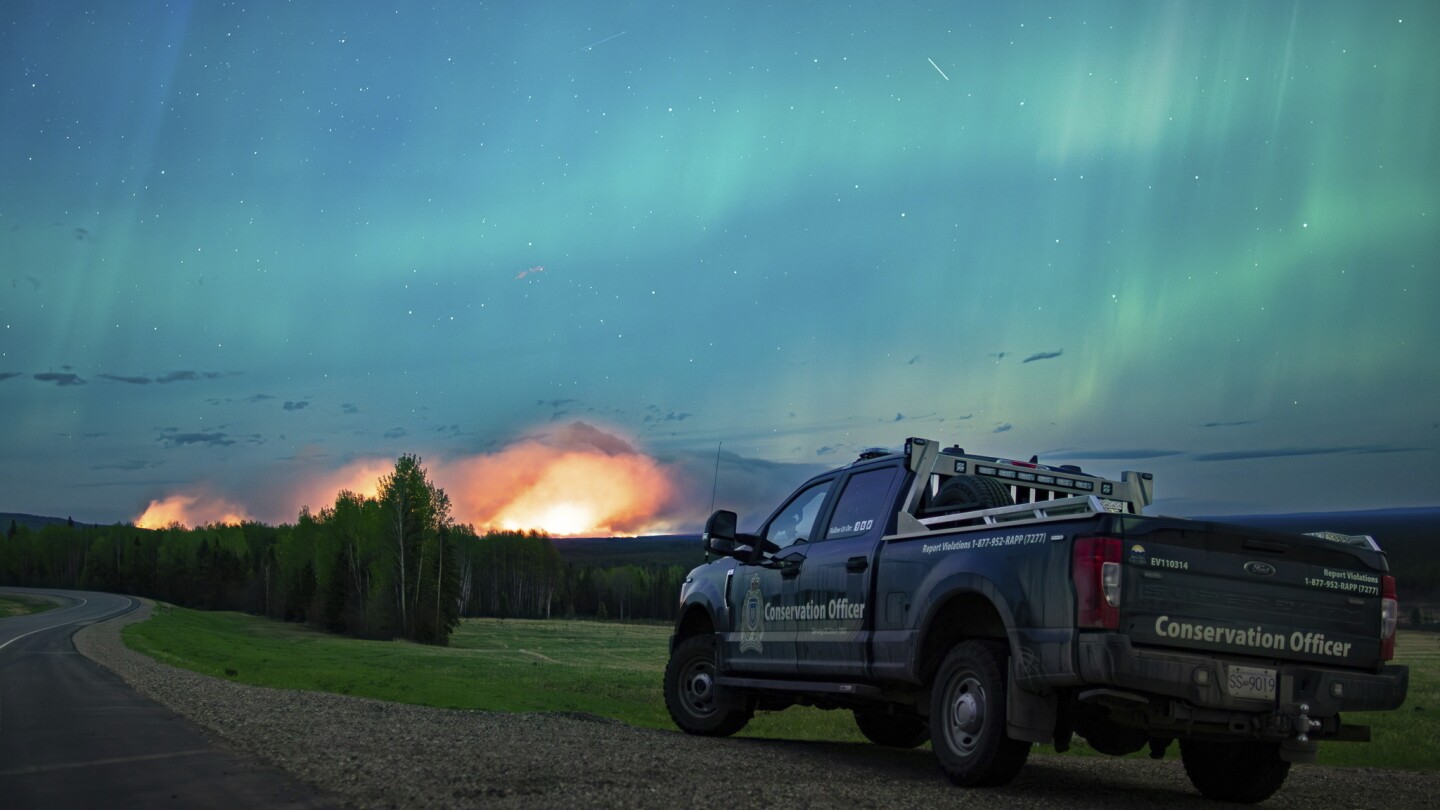
An intense wildfire in western Canada is threatening the town of Fort Nelson this week, with officials warning that the blaze could reach the town due to forecasts of high winds. The British Columbia Wildfire Service reported that the fire was burning 2½ kilometers northwest of Fort Nelson and more than 4,700 people have been evacuated as a precautionary measure. The province’s minister of emergency management expressed extreme concern over the situation, citing persistent drought conditions and the absence of rain in the forecast. The evacuation order issued on Friday is uncommon for the region, indicating the severity of the situation.
Cliff Chapman, the director of operations for the British Columbia Wildfire Service, stated that the wildfire was being driven by high winds that could pose a significant threat to Fort Nelson. Despite the winds not materializing overnight, forecasts indicated that they would continue to blow westward in the coming days. Helicopters and bulldozers are being utilized to fight the fire, while ground crews are focused on protecting structures in the area. Emergency workers are preparing for a potential “last stand” if the fire advances into the town, with the mayor urging remaining residents to leave.
The wildfire, which has grown to nearly 53 square kilometers, is causing air quality concerns in neighboring U.S. states like Minnesota and Wisconsin. Smoke from the fires has prompted air quality alerts in regions spanning from British Columbia to Manitoba, affecting a wide area. Fort Nelson, located in northeastern British Columbia, has a combined population of around 3,400 people and is facing one of several out-of-control wildfires threatening Western Canada. In Alberta, fires near Fort McMurray and Grande Prairie have led to evacuations, while Manitoba has evacuated residents from Cranberry Portage.
The Regional Municipality of Wood Buffalo in Alberta has advised Fort McMurray residents to be prepared for evacuation on short notice, although schools remained open as of Monday. Predicted light showers in the oil sands region are expected to help lower fire activity and assist crews in containing the flames. Fort McMurray, with a population of approximately 68,000, suffered a major wildfire in 2016 that destroyed thousands of homes. The current wildfire situation in Western Canada has raised concerns about the impact of climate change and the increasing frequency of wildfires in the region. Firefighters and emergency responders continue to work tirelessly to protect communities and prevent further devastation.