




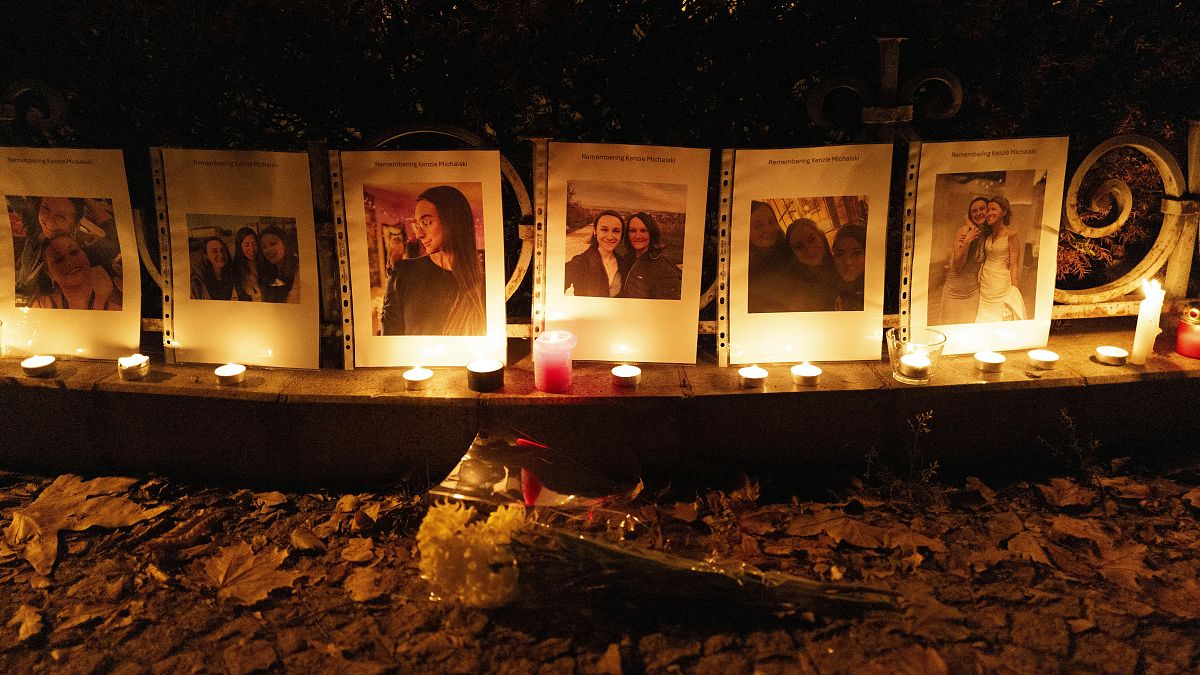
31-year-old Mackenzie Michalski from Portland, Oregon, was reported missing on November 5th after she was last seen at a nightclub in central Budapest. Her friends and family gathered to mourn her at a vigil, while a 37-year-old suspect was in custody. Michalski was seen with this man in several nightclubs on the night of her disappearance, and he later confessed to killing her after being detained by the police on November 7th. Prior to his confession, Michalski’s loved ones had started a Facebook group to gather information on her whereabouts, and her parents traveled to Hungary to aid in the search but were informed of her death before arriving.
Investigators revealed that Michalski and the suspect had met at a nightclub and engaged in an intimate encounter at the man’s rented apartment where the killing occurred. The suspect claimed that the killing was accidental, but proceeded to cover up the crime by cleaning the apartment, hiding Michalski’s body in a wardrobe, and eventually disposing of it in a wooden area outside the town of Szigliget after placing it in a suitcase. The suspect was found guiding authorities to the location where he had left the body, and police shared details of his internet searches related to body disposal, police procedures, and wildlife presence in the area.
Michalski’s father described Budapest as his daughter’s “happy place”, emphasizing her love for the city’s history and the sense of relaxation it brought her. He reflected on her previous visits to the city and her affection for it. The investigation into Michalski’s death continues, with Hungarian police following up on leads and gathering evidence. The suspect’s actions post-crime, including hiding the body, purchasing a suitcase, renting a car, and disposing of the body in a remote area, shed light on the meticulous planning that went into covering up the crime.
The tragic loss of Mackenzie Michalski at the hands of the suspect has left her friends, family, and community in shock and mourning. The vigil held in her memory serves as a testament to the impact she had on those around her, and the senseless violence that ended her life abruptly. The details of the case, from her last known location to the suspect’s confession and subsequent activities, paint a grim picture of the events leading to Michalski’s death. Authorities must now work diligently to uncover the full extent of the crime, bring justice to Michalski, and ensure the safety of others in the future.
The suspect’s disturbing internet searches, which included information on body disposal, police procedures, and wildlife in the area, point to a premeditated and callous act. The suspect’s attempts to evade detection and eliminate evidence show a complete disregard for human life and a lack of remorse for his actions. Michalski’s parents, who flew to Hungary in hope of finding their daughter alive, were met with the devastating news of her death, underscoring the cruel reality of the situation. The impact of this tragedy resonates far beyond Budapest, as Michalski’s story serves as a grim reminder of the dangers that lurk even in familiar settings.
As the investigation into Michalski’s death continues, the community grapples with the loss of a vibrant and beloved individual. The suspect’s confession and the evidence gathered shed light on the chilling details of the crime, leaving many horrified and saddened by the senseless violence that claimed Michalski’s life. The outpouring of support for her family, the efforts to locate her before her tragic fate was confirmed, and the ongoing search for justice are all markers of the profound impact she had on those around her. Michalski’s memory will live on in the hearts of those who knew her, as they seek solace and closure in the wake of this devastating event.