





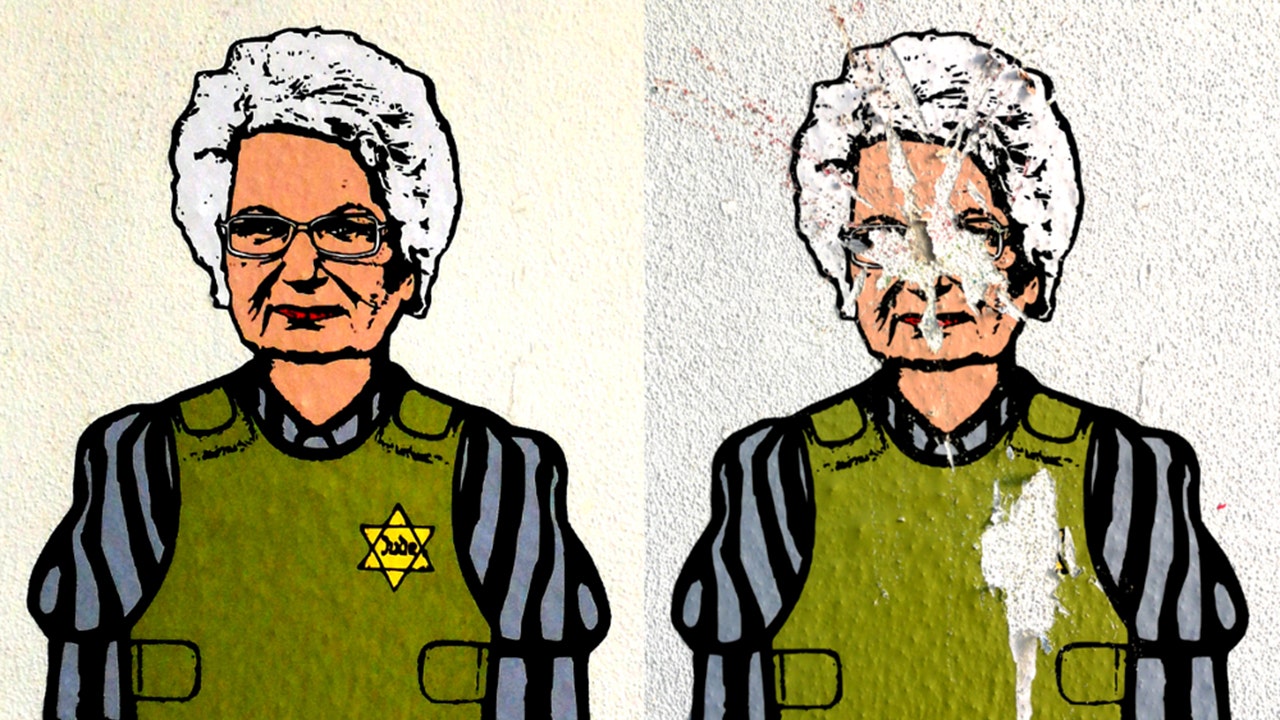
A mural of Holocaust survivors in Italy, created by artist aleXsandro Palombo, has been defaced in a “demented act” of vandalism. The mural featured Auschwitz-Birkenau survivors Liliana Segre and Sami Modiano, whose faces and Stars of David were scratched out. The purpose of the artwork was to emphasize Holocaust remembrance in light of rising antisemitism in Europe. The defacement occurred following a pro-Palestinian rally in Milan where some demonstrators targeted Segre, a 94-year-old Italian senator, labelling her a “Zionist agent”. Outraged by the rhetoric, Palombo responded with the mural, which drew a backlash across Italy. Mario Venezia, head of Italy’s Holocaust memorial museum, condemned the act as damaging walls but not history, while Italian Democratic Party official Piero Fassino called it a “cowardly assault on Holocaust memory”.
aleXsandro Palombo, known for tackling hot-button issues in his murals, has faced similar acts of vandalism previously. Last year, his mural depicting Holocaust victim Anne Frank alongside a young Palestinian girl was defaced. Another mural portraying Vlada Patapov, the “girl in red” who survived a Hamas attack, was also defaced shortly after completion. Palombo spoke out against the antisemitic sentiments fuelled by Hamas, expressing that terrorism is a denial of humanity and poses a threat to freedom, security, and the future of every individual. He emphasized that terrorism must be eradicated in order to achieve peace, as legitimizing it would be condemning humanity to death. Rome’s Shoah Museum condemned the vandalism, stating that such acts not only harm art but also undermine the value of memory that is crucial for building a conscious and just society.
The defacement of the Holocaust survivors mural has sparked a wave of condemnation across Italy, with many denouncing the act as an assault on Holocaust memory and a reflection of the rising antisemitism in Europe. Amidst the backlash, Palombo’s message of unity against terrorism and defense of the value of memory has resonated with many. The vandalism of the mural, intended to highlight the importance of Holocaust remembrance, has brought attention to the urgent need to combat antisemitism and extremism in society. By defacing a powerful tribute to survivors of one of history’s darkest chapters, the vandals have only reinforced the necessity of preserving memory and standing against hate.
The incident has reignited discussions about the resurgence of antisemitism in Europe and the need to address the root causes of extremism. The targeting of Holocaust survivors and the desecration of their images in the mural reflect a troubling trend of intolerance and prejudice that must be confronted. The vandalism serves as a reminder of the importance of education, remembrance, and vigilance in countering hate speech and discriminatory attitudes. It also highlights the role of art in raising awareness and promoting unity in the face of divisive ideologies. The defacement of the mural underscores the ongoing struggle to uphold the values of peace, tolerance, and mutual respect in a world marred by violence and discrimination.
In the wake of the vandalism, calls for solidarity and action have emerged from various quarters in Italy and beyond. Political leaders, activists, and cultural institutions have come together to condemn the act and reaffirm their commitment to upholding the memory of Holocaust survivors and combating antisemitism. The defacement of the mural has galvanized a collective response that seeks to challenge hatred and promote understanding among diverse communities. It has underscored the power of art to provoke dialogue, inspire empathy, and mobilize individuals to stand up against injustice. As the artist Palombo continues to use his murals as a platform for social commentary and resistance against extremism, the incident serves as a rallying cry for unity in the face of bigotry and intolerance. Ultimately, the defacement of the Holocaust survivors mural in Italy has sparked a broader conversation about the need to confront the dark legacy of the past and build a future based on mutual respect, inclusivity, and shared humanity.