



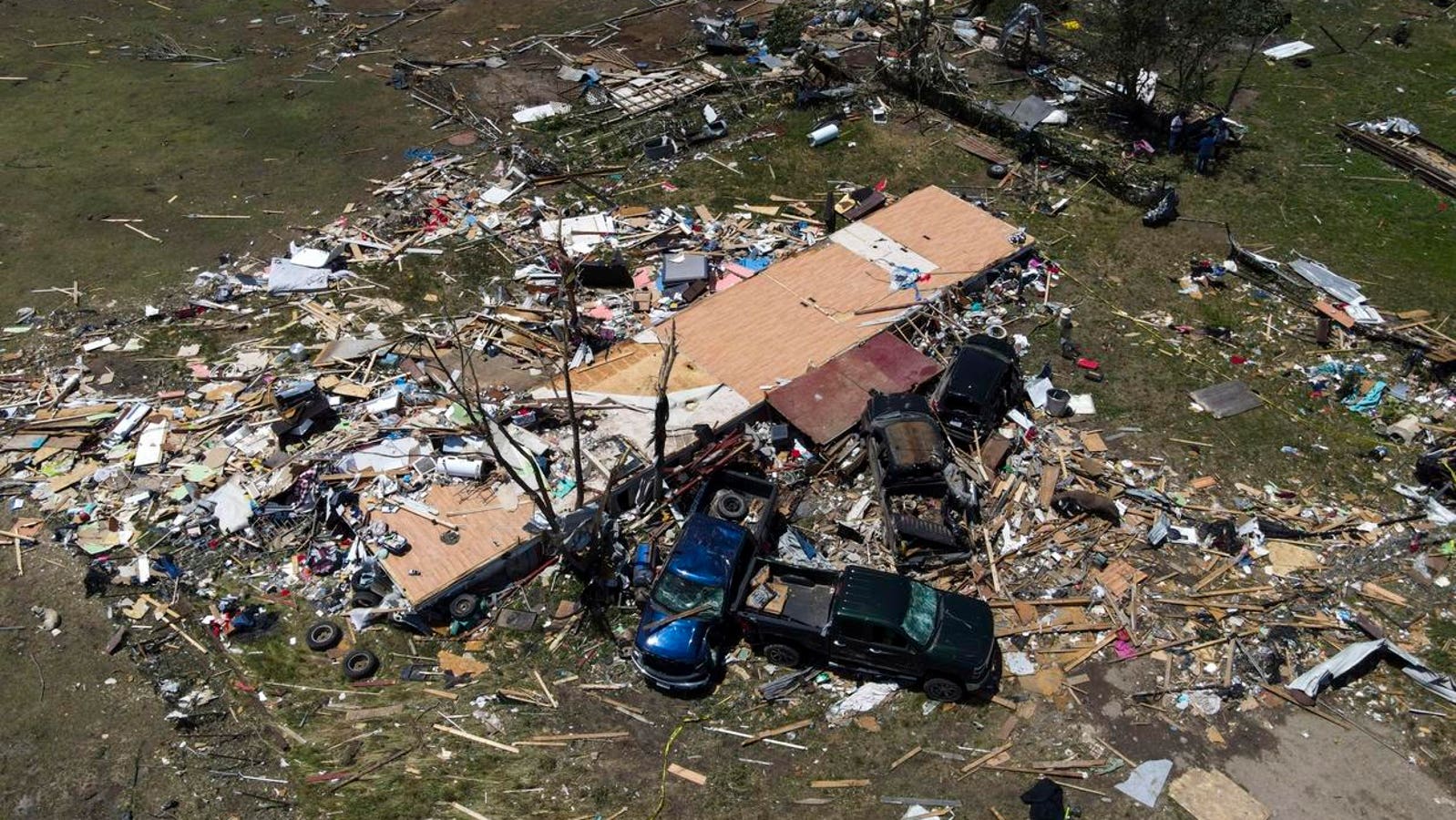
Over the weekend, several states in the southern U.S., including Texas, Oklahoma, Arkansas, and Kentucky, were hit by powerful storms that resulted in at least 21 deaths and over 100 injuries. Texas Governor Greg Abbott reported that seven people, including two children, died in Cooke County after a tornado hit a mobile home park. The storm caused extensive damage to homes and structures, with wind speeds reaching up to 135 mph. In Arkansas, Governor Sarah Huckabee Sanders declared a state of emergency after at least eight people were killed by storms and a powerful tornado.
In Kentucky, a man was killed in Louisville after being hit by a falling tree due to the severe weather conditions. Governor Andy Beshear confirmed a total of four deaths ranging from ages 34 to 67, with one person fighting for their life. Beshear also declared a state of emergency in response to multiple reports of wind damage and tornadoes. Power outages affected over 212,000 homes and businesses in the four states, a decrease from nearly 300,000 on Sunday night, as the storm moved through the Ohio and Tennessee Valleys.
April saw over 300 tornadoes in the U.S., the second-highest number for the month on record, with tornadoes reported on 18 days. In Oklahoma, Kansas, and Iowa, at least six people were killed, and hundreds of homes were destroyed or damaged. Last week, a tornado in Greenfield, Iowa, resulted in four deaths and numerous injuries. Experts have cautioned that climate change could impact tornado occurrences, with tornadoes shifting eastward and occurring more frequently in colder months. However, the exact link between climate change and tornado activity remains uncertain.
It is important to note that the U.S. experiences approximately 1,200 tornadoes annually, according to the National Oceanic and Atmospheric Administration. The National Weather Service has warned of severe thunderstorms moving eastward on Monday, affecting parts of the Middle/Lower Mississippi Valley and Ohio/Tennessee Valleys. The storm system is expected to bring excessive rain to the Mid-Atlantic and Northeast regions, potentially leading to localized flash flooding. Residents in these areas should stay updated on weather alerts and take necessary precautions to ensure their safety.