




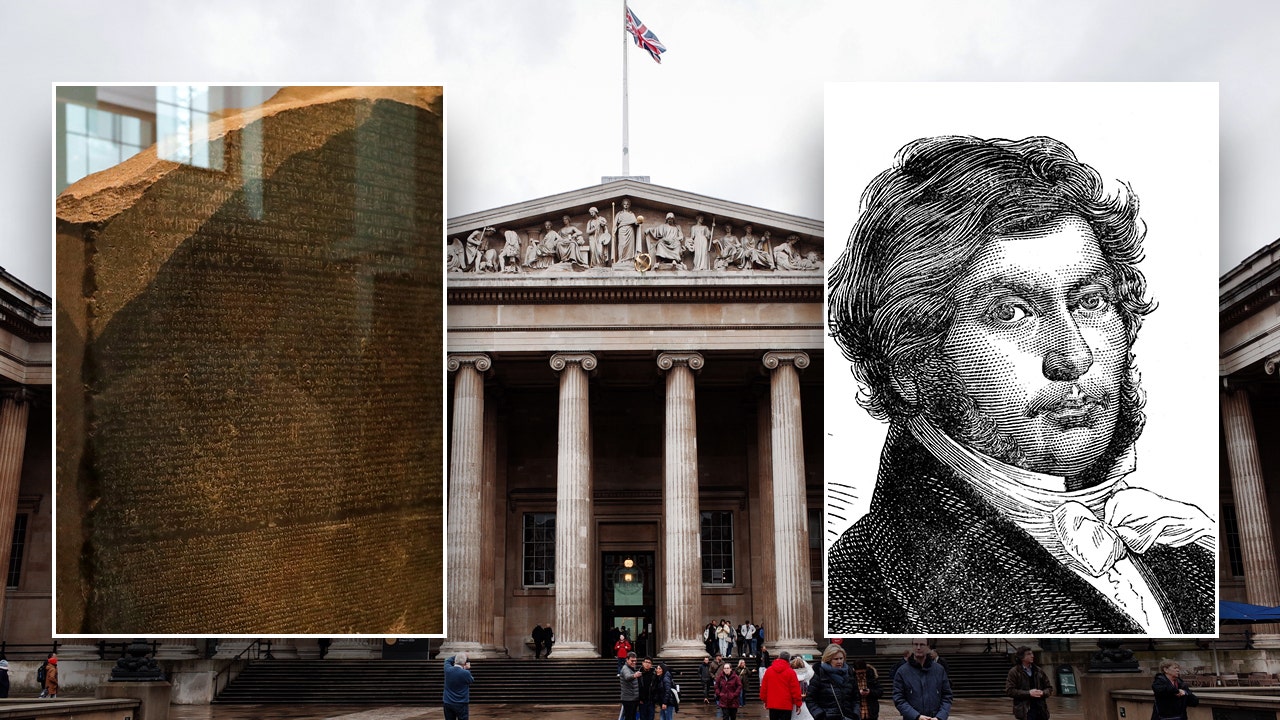
The Rosetta Stone was discovered in 1799 by Napoleon Bonaparte’s soldiers in Egypt and eventually came into British possession in 1801. The stone, which measures 44 inches tall and 30 inches wide, is inscribed with the same text in Demotic, hieroglyphic, and Greek scripts. It played a crucial role in scholars deciphering Egyptian hieroglyphs, which had been a forgotten writing system after the 4th century A.D.
Decoding the message of the Rosetta Stone was a collaborative effort by multiple scholars over many years. English physicist Thomas Young made significant progress in understanding the hieroglyphs, while French scholar Jean-François Champollion further deciphered the message and announced his success in 1822. The message on the stone is a decree regarding King Ptolemy V Epiphanes of Ancient Egypt, issued by a council of priests stating their support for the king and noting his accomplishments, such as tax reductions and restoring peace in Egypt.
The Rosetta Stone has been housed in The British Museum in London since 1802, with a brief relocation during World War I for safekeeping. The stone was part of a larger slab and contains inscriptions in multiple languages that were crucial in understanding the writing system of hieroglyphs. The stone’s importance lies in its role in helping scholars decipher Egyptian hieroglyphs and revive a forgotten writing system that had not been used for centuries.
The deciphering of the Rosetta Stone’s message revealed details about King Ptolemy V Epiphanes and his accomplishments, shedding light on the history and administration of Ancient Egypt during his reign. The stone’s decree, dating back to 196 B.C., provides insight into the support of the king by the priests of a temple in Memphis and highlights his efforts to bring stability and prosperity to Egypt. Through collaborative efforts over the years, scholars were able to unlock the secrets of the Rosetta Stone and gain a deeper understanding of Ancient Egyptian culture.
The discovery of the Rosetta Stone has been credited with revolutionizing the field of Egyptology and providing valuable insights into the ancient civilization of Egypt. The stone’s inscriptions in different languages allowed scholars to translate and interpret the hieroglyphic writing system, which had been a mystery for centuries. By studying the Rosetta Stone, researchers were able to piece together the history and language of Ancient Egypt, enriching our understanding of this fascinating civilization.
In conclusion, the Rosetta Stone’s discovery and deciphering have played a crucial role in unraveling the mysteries of Ancient Egyptian hieroglyphs and shedding light on the history and culture of this ancient civilization. The collaborative efforts of scholars in understanding the stone’s message have paved the way for further research and exploration into the world of Egyptology, making the Rosetta Stone a valuable and iconic artifact in the study of ancient civilizations.