




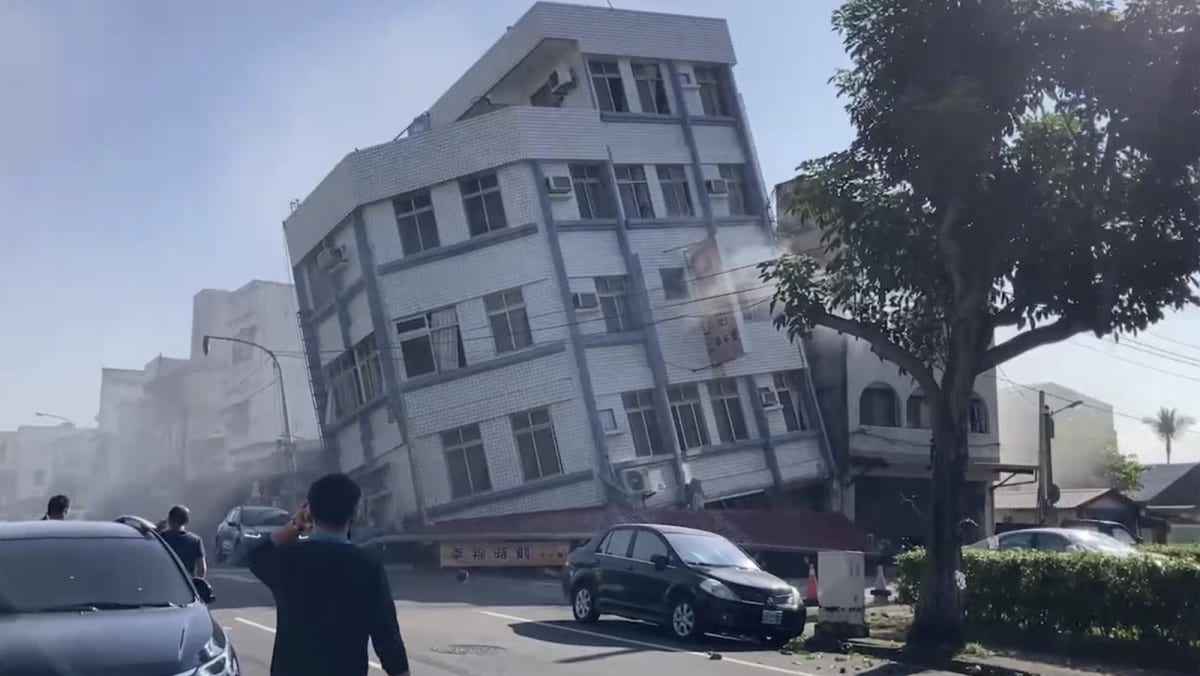
Taiwan recently experienced its most powerful earthquake in 25 years, resulting in the deaths of at least nine people and injuries to hundreds more, along with damage to buildings and highways. Despite being prone to powerful earthquakes due to its location along the Pacific Ring of Fire, Taiwan has managed to contain the damage and casualties through its excellent earthquake preparedness measures. The island’s mountainous landscape can magnify ground shaking, leading to landslides, such as those that occurred near the epicenter of the recent quake in eastern Hualien County.
The Pacific Ring of Fire is a line of seismic faults encircling the Pacific Ocean where most earthquakes occur, making the region particularly vulnerable to seismic activity. The tension accumulated from the interactions of the Philippine Sea Plate and the Eurasian Plate can lead to sudden releases in the form of earthquakes. Despite a powerful earthquake striking Taiwan with a magnitude of 7.2 (according to Taiwan’s earthquake monitoring agency) or 7.4 (according to the U.S. Geological Survey), Taipei managed to avoid major damage thanks to the island’s advanced earthquake preparedness measures.
Taiwan has implemented strict building codes, a world-class seismological network, and widespread public education campaigns on earthquake safety, making it one of the most advanced countries in terms of earthquake preparedness. The government continuously revises the level of quake resistance required for buildings and offers subsidies to residents willing to check their buildings’ quake resistance. Quake drills are also being promoted in schools and workplaces, and public media and cellphones regularly carry notices about earthquakes and safety measures. These measures have significantly increased Taiwan’s resilience to earthquakes, reducing the potential for catastrophic damage and loss of life.
Since 1980, Taiwan has experienced about 2,000 earthquakes with a magnitude of 4.0 or greater, with more than 100 earthquakes above 5.5 in magnitude. The island’s worst quake in recent years occurred in 1999, resulting in 2,400 deaths, injuries to around 100,000 people, and the destruction of thousands of buildings. The latest deadly quake in Hualien County was in 2018, which collapsed a historic hotel and other buildings. Seismologist Stephen Gao emphasized the importance of preparedness and resilience to earthquakes, as the high level of seismic activity in the region will continue for millions of years to come.
Despite Taiwan’s frequent seismic activity, the island’s earthquake preparedness measures have proven to be effective in minimizing the impact of earthquakes. The resilience-building efforts, including strict building codes, public education campaigns, and subsidy programs, have helped mitigate potential damage and loss of life in the face of ongoing seismic risks. Taiwan’s experience with earthquakes underscores the importance of proactive measures to prevent and mitigate the effects of seismic activity, ensuring the safety and well-being of its 23 million residents.