





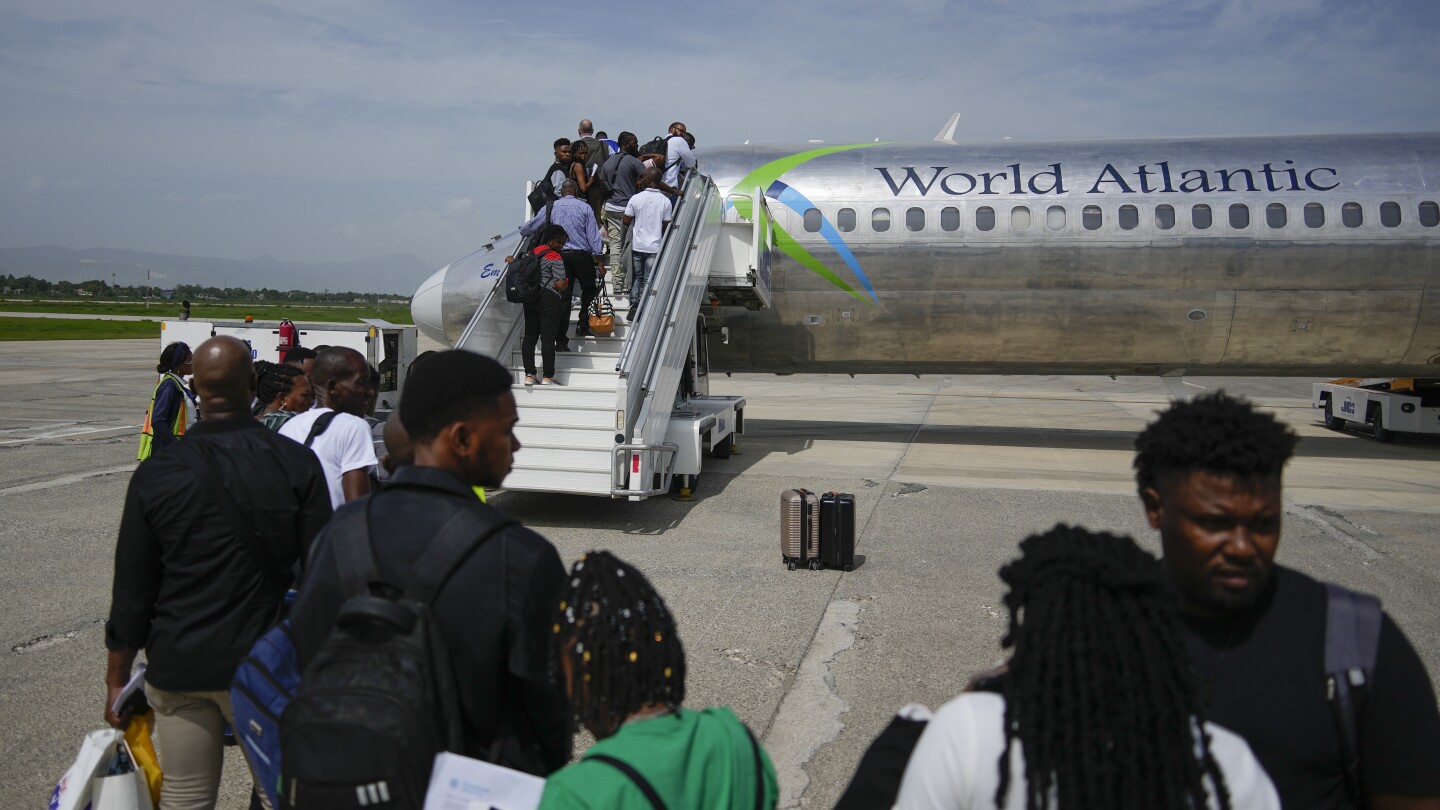
Haiti’s main international airport in Port-au-Prince, the Toussaint-Louverture airport, has reopened after being closed for nearly three months due to gang violence. The reopening of the airport is expected to help alleviate a critical shortage of medications and other basic supplies in the country, as the main seaport remains paralyzed and gangs control 80% of the capital. U.S.-based airlines are not expected to start using the airport until late May or early June. The first commercial passenger flight since March left for Miami, with passengers complaining about the lack of air conditioning until takeoff. The flight was organized by local carrier Sunrise Airways but contracted Florida-based charter airline World Atlantic.
Prior to the reopening of the airport in Port-au-Prince, the sole airport operating in Haiti was located in Cap-Haitien, a north coastal city. However, it was out of reach for many seeking to flee the country due to the roads leading from Port-au-Prince being controlled by gangs. The U.S. government evacuated hundreds of citizens by helicopter from a hilly neighborhood in Port-au-Prince, along with nonprofit organizations, as gangs laid siege to parts of the capital. Gangs in Haiti have been involved in various attacks, including seizing control of police stations, storming prisons, and directing violence towards previously peaceful communities. This has left thousands homeless, with more than 2,500 people killed or injured in Haiti from January to March.
At the Couronne Bar near the airport, 43-year-old manager Klav-Dja Raphael expressed her fear despite welcoming her first clients. She recalled the day the airport was attacked, with bullets ricocheting through the area. While some workers at the airport were content to be back at work, others like Raphael were anxious and fearful due to the ongoing gang violence in the country. Many people in Haiti are facing difficult decisions about leaving the country to seek safety elsewhere, with concerns about the safety of their families and the ongoing violence. Workers at the airport express a mix of fear, relief, and hope for a better future.
Darling Antoine, who received a visa to live in the U.S., expressed mixed emotions about leaving her husband and son behind in Haiti due to the violence. She described the heavy gunshots and the need to hide under the bed in her neighborhood. Another individual, Jean Doovenskey, a 31-year-old accountant, was authorized to live in the U.S. due to the violence and hopes to return to Haiti one day. The attack on the airport also left former Prime Minister Ariel Henry locked out of the country, leading to his resignation and the formation of a transitional presidential council. The council is tasked with selecting a new prime minister, forming a new Cabinet, and organizing general elections.
In recent weeks, the U.S. military has sent supplies and civilian contractors to Haiti to help prepare for the arrival of foreign forces expected to assist in quelling the gang violence. Kenya has announced plans to deploy police officers to Haiti, with other countries like the Bahamas, Barbados, Benin, Chad, and Bangladesh expected to provide support. Agreements have been signed to deploy 1,000 police officers from Kenya to Haiti, with the deployment expected to happen in the coming days or weeks. The international community is stepping in to provide support and assistance to Haiti as it continues to grapple with the impacts of gang violence and insecurity. Gathering support and resources from various countries is seen as a crucial step in addressing the crisis in Haiti and working towards a more stable and secure future for the country.