




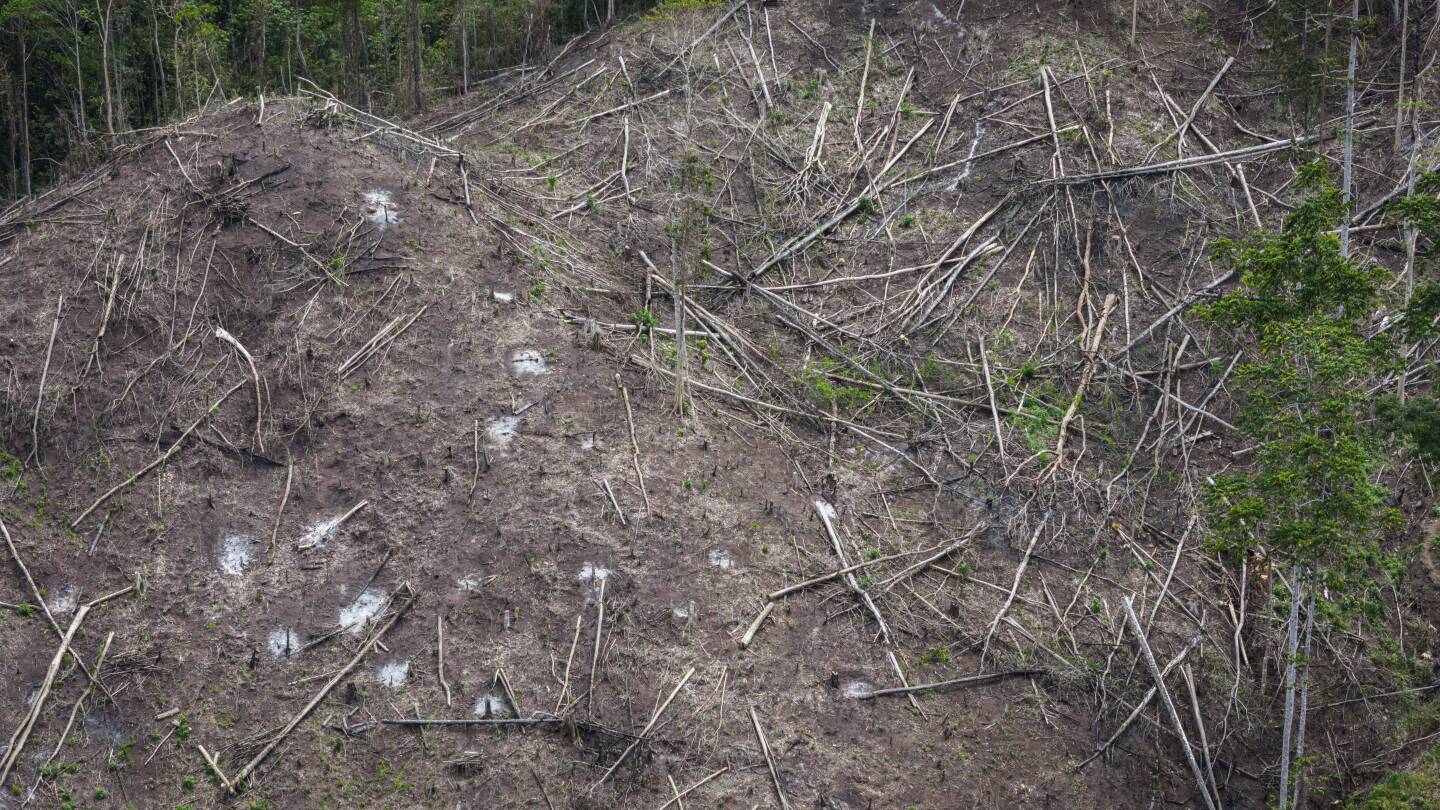
Enormous swathes of pristine forest are being cut down across Indonesia to meet the increasing international demand for biomass material, which is considered crucial for transitioning to cleaner forms of energy. The biomass from forests destroyed for wood pellet production since 2021 has mainly been shipped to South Korea and Japan, who have provided financial support to Indonesia for biomass production. However, experts and environmentalists fear that this rising demand, coupled with weak regulations, will accelerate deforestation and prolong the use of polluting fossil fuels. Biomass, which consists of organic material like plants and wood, can be burned alongside coal in coal-fired power plants to generate energy.
As countries worldwide accelerate their energy transitions, the demand for biomass continues to grow. The International Energy Agency reports that the use of bioenergy has been increasing at an average rate of about 3% per year between 2010 and 2022. However, it is crucial for this demand to be met sustainably, such as by using waste and crop residue rather than converting forest land to grow bioenergy crops. Deforestation not only leads to erosion and threatens biodiversity but also hampers the forests’ ability to absorb carbon and mitigate climate change. Many scientists and environmentalists argue against the use of biomass, as burning wood-based biomass can emit more carbon than coal and prolong the use of coal instead of transitioning directly to cleaner energy sources.
In Indonesia, biomass production is causing deforestation in various regions, with thousands of hectares of forest being cleared since 2020 for energy plantation forests. The carbon-rich forests of Gorontalo have faced extensive deforestation for the production of wood pellets, with significant habitat loss for flagship species such as Sumatran rhinos, elephants, orangutans, and tigers. A large portion of Indonesia’s wood pellet production is exported overseas, primarily to South Korea and Japan. Both countries have provided financial support to Indonesia for biomass development, reflecting their efforts to lower domestic emissions by importing biomass.
Indonesia’s state electricity company, Perusahaan Listrik Negara (PLN), plans to increase biomass co-firing in 52 coal plants across the country to achieve a 10% biomass co-firing target. However, this ambitious plan would require a significant increase in forest plantation land, potentially at the expense of intact and carbon-rich forests. With weak regulations and oversight in Indonesia’s expanding biomass industry, experts are concerned that deforestation will continue to escalate. The lack of due diligence and monitoring around biomass production poses a threat to forest conservation in Indonesia, as the country struggles to regulate this rapidly growing industry.
Overall, the surge in demand for biomass in Indonesia driven by international markets, coupled with the country’s plans to increase domestic biomass use, raises concerns about the impact on forests and biodiversity. The lack of clear regulations and oversight in the biomass industry creates challenges for sustainable biomass production and conservation efforts. As Indonesia grapples with these issues, experts emphasize the importance of addressing these concerns to ensure that biomass production aligns with environmental sustainability goals and does not jeopardize forest conservation efforts.