



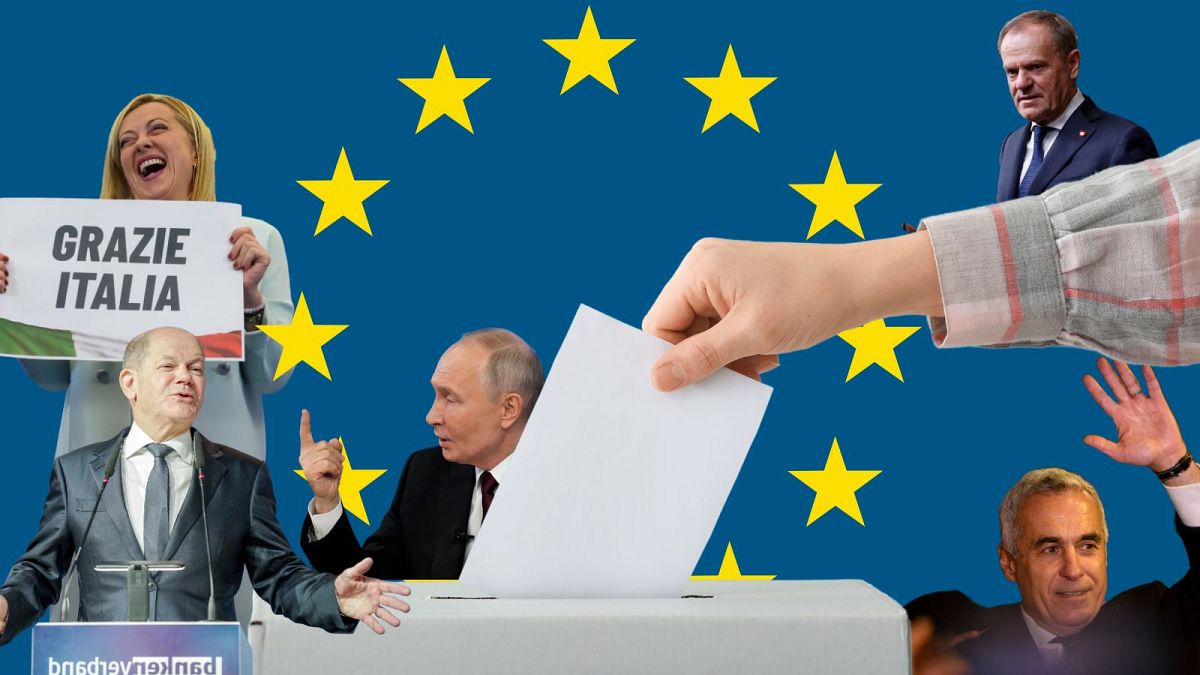
Voting in Europe in 2025 is set to bring about major political shifts across the continent. With key elections in Germany, Romania, Poland, Czechia, Norway, and beyond, the outcomes of these contests could potentially reshape the future of the European Union. From the rise of populist forces to tensions over foreign meddling, each election presents its own unique set of challenges and opportunities for the countries involved.
In Germany, the snap Bundestag vote following a vote of no-confidence on Chancellor Olaf Scholz has brought forward Friedrich Merz as a potential future chancellor. Merz’s more economically liberal and socially conservative policies have resonated with voters, with the CDU/CSU currently leading in the polls. In Romania, a tense presidential race is unfolding amid concerns of foreign interference and the rise of anti-EU populism. The outcome of the upcoming presidential vote is expected to shape the country’s future direction.
Poland’s upcoming presidential elections in May will serve as a test of approval for Donald Tusk’s government, with Civic Platform and PiS competing for power. Italy, facing local elections in September, will provide a crucial test for Giorgia Meloni’s relatively stable government. In Czechia, the parliamentary elections in October could potentially strengthen a far-right axis in Central Europe, with populist Andrej Babiš leading the polls.
In Croatia, the re-election of President Zoran Milanovic in a second round runoff on 12 January is expected to further solidify his ‘nationalist’ stance, opposing government policies on Ukraine and NATO. The UK will hold its first elections since Labour’s victory in July, with support levels for both Labour and the Conservatives historically low. Belarus, Russia, Norway, Ireland, Georgia, Moldova, Albania, and Kosovo are also set to hold elections in 2025, each with their own unique political dynamics and challenges.
Overall, the elections in 2025 promise to bring about significant changes in Europe’s political landscape, with the potential for new leaders to emerge, alliances to shift, and policies to be redefined. The rise of populist forces, concerns over foreign meddling, and the growing influence of right-wing parties in some countries are just a few of the key themes shaping the electoral landscape in Europe this year. The outcomes of these elections will not only impact the countries directly involved but could also have far-reaching implications for the future of the European Union as a whole.