




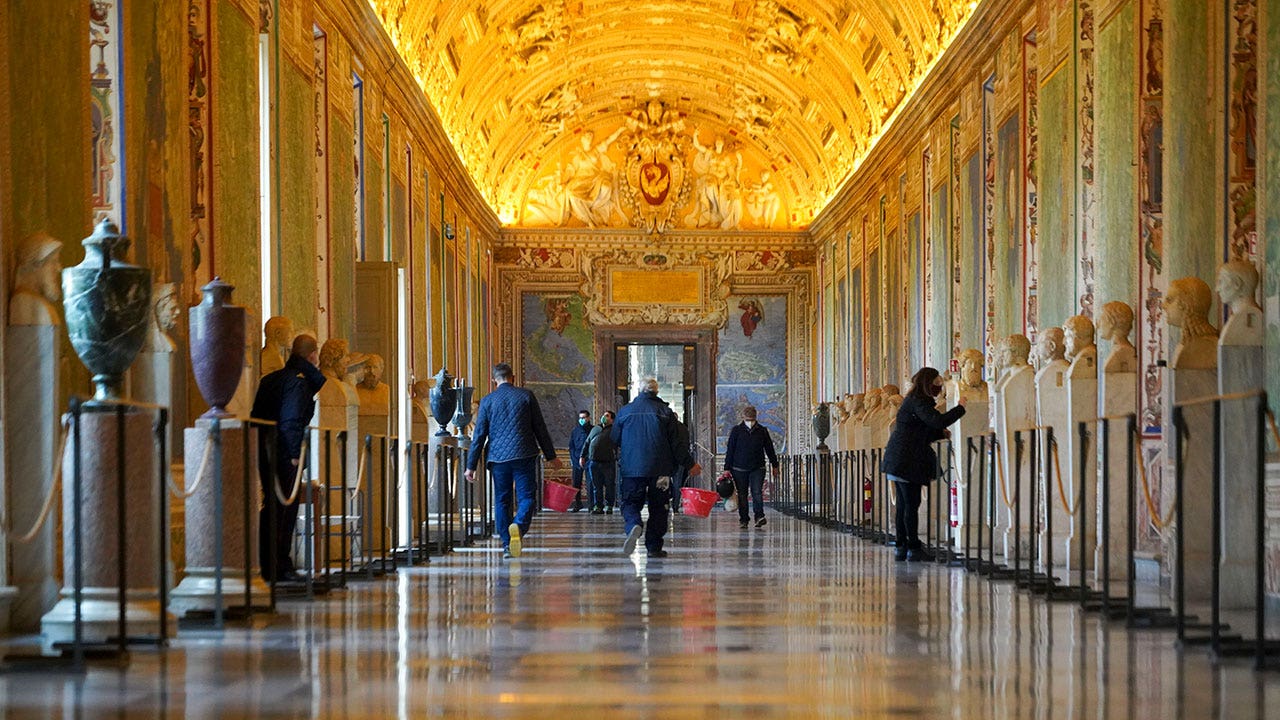
Forty-nine employees of the Vatican Museums have filed a class-action complaint demanding improved treatment due to health and security risks arising from cost-saving measures. The complaint, dated April 23, attributes these risks to initiatives such as overcrowding and reduced security guards. The employees cited Catholic social teaching and Pope Francis’ appeals for dignified treatment of workers in their demand for better seniority, leave, and overtime benefits.
The complaint, which was made public in Italian newspapers, is an unusual public challenge to Pope Francis’ governance and the Vatican administration. Neither the Vatican spokesman nor Cardinal Fernando Vérgez Alzaga, the president of the Vatican City State administration, have responded to the complaint when contacted. This legal challenge highlights how Vatican laws, regulations, and practices often clash with Italian and European norms, leaving Vatican employees with little to no legal recourse within the city state’s unique justice system.
The class-action complaint, written and signed by veteran Vatican attorney Laura Sgro on behalf of the 49 employees, demands better transparency regarding employee advancement, restoration of seniority bonuses, and adherence to Italian norms on sick days. The employees currently have to stay home all day if they are sick, rather than being able to rest for a few hours. If no talks with Verzaga begin within 30 days, Sgro can attempt a negotiated reconciliation through the Vatican’s labor office, which may ultimately end up in the tribunal if unresolved.
In previous cases, lawyers representing Vatican employees have considered taking their complaints about the system to the European Court of Human Rights, despite the Vatican not being a member or signatory to the European Convention on Human Rights. Some lawyers argue that the Vatican implicitly agreed to uphold European human rights norms by signing onto the European Union monetary convention in 2009. The employees’ class-action complaint sheds light on the challenges they face within the Vatican’s legal and regulatory framework.
The Vatican Museums serve as a significant revenue source for the Holy See bureaucracy, funding the central government of the Catholic Church. Hit financially by COVID-19 closures and restrictions, the museums increased the cost of a full-price ticket to $21.50 at the beginning of the year. The employees’ demand for better treatment and benefits is particularly relevant given the essential role the museums play in financially supporting the Vatican, emphasizing the need for fair and respectful treatment of workers in this crucial institution.
Overall, the class-action complaint filed by the Vatican Museums employees serves as a symbolic and concrete challenge to the Vatican administration and Pope Francis’ governance. By highlighting health and security risks faced by staff due to cost-saving measures, the employees are demanding better treatment based on Catholic social teaching and the Pope’s calls for dignified treatment of workers. The legal challenges and potential recourse options available to the employees further underscore the complex dynamics between Vatican laws and European norms, shedding light on the need for fair treatment and transparency within the Vatican Museums’ operational framework.