




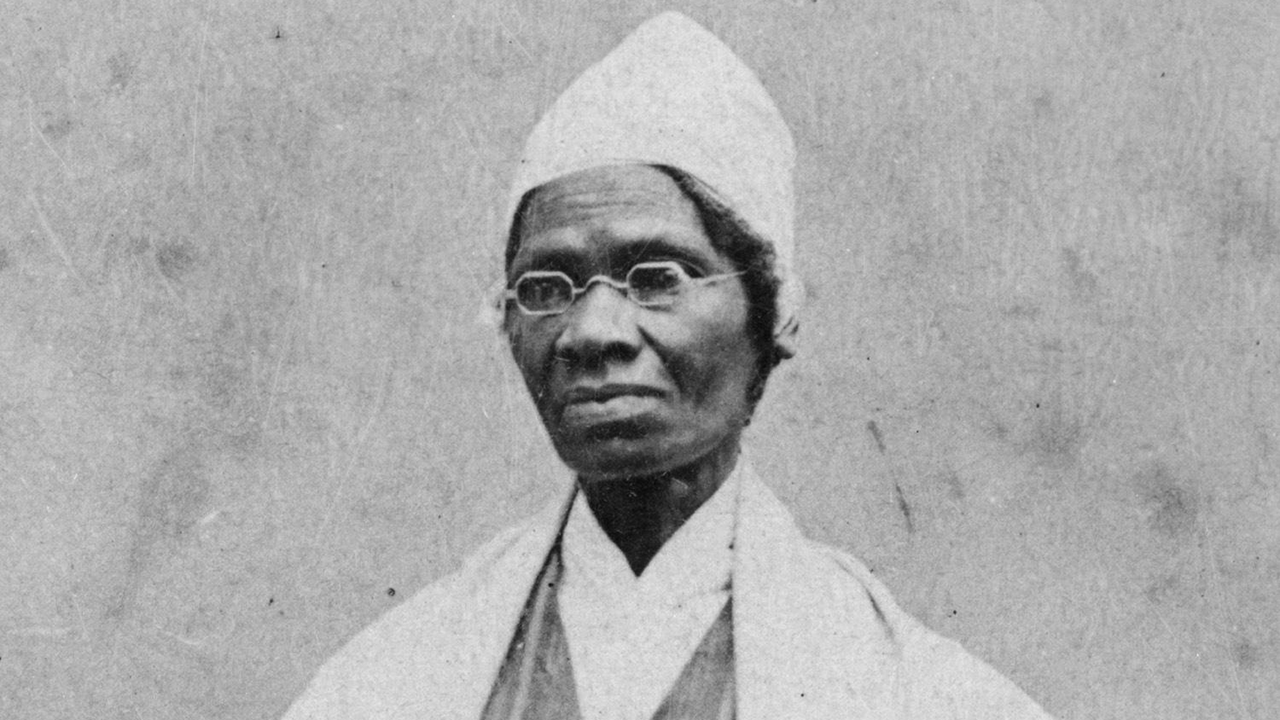
Sojourner Truth, the African American abolitionist and women’s rights advocate, delivered her famous “Ain’t I a Woman?” speech on May 29, 1851, at the Ohio Women’s Rights Convention in Akron, Ohio. Her powerful words continue to be used today as a call for equal treatment of women. Born into slavery in 1797, Truth endured mistreatment before fleeing to find freedom. After converting to Christianity, she changed her name to Sojourner Truth and dedicated herself to advocating for human rights.
During the 1850s, Truth was involved in the women’s rights and antislavery movements. Her famous speech at the Women’s Rights Convention in Akron highlighted the struggles of African American women and called for equal rights. Truth continued to fight for the rights of African Americans and women during and after the Civil War. Her passionate advocacy touched the hearts of many and inspired change in American society.
There are conflicting versions of Truth’s famous speech, with differing accounts of the actual words she spoke. Regardless of the exact wording, Truth’s message resonates as a beacon of hope and equality. She settled in Battle Creek, Michigan, during the 1850s and played a crucial role in recruiting soldiers for the Union Army during the Civil War. Truth believed that the war was divine retribution for the sin of slavery and worked tirelessly to help free Black people.
After the Civil War, Truth worked for the National Freedman’s Relief Association in Washington, D.C., and lobbied the U.S. government to grant land to newly freed Black men and women. She continued to travel the country, giving speeches on women’s rights, prison reform, and desegregation. Truth also fought to secure her son’s freedom in a landmark lawsuit that made her the first African American woman to win a case in the United States.
Sojourner Truth passed away in Michigan at the age of 84, leaving behind a legacy of courage and resilience. Her dedication to the fight for equality earned her a national reputation as a powerful advocate for human rights. In her honor, a bronze bust was unveiled in the U.S. Capitol’s Emancipation Hall in 2009, making her the first African American woman to be honored in such a way. Truth’s influence continues to be felt as her words and actions inspire generations to strive for justice and equality.