




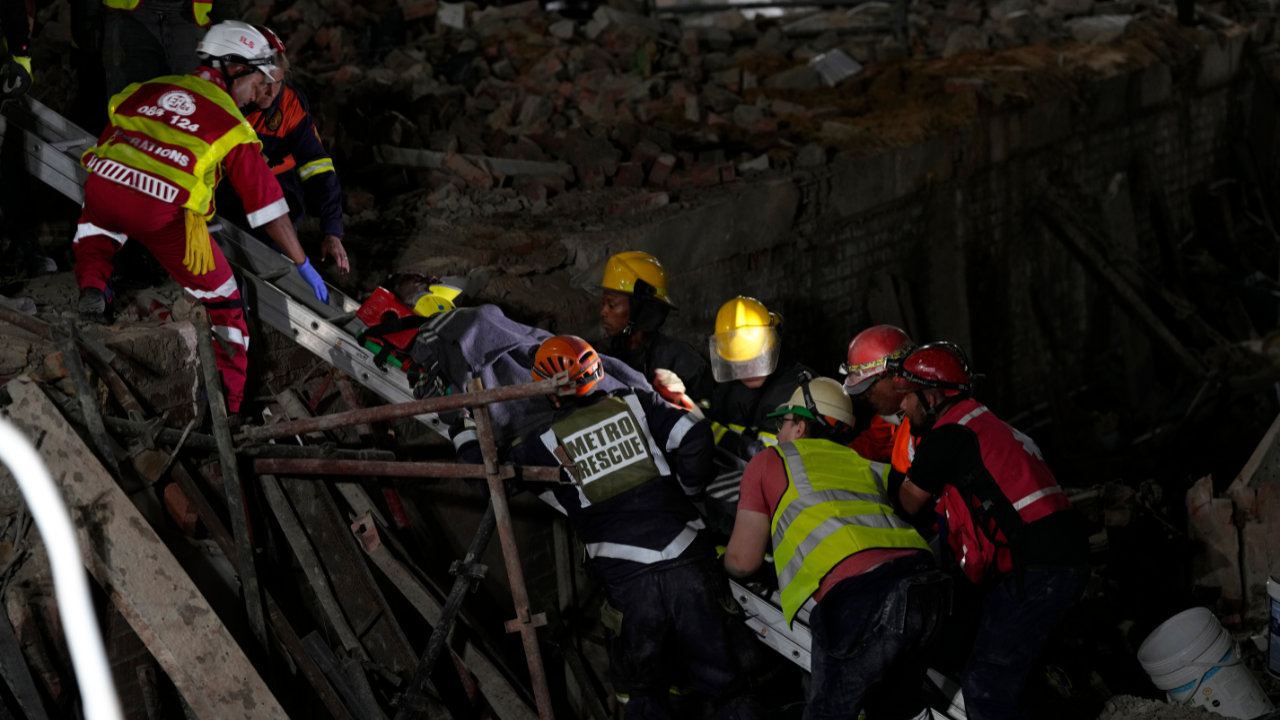
The extensive rescue operation to find missing construction workers trapped in the rubble of a collapsed building in South Africa is coming to an end after nearly two weeks. The collapse of the unfinished five-story apartment complex in George on May 6 resulted in at least 33 confirmed deaths, with the death toll expected to rise to over 50 as the operation shifts to recovery. With 19 workers still unaccounted for, authorities have made the difficult decision to transition to a recovery and clear-up operation, presuming that the remaining workers are deceased.
There were 81 workers on the site when the building collapsed, with 29 survivors pulled from the rubble, some of whom remain in the hospital. South African President Cyril Ramaphosa visited the site to show support for the victims’ families, emergency workers, and others involved in the rescue efforts. More than 600 emergency responders and personnel were part of the search, with some remarkable stories of survival, including a man who was found alive after six days trapped without food or water, but with only minor injuries.
The collapsed building, one of South Africa’s worst building tragedies, will be handed over to the national department of employment and labor for investigation as the rescue operation concludes. Other investigations will also take place, including ones by the police and the Western Cape government. Many of the workers were foreign nationals from Mozambique, Zimbabwe, and Malawi. The construction contractors responsible for the building will be scrutinized to determine if safety standards were followed, as the building was scheduled to be completed in July or August.
The George municipality and disaster response unit announced the end of the rescue operation, stating there are no further expectations of finding survivors in the debris. The decision to transition to a recovery operation was made based on the long duration since the collapse and the lack of indications that the missing workers are still alive. The efforts of the emergency workers who worked tirelessly for over 250 hours have been acknowledged, as well as the resulting physical and emotional toll on those involved in the rescue.
The collapse of the building has underscored the importance of adhering to safety standards in construction projects, with investigations set to examine whether the construction contractors complied with regulations. The tragedy has prompted a push for accountability and justice for the victims, with various agencies and authorities conducting inquiries into the causes of the collapse. The loss of life and the scale of the disaster have led to expressions of grief and condolences from leaders and citizens alike, with a focus on supporting the families affected by the tragedy and ensuring that such incidents are prevented in the future.
As the recovery operation continues and investigations unfold, the aftermath of the building collapse will serve as a grim reminder of the risks inherent in construction projects and the importance of robust safety measures. The tragic event has brought communities together in mourning and solidarity, with a shared determination to honor the memory of the lives lost and to strive for a future where such devastating incidents are averted. The legacy of the collapsed building will be one of remembrance, reflection, and a call to action to prevent similar tragedies from occurring in the future.