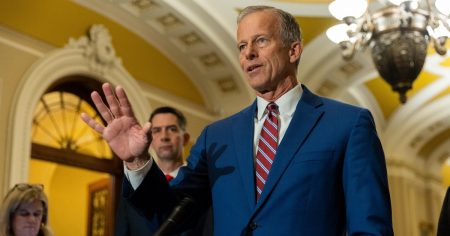





Republicans are gearing up to take control of both the House and Senate as a new Congress kicks off. With a focus on immigration and taxes, Republican leaders are planning to push their agenda through the budget reconciliation process. House Speaker Mike Johnson emphasized the importance of coordination, planning, and precision in executing their plans. The first days of the new Congress will be marked by the speaker’s election and the counting of Electoral College votes.
The issue of immigration has been a key focus for Republicans, aligning with President-elect Trump’s campaign promises. Plans include pursuing legislation to surge resources to the southern border, continue construction of the border wall, and bolster Border Patrol and technology. The Senate may move quickly on immigration matters, pairing them with defense and energy provisions in the reconciliation package. A focus on border security is expected to reach President Trump’s desk by January or early February.
Concerns around expiring portions of Trump’s 2017 Tax Cuts and Jobs Act have prompted Republicans to aim to extend or make them permanent. Plans include strengthening existing provisions, such as research and development costs and child tax credits. However, the challenge remains in keeping the House and Senate Republican conferences together as they work on tax cut extensions, while other priorities are also on the agenda, including government funding and the debt ceiling.
The debt ceiling issue, while not among Republicans’ legislative priorities, has major implications for advancing their agenda. Treasury Secretary Janet Yellen has highlighted the impending need to address the borrowing limit, with the government expected to reach it between Jan. 14 and 23. The energy policy is also on the agenda for Republicans, with plans to increase domestic energy production by mandating lease sales and easing energy regulations.
Another priority for Republicans in the new Congress is approving Cabinet nominees and top administration roles. President Trump has announced picks for these roles, setting up potential confirmation hearings and votes in the Senate. Senate Republicans have pledged to swiftly approve Trump’s nominees post-inauguration, though some picks, like defense secretary nominee Pete Hegseth, have faced controversy. Overall, the agenda for the new Congress under Republican control includes addressing immigration, taxes, energy policy, government funding, and confirming key administration roles.