



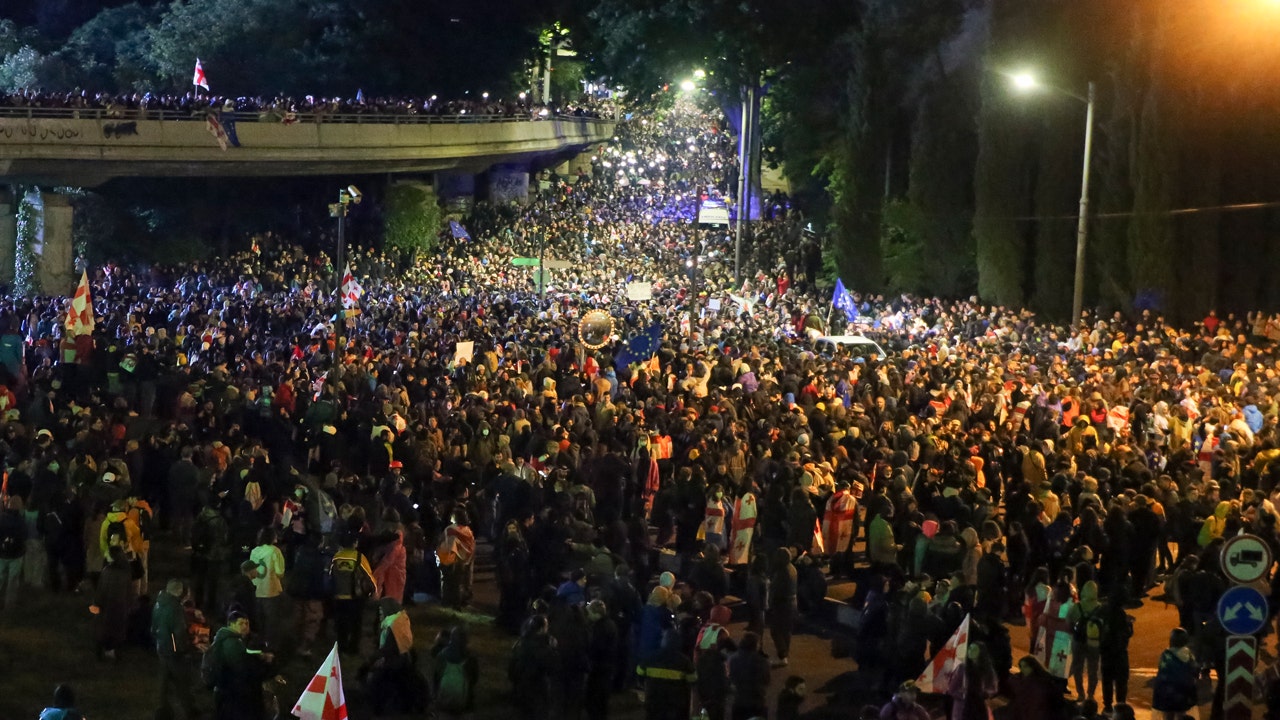
Massive protests erupted in the capital of Georgia following the approval of a controversial “foreign influence” bill by lawmakers. Critics argue that the bill threatens free speech and the country’s efforts to join the European Union. The bill requires media and non-governmental organizations receiving more than 20% of their funding from abroad to register as “pursuing the interests of a foreign power.” Although the government claims the bill is necessary to combat destabilizing foreign actors, protesters view it as reminiscent of Russian legislation used to suppress dissent.
European Council President Charles Michel emphasized that Georgia must uphold fundamental democratic principles if it wishes to join the EU. The White House expressed deep concern over the bill, warning that it would distance Georgia from European values and NATO. The US Assistant Secretary of State for Europe and Eurasia Affairs cautioned Georgia against undermining democracy and mistreating peaceful protesters, highlighting potential restrictions on the relationship between the US and Georgia. The bill mirrors a previous version that faced public backlash, leading to renewed protests and clashes with authorities.
President Salome Zourabichvili, at odds with the governing party, vowed to veto the bill, but the Georgian Dream party has the majority to override it. The ongoing demonstrations reflect a strong opposition to the bill and determination to safeguard Georgia’s European future. In parliament, a brawl erupted between ruling party and opposition members, underscoring the heightened tensions surrounding the bill. The opposition accuses the government of betraying the country’s European aspirations and violating constitutional principles, while the ruling party condemns the protests as politically motivated and potentially radical.
Protests swelled near the parliament building, with demonstrators attempting to break barriers and marching to Heroes Square. Police arrested several individuals, and violence erupted as authorities dispersed the protests with tear gas and water cannons. Renewed demonstrations have engulfed Georgia in recent weeks, as opposition groups and activists rally against the bill. European and US leaders have condemned the legislation, signaling potential consequences for Georgia’s international relationships if the bill is enacted. The bill’s resemblance to Russian laws has raised concerns about the erosion of democratic values and freedom of expression in Georgia.
The Georgian Dream party has faced mounting pressure to withdraw the bill amid widespread opposition and international criticism. The party accuses the opposition of exploiting the protests for political gain, while opposition leaders assert that Georgia’s future is at stake due to the bill’s threat to democratic principles. With President Zourabichvili’s veto powerless against the ruling party’s majority, the fate of the bill remains uncertain. Georgia’s aspirations to join the EU and uphold democratic values are on the line as protests continue to flare up in response to the controversial legislation. The government’s handling of the situation and respect for civil liberties will determine the country’s trajectory in the international community.