



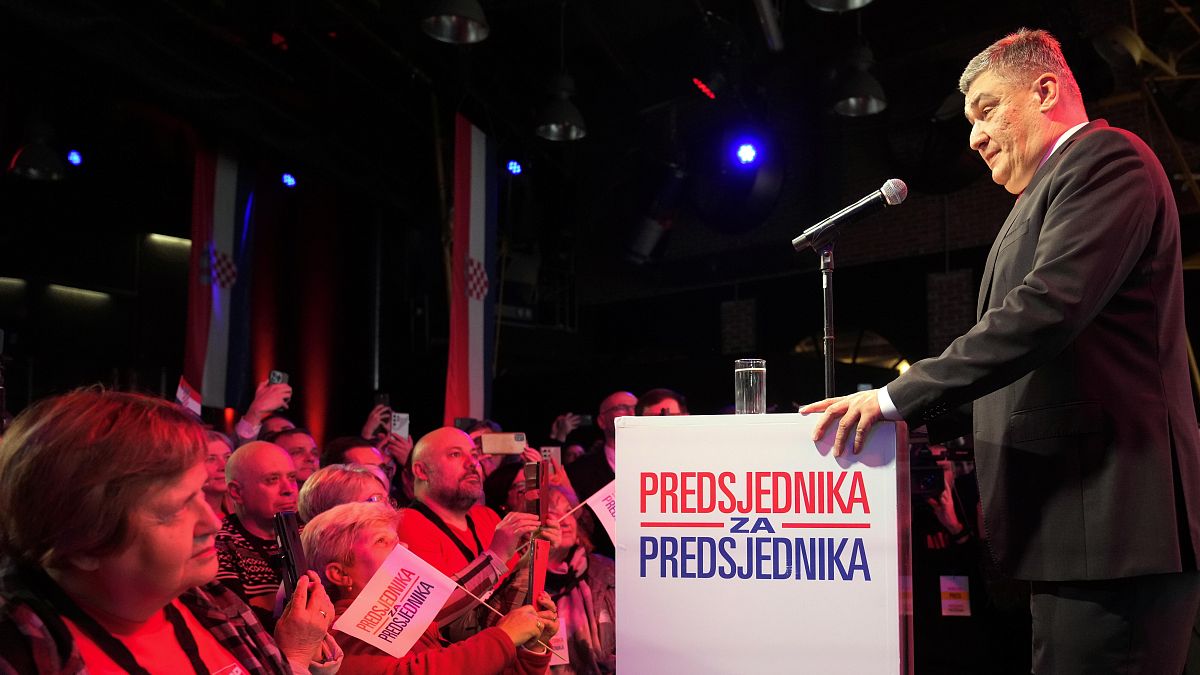
In the first round of Croatia’s presidential election, left-leaning incumbent Zoran Milanović won 49% of the votes, while his main challenger Dragan Primorac of the ruling conservative HDZ party trailed with 19%. As no candidate received more than 50% of the vote, Milanović will face a runoff against Primorac on January 12th to secure another five-year term. Milanović, an outspoken critic of Western military support for Ukraine, has been compared to Donald Trump for his combative style and has served as prime minister in the past.
The election has been characterized by differences in views on Croatia’s positioning relative to the West and the East, with current Prime Minister Andrej Plenković labeling Milanović as “pro-Russian” and a threat to Croatia’s international standing. Milanović has criticized NATO and EU support for Ukraine, insisting that Croatia should not take sides in global disputes despite being a member of both alliances. He has also blocked Croatia’s participation in a NATO-led training mission for Ukraine, stating that Croatian soldiers will not take part in someone else’s war.
Milanović’s challenger, Dragan Primorac, has emphasized Croatia’s place in the West and the need for unity and global positioning. His campaign has been marred by a high-level corruption case that resulted in the imprisonment of Croatia’s health minister, which has been a prominent issue in pre-election debates. While Primorac positioned himself as a unifier, Milanović has been seen as divisive in the election campaign, with different visions for Croatia’s future and position on the international stage.
Another presidential candidate, conservative independent Marija Selak Raspudić, focused her campaign on economic troubles, corruption, and population decline in Croatia. Trailing a distant third in pre-election polls, she addressed issues facing ordinary citizens and the country’s overall development. The presidency in Croatia is largely ceremonial, but holds political authority and acts as the supreme military commander, giving weight to the outcome of the election.
The election in Croatia follows two previous votes this year, a parliamentary election in April and the European Parliament balloting in June. The results of the presidential election will have implications for Croatia’s future direction, both domestically and internationally, as the two main candidates present contrasting views on the country’s positioning in relation to key alliances and global politics. The runoff between Milanović and Primorac will determine who will lead Croatia for the next five years and shape the country’s policies and positions on various issues in the coming term.