




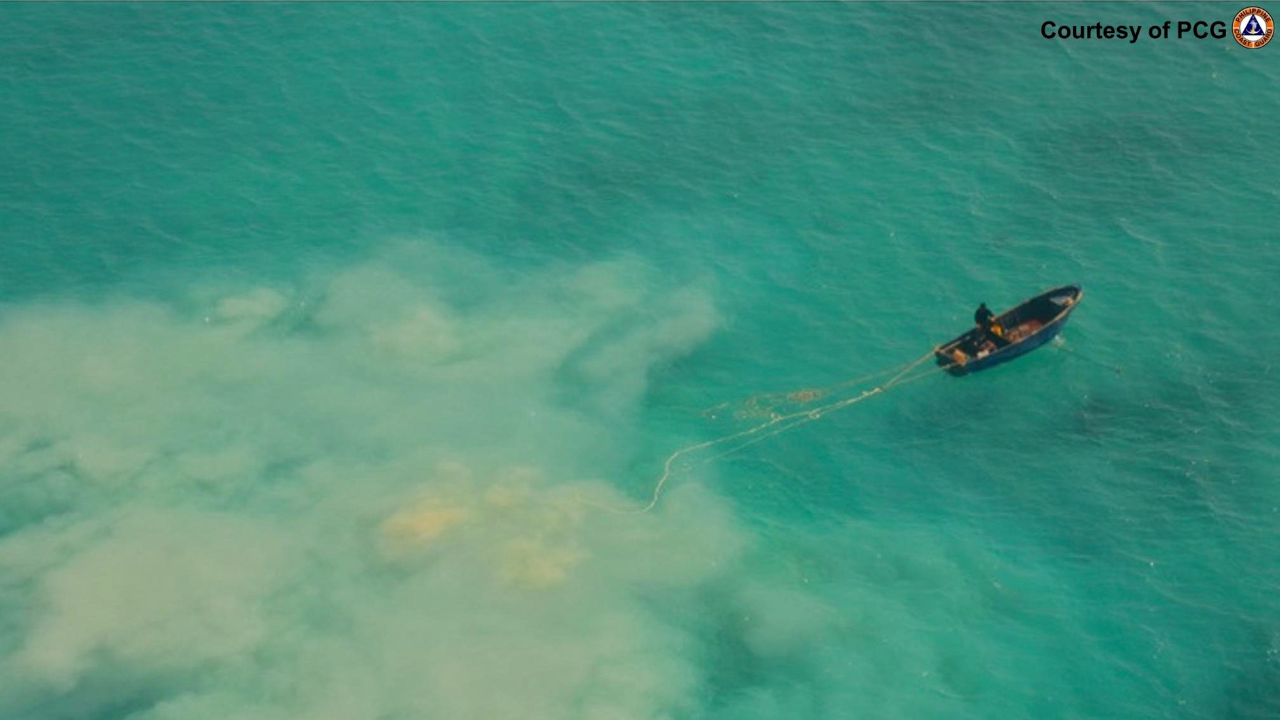
The Philippines accused Chinese fishermen of causing the depletion of giant clams at Scarborough Shoal in the South China Sea, presenting surveillance photographs as evidence of the alleged harvesting by Chinese fishermen. The Philippine coast guard expressed concern over the environmental damage caused by the harvesting, noting scars on surrounding coral. The Philippine coast guard presented surveillance photographs of Chinese fishermen harvesting giant clams for a number of years in a lagoon at Scarborough Shoal, with signs of such activities stopping in March 2019. Parts of the surrounding coral appeared to be badly scarred, indicating a futile search by the Chinese for more clams. The lagoon, known as Bajo de Masinloc to Filipinos and Huangyan Dao to the Chinese, is a prominent fishing area in the South China Sea.
The Philippine coast guard voiced alarm over the situation at Scarborough Shoal and called for an international inquiry into the environmental damage in the area. The National Security Council Assistant Director General, Jonathan Malaya, urged China to allow an independent inquiry by experts from the United Nations and environmental groups. Meanwhile, the Chinese Embassy in Manila did not immediately respond to requests for comment. Beijing has repeatedly asserted its sovereignty over much of the South China Sea, with territorial disputes involving China, the Philippines, Vietnam, Malaysia, Brunei, and Taiwan. The Philippine government has been publicizing China’s assertive actions in the contested waters to gain international support, with the news conference being its latest effort to condemn China’s action at Scarborough Shoal.
China effectively seized Scarborough Shoal in 2012 after a standoff that ended when Philippine government ships withdrew based on what Manila said was a deal brokered by American officials. Since then, China has surrounded the shoal with coast guard and suspected militia ships, preventing Philippine patrol ships and fishing boats from entering the lagoon. Chinese ships have fired powerful water cannons that damaged Philippine coast guard and fisheries vessels. The Philippines have brought their territorial disputes with China to international arbitration and largely won, with a ruling in 2016 invalidating China’s expansive claims to much of the South China Sea, citing environmental damage caused by Chinese government actions.
The territorial hostilities in the South China Sea have sparked fears of a larger conflict that could involve the U.S., which has warned that it is obligated to defend the Philippines if Filipino forces come under an armed attack. The U.S. has a long-standing treaty alliance with the Philippines and has expressed its commitment to defending its ally in the region. The disputes in the South China Sea involve multiple countries and have raised concerns about the impact on global trade routes in the area. The Philippines’ efforts to bring international attention to China’s actions in the South China Sea reflect ongoing tensions in the region and the importance of finding diplomatic solutions to avoid further escalation and maintain stability in the disputed waters.