





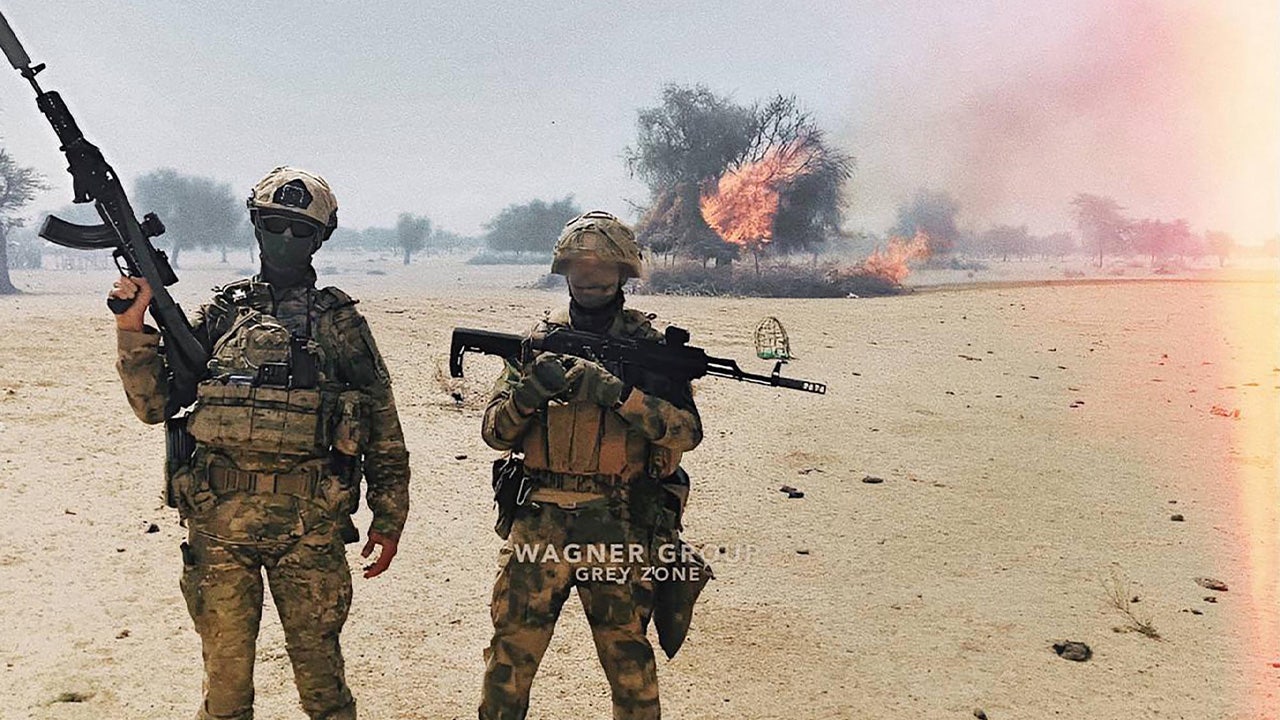
Dozens of Russian mercenaries fighting for the Wagner group in northern Africa were ambushed and massacred in Mali over the weekend. Footage showed Russian soldiers collapsed on top of one another, strewn around burnt vehicles, and apparently dead after a violent assault by Tuareg separatists on Wagner and Malian forces near the border with Algeria. The rebel movement in Northern Mali claimed responsibility for the attack, stating that a large amount of equipment and weapons were seized or damaged, and that they also took an unconfirmed number of prisoners, with seven of their fighters killed and 12 others injured.
The ambush in northeast Mali occurred after days of fighting in the Tinzaouatene area. Wagner forces, led by Yevgeny Prigozhin until his death in 2023, have been fighting alongside the Malian army since 2022. Mali’s military rulers have claimed that the Russian forces in the region are not Wagner mercenaries, but trainers aiding the army in its fight against Islamic extremists. However, Wagner confirmed on Telegram that its forces in Mali, under commander Sergei Shevchenko, engaged in a fight alongside Malian forces from July 22-27. The group claimed that they initially destroyed most of the Islamists but were hindered by a sandstorm, allowing the radicals to regroup and increase their numbers to 1,000 people. Shevchenko was reportedly killed in the fighting.
The rebel movement in Northern Mali, known as the Permanent Strategic Framework for Peace, Security and Development, claimed responsibility for the attack on Wagner forces. They reported that they decisively obliterated the enemy columns on Saturday, seizing or damaging a large amount of equipment and weapons, and taking an unconfirmed number of prisoners. Russian media reported the death toll at at least 20 Wagner soldiers, while the Malian army stated that two of its soldiers were killed. Reports have suggested that the Russian death toll could be as high as 80, though this information has not been independently verified. The events leading up to the ambush remain unclear, and footage reviewed by Fox News Digital indicated a scene of devastation with collapsed soldiers and burnt vehicles.
The fighting in Mali’s northern region has escalated in recent months after the Malian military rulers scrapped a 2015 peace deal with a separatist group in January. The violence intensified after French forces were ousted and Malian military leaders took over the nation. The United Nations ended its peacekeeping mission in Mali after a decade, leaving a volatile situation in the region. The ongoing conflict in Mali has raised concerns about instability and the presence of foreign forces, such as Wagner mercenaries, in the country. The aftermath of the ambush highlights the complex and precarious nature of the conflict in Mali and the involvement of various armed groups and foreign actors in the region.
In conclusion, the ambush of Russian mercenaries in Mali has highlighted the deadly consequences of the ongoing conflict in the region. The involvement of Wagner forces, alongside the Malian army, has further complicated the situation, with conflicting reports about the nature of their presence in Mali. The rebel movement’s claim of responsibility for the attack raises questions about the motives and goals of the various armed groups operating in the country. The escalation of violence in Mali, following the ousting of French forces and the collapse of a peace deal, underscores the challenges faced by the Malian government and its international partners in restoring stability and security. The devastating aftermath of the ambush serves as a grim reminder of the human cost of war and the urgent need for a peaceful resolution to the conflict in Mali.