




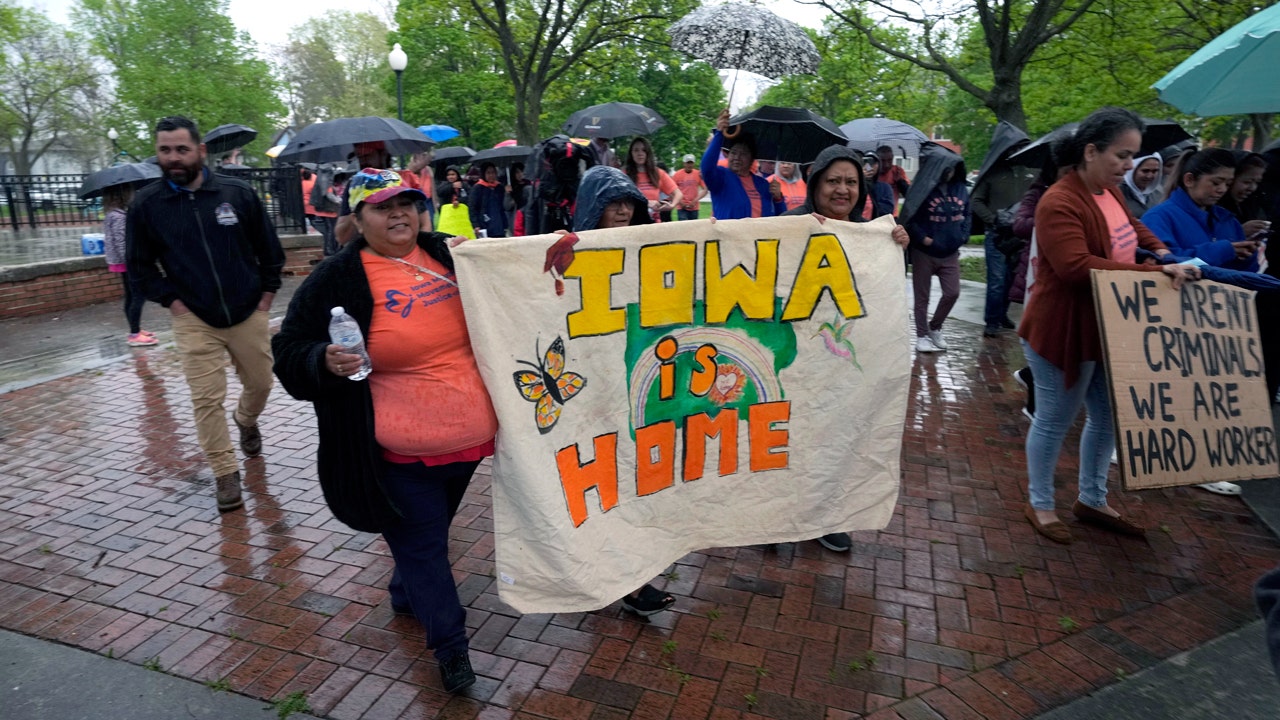
The U.S. Department of Justice has informed Iowa’s top officials that it plans to sue the state over a new law that makes it a crime for individuals to be in Iowa if they have previously been denied admission to the U.S. The DOJ argued that the law interferes with the federal government’s authority to enforce immigration law and has already sued Texas over a similar measure. Iowa Governor Kim Reynolds and Attorney General Brenna Bird have been notified that the DOJ intends to sue unless the state agrees by May 7 not to enforce the law.
Bird indicated that Iowa is unlikely to agree to the federal terms, stating that the state will not back down while their safety hangs in the balance. The law in question is similar to one in Texas that is currently on hold due to the Justice Department’s court challenge. Legal experts and some law enforcement officials have raised concerns about the Iowa law, suggesting that it raises similar questions to those brought up in the Texas case, as the enforcement of immigration law has traditionally been the responsibility of federal authorities. The Justice Department argued that the Iowa law violates the U.S. Constitution by effectively creating a separate state immigration scheme.
Scheduled to go into effect on July 1, the Iowa law allows for criminal charges to be brought against individuals with outstanding deportation orders or who have previously been removed from or denied admission to the U.S. Once in custody, migrants can either agree to a judge’s order to leave the U.S. or face prosecution. The law has caused increased anxiety in Iowa’s immigrant communities, leading to protests in Des Moines and other cities. Republican lawmakers across the country have criticized President Joe Biden, accusing him of neglecting his duty to enforce federal immigration law. Governor Reynolds stated that the reason the law was passed was due to the Biden Administration’s refusal to enforce existing laws.
The fight over Iowa’s new immigration law highlights the ongoing tensions between states and the federal government over immigration policy. The federal government argues that the state law interferes with its authority to enforce immigration laws, while state officials maintain that they are taking necessary measures to protect their citizens in the absence of federal action. The Iowa law, which allows local authorities to arrest individuals with certain immigration statuses, has sparked controversy and drawn criticism from advocates who argue that it violates constitutional rights and undermines the federal government’s role in immigration enforcement. The state’s refusal to back down in the face of a potential lawsuit from the Justice Department indicates that this legal battle is far from over.
As the deadline for the state to agree not to enforce the law approaches, the rift between Iowa and the federal government is likely to deepen. The outcome of this conflict will have far-reaching implications for both Iowa and the broader national debate on immigration policy. With immigration remaining a divisive issue in American politics, the clash between federal and state authorities over the Iowa law reflects the challenges of finding a comprehensive and cohesive approach to immigration enforcement. As both sides dig in their heels, the legal battle that looms on the horizon will shape the future of immigration policy in Iowa and beyond.