




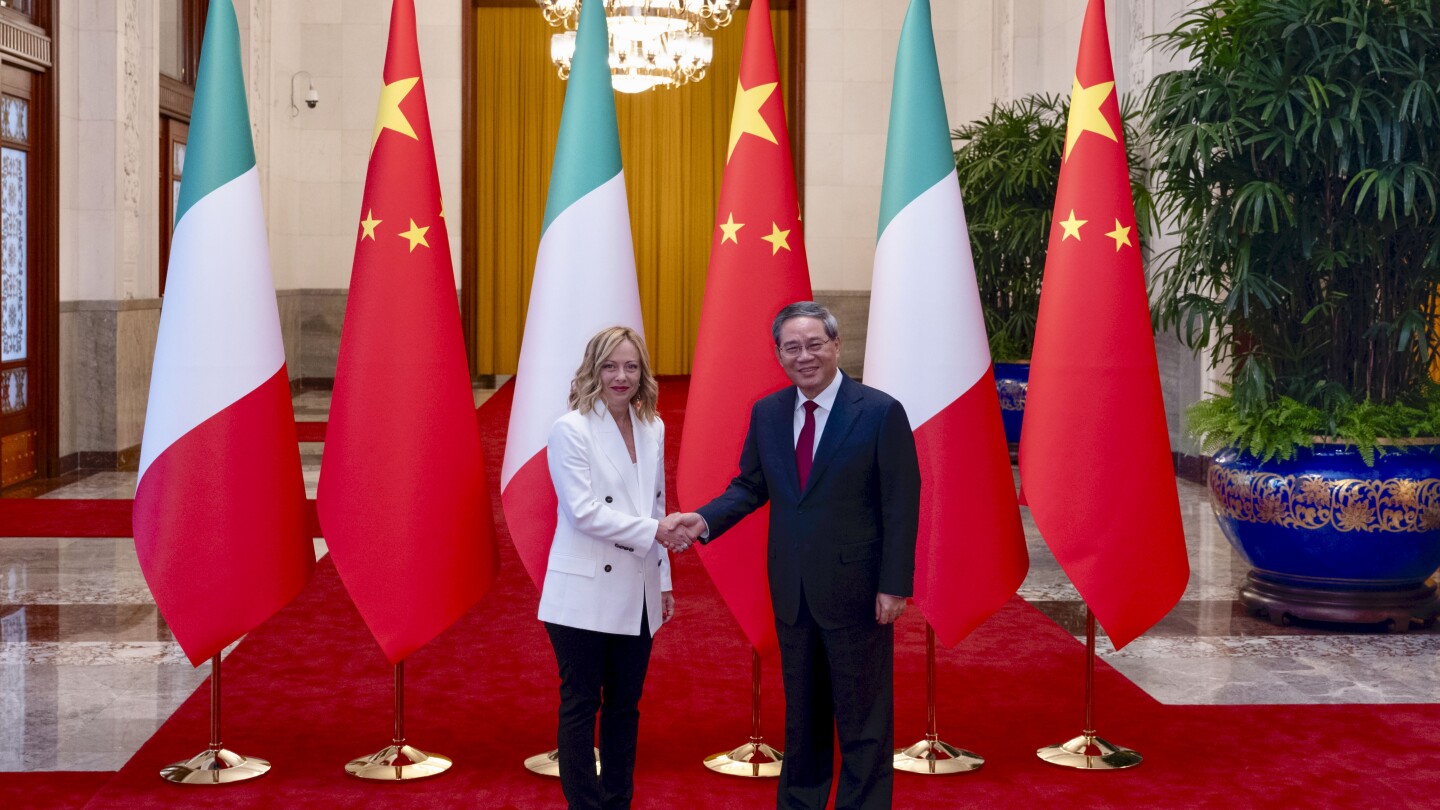
Italy and China signed a three-year action plan to implement past agreements and experiment with new forms of cooperation, as Italian Prime Minister Giorgia Meloni visited Beijing. The aim is to reset relations with China amid fears of a trade war with the European Union while also seeking Chinese investment in sectors such as auto manufacturing. This comes after Italy dropped out of China’s Belt and Road Initiative, but remains interested in maintaining a strong economic relationship. Stellantis, a major automaker that includes Italy’s Fiat, formed a joint venture with a Chinese electric car startup to sell EVs in Europe.
During a meeting with Chinese Premier Li Qiang, Meloni discussed the importance of the work to be done in such a complex global phase and at a multilateral level. Li assured Italian and Chinese business leaders that China’s efforts to upgrade its economy will create more opportunities for cooperation between companies from both countries. He also promised to open Chinese markets further, treat foreign companies equally to Chinese ones, and ensure a transparent and predictable business environment, addressing common complaints from businesses operating in China.
Meloni announced the signing of an industrial collaboration memorandum encompassing electric vehicles and renewable energy, areas where China has been pioneering technological advancements and sharing knowledge with partners. Electric vehicles have become a symbol of growing tensions between China and the EU, with the EU imposing provisional tariffs on China-made electric vehicles and China launching an anti-dumping investigation into European pork exports. Talks are ongoing to resolve these issues by an early November deadline.
The visit marks Meloni’s first trip to China as prime minister, with discussions focusing on industrial collaboration and efforts to maintain a fair and non-discriminatory business environment for both Chinese and Italian companies. Italy’s decision to join the Belt and Road Initiative in 2019 was seen as a political win for China but has since led to strained relations with other Western European governments and the United States. Despite this, Italy remains committed to pursuing economic cooperation with China and exploring new avenues for partnership in various sectors.
The meeting between Meloni and Li underscores the importance of fostering stronger economic ties between Italy and China, despite past challenges and geopolitical tensions. Both leaders emphasized the need for cooperation and mutual benefit in areas like electric vehicles and renewable energy. While trade disputes continue between China and the EU, efforts are being made to address these issues through dialogue and negotiation. The visit serves as an opportunity for both countries to deepen their economic partnership and explore new opportunities for collaboration in emerging industries. Italy’s approach to engaging with China reflects a strategic effort to balance economic interests with the need for a fair and transparent business environment for all parties involved.