



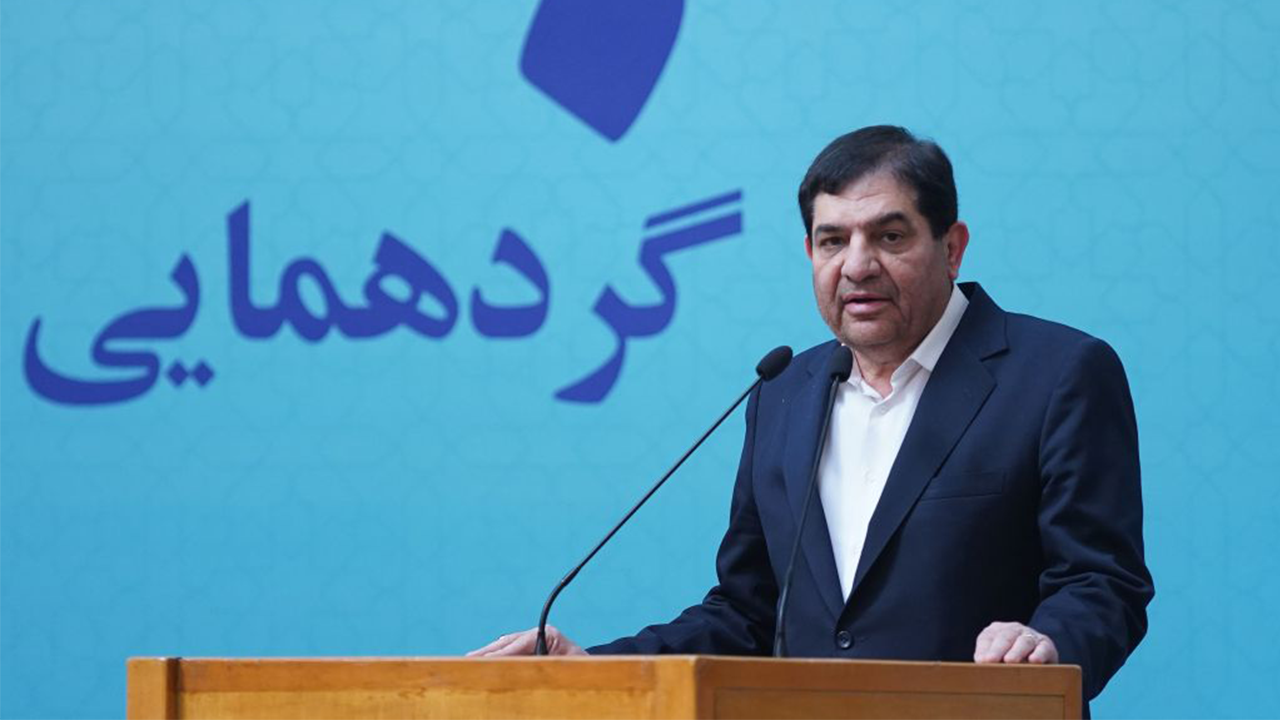
Iran’s Supreme Leader Ali Khamenei confirmed First Vice President Mohammad Mokhber as interim head of the country’s executive branch following the death of President Ebrahim Raisi in a helicopter crash. Raisi, along with Foreign Minister Hossein Amir-Abdollahian and other officials, were confirmed dead after the helicopter they were in crashed into a mountainous region in northwest Iran. The officials were traveling in Iran’s East Azerbaijan province when the helicopter made a hard landing, according to Iranian media. The governor of the East Azerbaijan province and other officials were also aboard the helicopter.
Mokhber has been appointed to manage the executive branch and is obligated to work with the heads of the legislative and judicial branches to elect a new president within a maximum of 50 days, according to Khamenei. The Supreme Leader also declared five days of public mourning following Raisi’s unexpected death. Iran now has a maximum of 50 days to hold a presidential election to select Raisi’s successor. Article 131 of Iran’s constitution states that a council consisting of the first vice president, the speaker of parliament, and the head of the judiciary must prepare for the election of a new president.
The helicopter crash involving Raisi, Amir-Abdollahian, and other officials has shaken Iran, resulting in the need for Mokhber to step in as the interim head of the executive branch. The sudden loss of Raisi, who was elected as president in 2021, has created a void in leadership that needs to be filled within the prescribed 50-day period through the election of a new president. The tragic incident has led to a period of national mourning in Iran as the country comes to terms with the loss of key political figures.
The appointment of Mokhber as interim head of the executive branch comes at a time of transition and uncertainty in Iran following Raisi’s death. As Mokhber takes charge, he is tasked with overseeing the process of electing a new president in collaboration with other branches of government. The selection of a new president within the specified timeframe will be crucial for maintaining stability and continuity in Iran’s political leadership. The tragic circumstances surrounding Raisi’s death have placed additional pressure on the government to ensure a smooth transition of power.
Iran’s constitution provides a clear framework for the selection of a new president in the event of a vacancy, as outlined in Article 131. The council responsible for orchestrating the election of a new president consists of key government officials, including the first vice president, the speaker of parliament, and the head of the judiciary. This process is designed to ensure a systematic and orderly transition of power, allowing for the continuation of governance in the face of unexpected events such as Raisi’s passing.
The sudden and tragic death of President Raisi in a helicopter crash has sent shockwaves through Iran, prompting the implementation of emergency measures to address the leadership vacuum. The appointment of Mohammad Mokhber as interim head of the executive branch signals a period of transition and uncertainty as Iran prepares to elect a new president within the next 50 days. The country is mourning the loss of key political figures and grappling with the task of selecting a successor to lead the nation during this challenging time. The process of choosing a new president will be a critical step in ensuring the continuity of governance in Iran.