



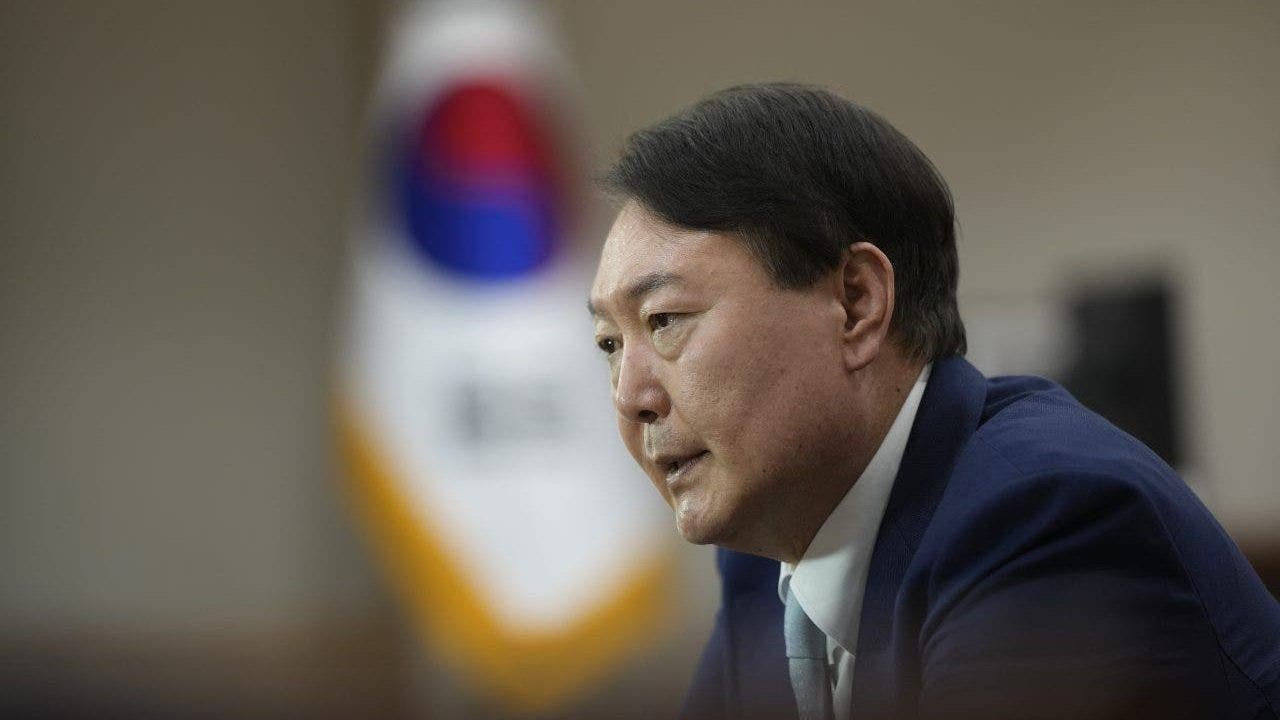
Following his impeachment last month, South Korean President Yoon Suk Yeol faced an attempted arrest by investigators from the country’s anti-corruption agency. The investigators were blocked from entering the president’s official residence for nearly six hours by the presidential security service. Yoon has been defiant in failing to respond to investigators’ attempts to question him since his impeachment. Yoon was impeached after declaring martial law and dispatching troops to surround the National Assembly, a move that was quickly overturned by parliament. The court issued a warrant for Yoon’s detention, but enforcing it is difficult as long as he remains in his official residence due to a law protecting locations potentially linked to military secrets.
Yoon’s lawyers challenged the warrant for his detention, citing the law protecting his residence from search without consent related to potential military secrets. The office has not immediately indicated whether they will make another attempt to detain Yoon. If investigators manage to arrest Yoon, they will likely seek court permission for formal arrest or release him after 48 hours if not. Thousands of police officers gathered outside Yoon’s residence, along with pro-Yoon protesters, in support of the impeached president. There were no reports of major clashes as multiple lawyers attempted to enter the residence to assist Yoon during the standoff between investigators, police, and presidential security forces.
Yoon’s presidential powers have been suspended since his impeachment, and the fate of his presidency now rests with the Constitutional Court. The court will deliberate on whether to uphold the impeachment and formally remove Yoon from office or reinstate him. A vote of at least six Justices out of the nine-member Constitutional Court is needed to remove him from office. Yoon’s actions, which led to his impeachment, were seen as a reaction to his policies being blocked by an opposition-dominated parliament. The unfolding political crisis in South Korea has seen Yoon at the center of investigations by anti-corruption authorities and public prosecutors.
Yoon’s refusal to leave his residence to face questioning has intensified the standoff between investigators and his legal team. The warrant for his detention remains valid for one week, leaving the possibility of further attempts to detain him. Yoon’s supporters have gathered outside his residence in a show of solidarity, despite the subfreezing temperatures. The situation remains tense as investigators and police confronted the presidential security forces, highlighting the deepening political crisis in South Korea. Yoon’s insistence on fighting efforts to oust him has marked his response to his impeachment and the investigations against him.
The dramatic standoff between investigators and Yoon’s presidential security forces underscores the tumultuous political climate in South Korea following the president’s impeachment. The power struggle between Yoon’s supporters and those seeking to remove him from office has played out in a series of confrontations and legal challenges. The Constitutional Court’s deliberations on Yoon’s impeachment will determine the future of his presidency and the stability of the country. As the investigations into Yoon’s actions continue, the outcome of the standoff at his official residence remains uncertain, reflecting the broader uncertainty and unrest in South Korean politics.