




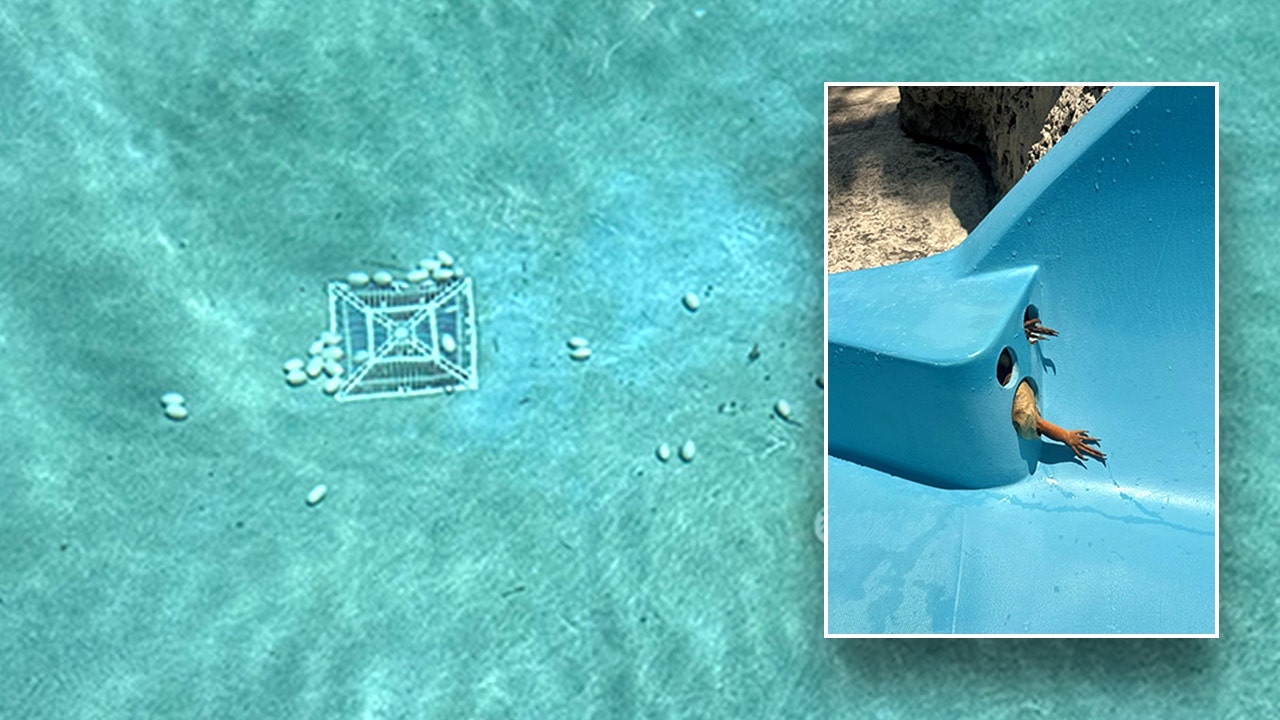
In South Florida, iguanas have been laying eggs in unusual places, causing concern for local residents. Recently, a female iguana was found inside a water slide at a Miami resort, where she laid over two dozen eggs before escaping. Michael Ronquillo of Humane Iguana Control shared that during breeding season, which typically occurs from February to March, iguanas become more creative with their nesting selections, often choosing human-made structures like pools, artificial turf, and cars. It is not uncommon for female iguanas to lay up to 70 eggs annually, leading to potential infestations.
Humane Iguana Control was called to the resort to remove the iguana and her eggs, but this is not an isolated incident. Iguanas have been causing problems in South Florida in recent years, becoming more invasive and destructive, even destroying personal property. Ronquillo warns that approaching these reptiles in the wild can have serious consequences, as they have sharp nails, teeth, and tails that can whip at speeds up to 30 mph. Additionally, iguanas can carry ticks, mites, and salmonella, posing health risks to humans.
If you encounter an iguana in the wild, it is best to call the appropriate authorities rather than trying to approach or handle the animal yourself. Ronquillo advises refraining from interacting with invasive reptiles to avoid bodily harm and health risks. Iguanas have become a nuisance in South Florida, and it is important to take precautions to prevent infestations and protect personal property from their destructive behavior. By being aware of the risks associated with iguanas and reporting sightings to authorities, residents can help mitigate the impact of these invasive reptiles on the local environment.
The breeding season for iguanas in South Florida is a time when these reptiles can be particularly active and visible in urban areas. Female iguanas seek out suitable nesting spots to lay their eggs, which can lead to them choosing unusual locations like swimming pools and artificial turf. Humane Iguana Control has been responding to calls from concerned residents and businesses about iguanas nesting in unexpected places, highlighting the need for measures to manage and control the population of these invasive reptiles in the region.
In addition to the nuisance they cause by nesting in urban areas, iguanas can also pose health risks to humans. Ronquillo emphasizes that iguanas can carry diseases such as salmonella and parasites like ticks and mites, which can be transmitted to people through contact with the animals or their droppings. To minimize the potential for exposure to these health hazards, it is important for residents to avoid handling or approaching iguanas and to seek professional assistance in removing them from their properties. By taking proactive steps to address the presence of iguanas in the environment, individuals can help protect both themselves and the local ecosystem from the negative impacts of these invasive reptiles.
Ultimately, the increasing presence of iguanas in South Florida underscores the importance of effective management strategies to address the challenges posed by these invasive reptiles. From nesting in urban environments to causing damage to property and transmitting diseases, iguanas can have significant impacts on both human health and the local ecosystem. By implementing measures such as reporting sightings to authorities, seeking professional assistance in removal, and taking precautions to avoid contact with iguanas, residents can help mitigate these impacts and protect their communities from the negative effects of invasive species. Through proactive efforts to manage iguana populations and minimize their presence in urban areas, it is possible to reduce the risks associated with these reptiles and promote a healthier, safer environment for both humans and wildlife in South Florida.