




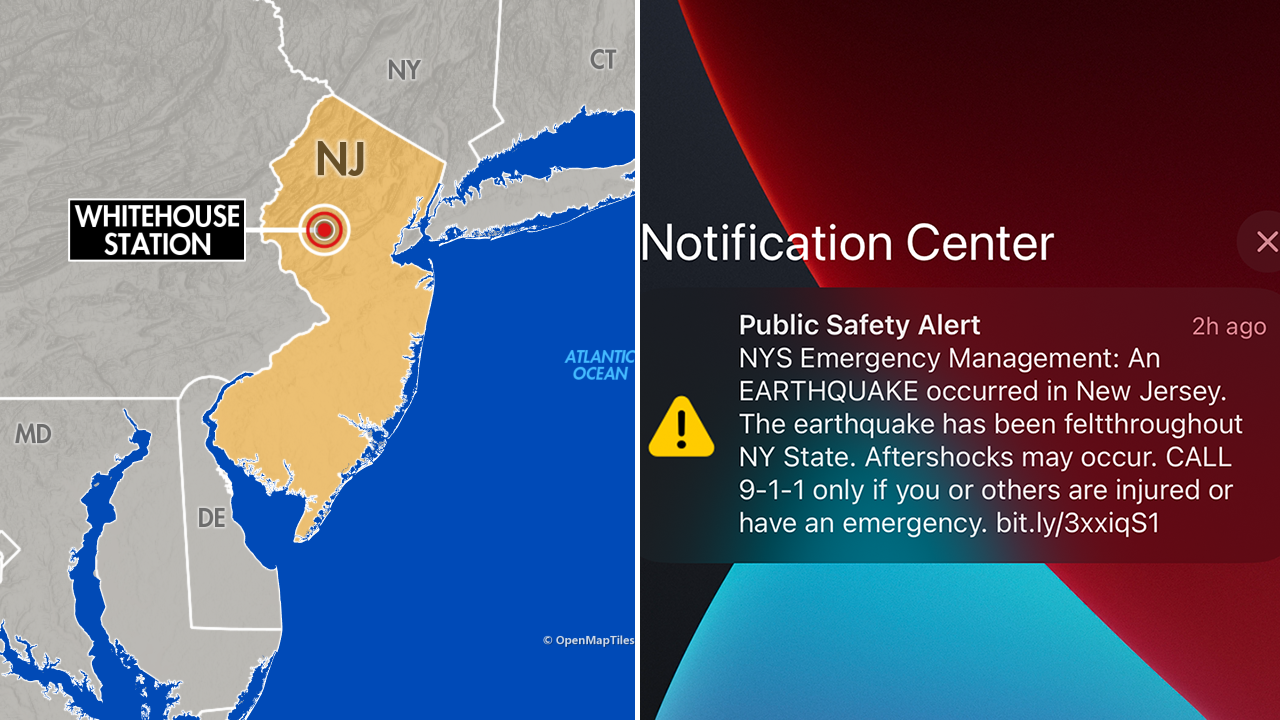
An earthquake with a preliminary magnitude of 4.7 struck New Jersey near Readington in Hunterdon County, leaving an estimated 42 million people feeling the seismic impacts across surrounding states. New York City Mayor Eric Adams confirmed that a 4.8 magnitude earthquake was felt in the city, with an epicenter in Lebanon, New Jersey. There were no major impacts or injuries reported at the time. The East Coast residents, who are not typically prepared for earthquakes, were advised on how to stay safe in the event of another tremor or an aftershock.
New York Gov. Kathy Hochul stated that this was one of the largest earthquakes to occur on the East Coast in the last century. She directed her emergency management team to start damage assessments immediately after receiving reports of the earthquake to prepare for potential aftershocks. A seismologist from Columbia University explained that earthquakes on the East Coast can be more devastating due to the geology of the region, where seismic waves can be felt at a greater distance. The American Red Cross provided safety tips and advised people to expect and prepare for aftershocks, watch out for fires, and protect themselves from falling debris.
The American Red Cross shared important tips on how to stay safe during an earthquake, including dropping to your hands and knees, covering your head and neck with your arms, and holding on until the shaking stops. It emphasized the importance of staying inside during an earthquake and not running outside or to other rooms. Securing items such as televisions, shelves, and water heaters to prevent injuries was also advised. The CDC recommended against standing in a doorway during an earthquake, as it does not provide protection from falling objects.
Following the earthquake, the New Jersey governor activated the State Emergency Operations Center and urged residents not to call 911 unless there was an actual emergency. The New York City mayor assured that first responders were working to ensure the safety of residents and that there were no major reports of impacts or injuries. The East Coast residents were encouraged to check on loved ones and follow safety tips in the event of an aftershock, which is a smaller earthquake following a larger one. The authorities were conducting inspections of critical infrastructure to address any potential issues.
Overall, the earthquake in New Jersey had a significant impact on more than 42 million people across surrounding states, with East Coast residents being urged to prepare for potential aftershocks. Safety tips provided by the American Red Cross and guidance from the CDC emphasized the importance of staying inside, protecting oneself from falling debris, and securing objects to prevent injuries during an earthquake. With the potential for aftershocks following a large tremor, both state and city officials were actively monitoring the situation and conducting assessments to ensure the safety of residents and infrastructure.