




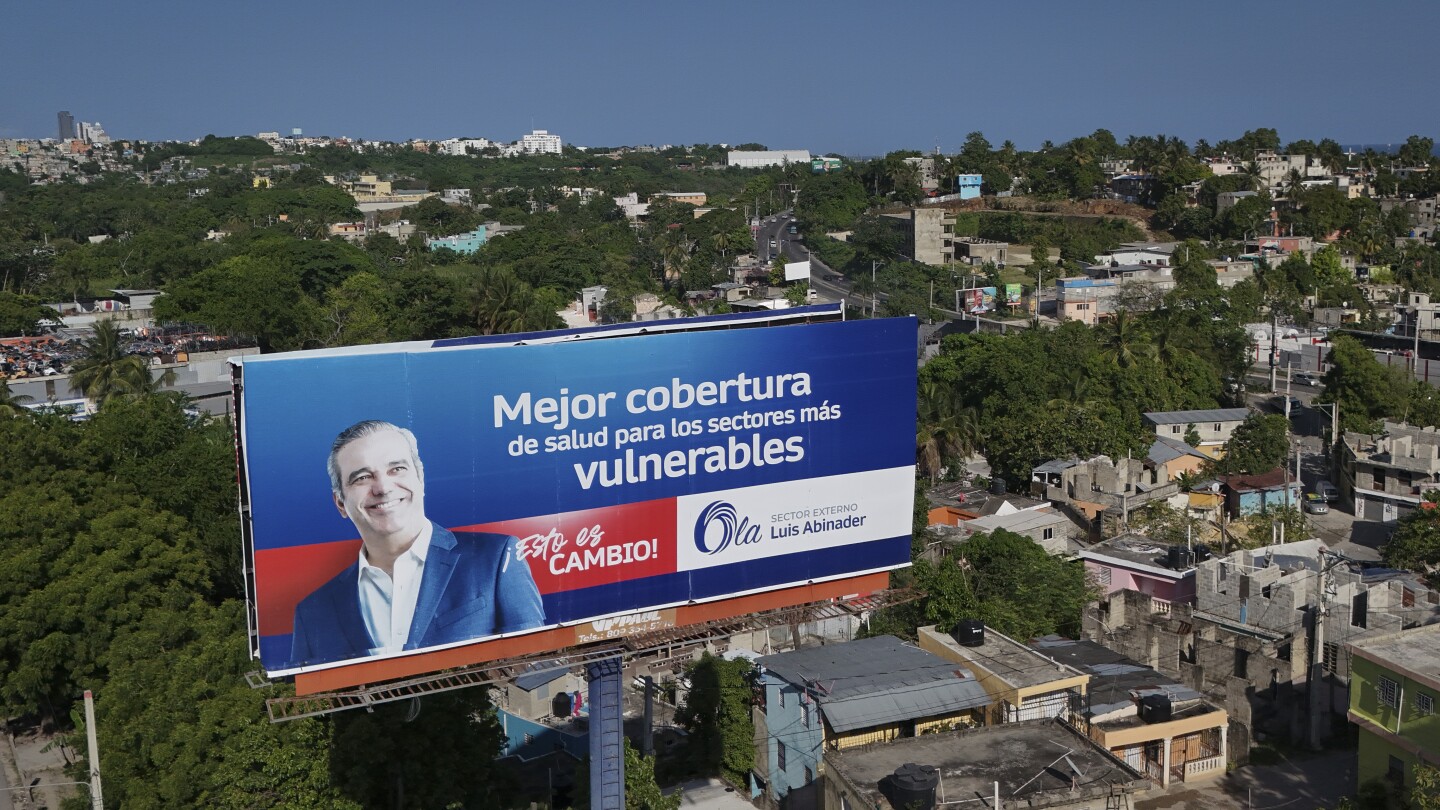
The Dominican Republic is gearing up for elections against the backdrop of escalating violence and political unrest in neighboring Haiti. President Luis Abinader is running for re-election and has made border security and crackdowns on migrants a central theme of his campaign. Abinader has already started building a border wall along Haiti’s border and conducted mass deportations of Haitians last year. His rivals, former President Leonel Fernández and Santiago Mayor Abel Martínez, have also called for stricter measures against migration, aligning with Abinader’s policies.
The crackdown on migrants by the Dominican government has drawn criticism from human rights groups, who argue that the policies are discriminatory and endanger vulnerable individuals. Despite the concerns, Dominicans seem to be supporting Abinader’s approach, with the incumbent expected to receive more than 50% of the vote needed to win in the first round. However, if no candidate reaches the 50% mark, a runoff between the top contenders will be held. The issue of migration is just one of the key electoral concerns for Dominicans, who also prioritize crime and corruption as pressing issues.
While some Dominicans support the government’s actions on migration, many Haitians living in the Dominican Republic fear for their safety amid the ongoing crackdown. Yani Rimpel, a Haitian businesswoman who has lived in the country for 20 years, expressed concerns about the uncertainty facing Haitian communities due to Abinader’s policies. She recounted a traumatic experience of immigration agents raiding her home and stealing her savings, leaving her without any means of support. The fear and uncertainty among Haitians in the Dominican Republic highlight the plight of migrants caught in the crossfire of political decisions.
Haiti, reeling from the assassination of President Jovenel Moïse and subsequent violence, is facing deepening turmoil as gangs battle for power and violence escalates. The political vacuum left by Moïse’s death has added to the instability in the country, prompting many to flee their homes in search of safety. The transition council tasked with choosing Haiti’s new leaders offers a glimmer of hope for easing some of the country’s challenges, but the road ahead remains uncertain. The violence and instability in Haiti have prompted many to seek refuge in neighboring countries like the Dominican Republic and the United States, exacerbating tensions and generating fear among migrant communities.
The interconnected fates of Haiti and the Dominican Republic underscore the complex relationship between the two countries that share the island of Hispaniola. The upcoming elections in the Dominican Republic will not only shape the future of the country but also have implications for the broader region. As political dynamics and security challenges evolve in Haiti, the Dominican government’s policies on migration will continue to impact the lives of migrants and Haitian communities living in the country. The debates around border security and migration reflect deeper societal issues around crime, corruption, and governance that will shape the course of the region in the years to come.