




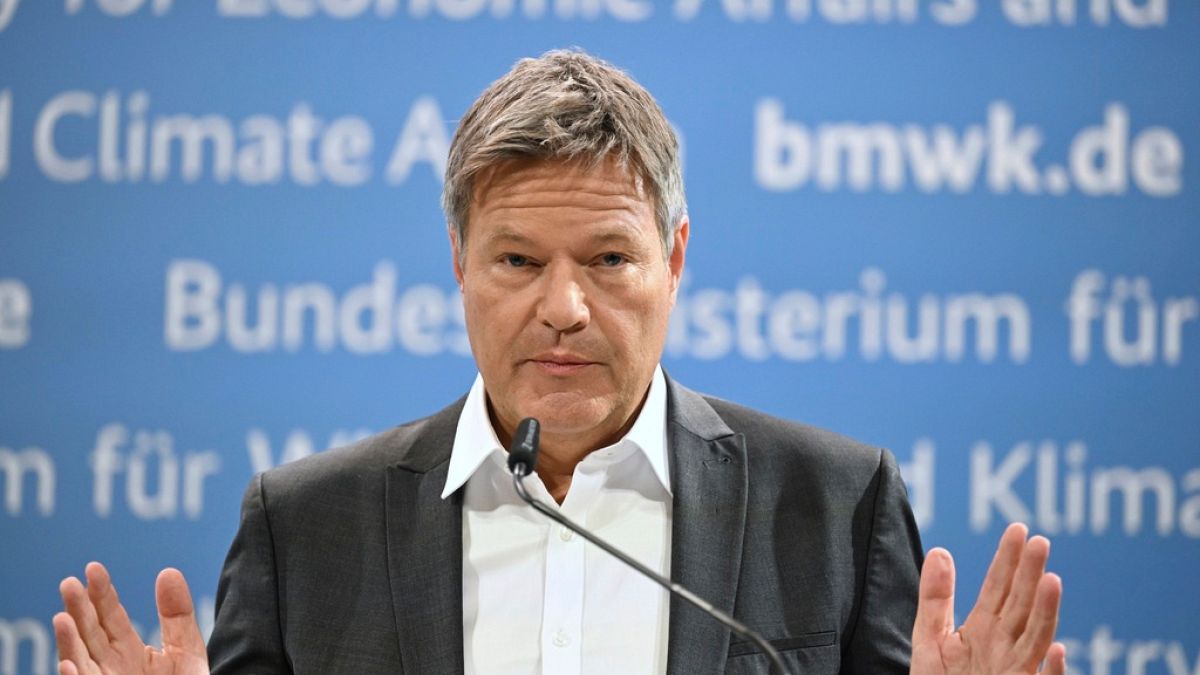
The German Deputy Chancellor and Economy Minister Robert Habeck is expected to announce his candidacy for the country’s top job on Friday on behalf of the Greens. This comes as Chancellor Olaf Scholz faces pressure to call early elections following the collapse of his ruling coalition. The coalition, consisting of the Greens, the Social Democratic Party (SPD), and the Free Democratic Party (FDP), saw its popularity plummet, with only 14% public satisfaction as of October, the lowest rating in decades. Tensions within the coalition reached a breaking point when Scholz fired his finance minister Christian Lindner, leading the FDP to withdraw its ministers from the coalition. Habeck, who is also the Minister for Economic Affairs and Climate Protection, announced that his ministers would remain in the coalition until a no-confidence vote and subsequent elections were called. The CDU and its leader Friedrich Merz have called for a vote of no confidence, with support for early elections high among the German public.
Despite Scholz setting the date for a confidence vote for January 15, the CDU is pushing for an earlier vote, with negotiations between Scholz and Merz ending in a stalemate. The lack of a parliamentary majority for Scholz raises questions about how he would govern in the interim, as he would need the support of individual parties to pass laws. Calls for immediate new elections from various opposition parties further emphasize the uncertainty facing the German government. Experts warn that without a clear mandate in parliament, Germany may struggle to show leadership both domestically and internationally. Jane Puglierin, a senior policy fellow at the European Council on Foreign Relations, highlighted that if new elections are not called before the end of March, Germany would not have a fully functioning government with its own majority until June, impacting its ability to take a leading role in European affairs.
The potential candidacy of Habeck for the chancellorship has been met with skepticism, with Friedrich Merz of the CDU dismissing it due to the Green party’s low polling numbers. However, the ongoing political crisis and the collapse of the ruling coalition have created an opening for new leadership. The failure of the current coalition to maintain public support has left the government in a vulnerable position, with pressure mounting for early elections to address the instability. Scholz’s decision to fire Lindner and the subsequent withdrawal of the FDP from the coalition have further complicated the political landscape, leading to calls for a vote of no confidence and the need for new elections to establish a legitimate government. The uncertainty surrounding the government’s ability to govern in the interim raises concerns about Germany’s capacity to provide leadership on both domestic and international issues.
The collapse of the ruling coalition and the subsequent political crisis have created a sense of urgency for new leadership in Germany. Habeck’s expected announcement of his candidacy for the chancellorship reflects the need for a change in direction amidst plummeting public satisfaction with the current government. Calls for early elections have gained traction, with the majority of the German public expressing support for a swift resolution to the political uncertainty. The inability of Scholz to govern effectively in the interim without a parliamentary majority raises questions about Germany’s ability to provide stable leadership both domestically and on the international stage. The ongoing negotiations and potential no-confidence vote underscore the need for decisive action to address the current political turmoil and establish a new government that can command public trust and confidence.