




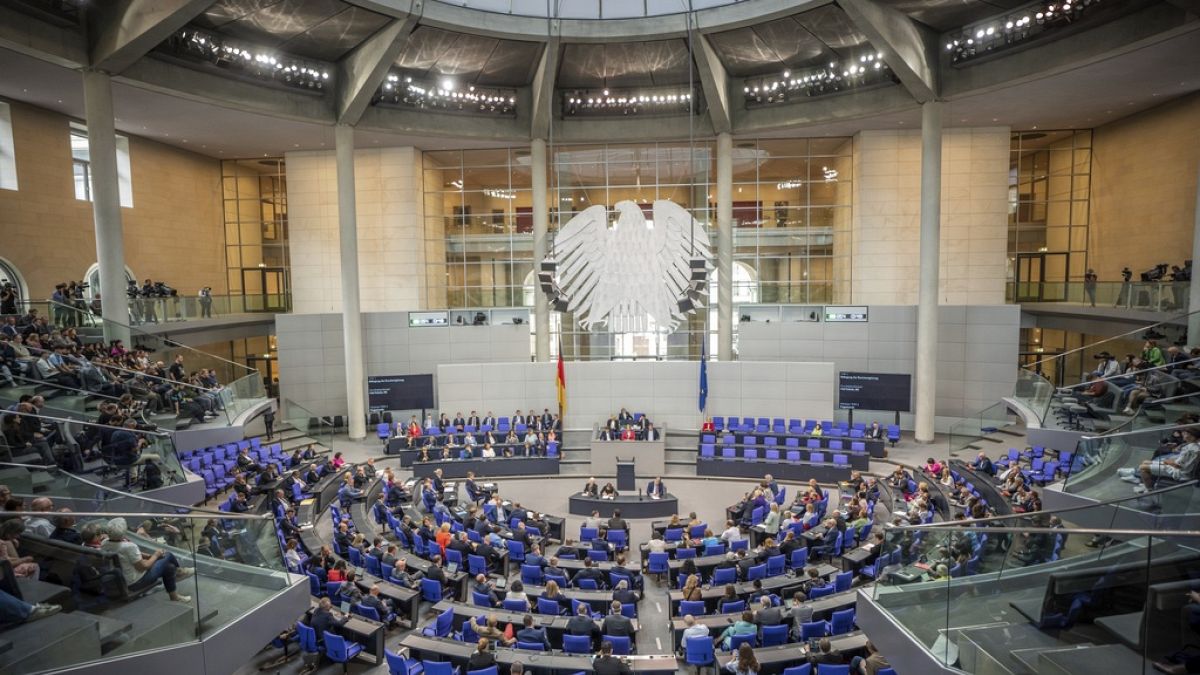
Germany’s highest court recently ruled on an electoral reform proposal aimed at downsizing the country’s parliament. The Federal Constitutional Court in Karlsruhe upheld the core elements of the reform, which include reducing the Bundestag from 736 members to 630, as well as eliminating overhang and compensatory mandates. However, the court overturned a planned change that would have disproportionately impacted smaller parties, known as the basic mandate clause. This clause required parties receiving less than 5% of the vote to be represented in the Bundestag if they had at least three directly elected lawmakers. The ruling came following objections from parties such as the Christian Social Union and the Left Party, who were concerned about losing their chance to send lawmakers to Berlin.
In the German electoral system, voters cast two votes: one for a directly elected candidate and one for a party list. Each of the country’s 299 constituencies elects a representative through a simple majority vote, while additional seats are allocated based on party lists. Under the old rules, if a party won more seats through direct votes than their party vote share would allow, they kept those seats, and additional seats were added for other parties to ensure proportional representation. However, this led to an increase in the number of lawmakers in the Bundestag. To address this issue, lawmakers approved a plan to cap the size of the chamber at 630 members starting with the next general election in September 2025. The Supreme Court upheld this aspect of the electoral reform, despite concerns from smaller parties regarding representation in parliament.
The court’s ruling also eliminated a provision that allowed parties with less than 5% support to receive seats if they had at least three directly elected lawmakers. This change was particularly contentious for the Christian Social Union, which only operates in Bavaria and is subject to the 5% threshold despite its dominance in that state. The Left Party also expressed dissatisfaction with the ruling, as they fell short of the 5% threshold in the 2021 election but still secured a full parliamentary group due to their three directly elected lawmakers. CSU leader Markus Söder hailed the court’s decision as a “success for Bavaria and a slap for the national government,” emphasizing the need for further reforms to the electoral system.
Despite the overturned clause, Bundestag speaker Bärbel Bas of the Social Democrats welcomed the court’s decision as a validation of the core aspects of the electoral reform. She highlighted that capping the Bundestag at 630 members sends an important signal to voters that there will be no more uncontrolled growth in the parliament. The ruling ensures that the new system, which includes no additional seats, will be implemented for the upcoming general election in 2025. The decision from the court is seen as a compromise between the need to reduce parliament’s size and the concerns of smaller parties about representation in the Bundestag. Lawmakers across the political spectrum have long debated how to address the issue of the bloated parliament, and the court’s ruling provides clarity on the path forward for electoral reform in Germany.
In conclusion, the recent ruling by Germany’s highest court on the electoral reform proposal has upheld key elements of downsizing the parliament, while overturning a planned change that would have disproportionately impacted smaller parties. The decision to cap the Bundestag at 630 members and eliminate overhang and compensatory mandates addresses the issue of the bloated parliament and ensures more proportional representation. However, the contentious provision regarding parties with less than 5% support will no longer be in effect, affecting parties like the Christian Social Union and the Left Party. The court’s ruling reflects a compromise between reducing parliament’s size and ensuring fair representation for all parties, setting the stage for the upcoming general election in 2025.