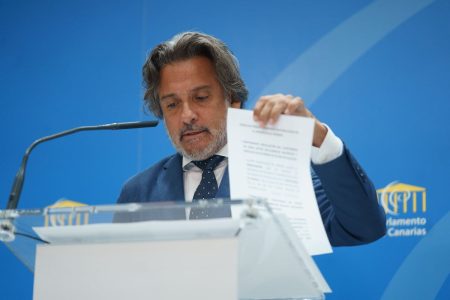






A court in Germany convicted prominent far-right politician Björn Höcke of knowingly using a Nazi slogan in a speech and ordered him to pay a fine of approximately $14,000. The charge could have carried a maximum sentence of three years in prison, but prosecutors had sought a six-month suspended sentence. The case revolved around a speech in which Höcke used the phrase “Everything for Germany!” Prosecutors argued that he was aware of its origin as a Nazi slogan, but Höcke maintained that it was an “everyday saying.” The court found that he was aware the formulation was a banned SA slogan and described him as an articulate and intelligent man who knows what he is saying.
Höcke, who is 52 years old, is an influential figure on the hard right of the Alternative for Germany (AfD) party, serving as the leader of the AfD’s regional branch in Thuringia since 2013. He is set to lead the party’s campaign in a state election scheduled for September 1. Höcke has stirred controversy in the past by calling the Holocaust memorial in Berlin a “monument of shame” and advocating for a change in how Germany remembers its history. Despite a party tribunal’s decision in 2018 to reject a motion to expel him, prosecutor Benedikt Bernzen argued that Höcke has used Nazi vocabulary strategically and systematically in the past.
The conviction of Höcke may not have a significant political impact on his ambitions, as it won’t have any direct legal effect on his candidacy. AfD has a strong presence in Germany’s formerly communist east, where Thuringia is located, but it is unlikely that other parties will be willing to work with Höcke and support his bid for governor. The Thuringia branch of AfD is among three regional branches under official surveillance as “proven right-wing extremist” groups by the domestic intelligence agency. A court ruling on Monday upheld the agency’s decision to put the entire party under observation for suspected extremism, which AfD has denounced as a political ploy.
Höcke has maintained his innocence throughout the trial, describing himself as a law-abiding citizen and arguing that his freedom of opinion is limited in Germany. He accused prosecutors of neglecting to consider any exonerating circumstances in his case. Despite his conviction, it remains uncertain how it will impact his standing within AfD and his candidacy in the upcoming election. The ruling may serve as a symbolic victory against the use of Nazi language in political discourse, but it underscores the ongoing challenges facing Germany in addressing far-right extremism and shaping its collective memory of the past.