



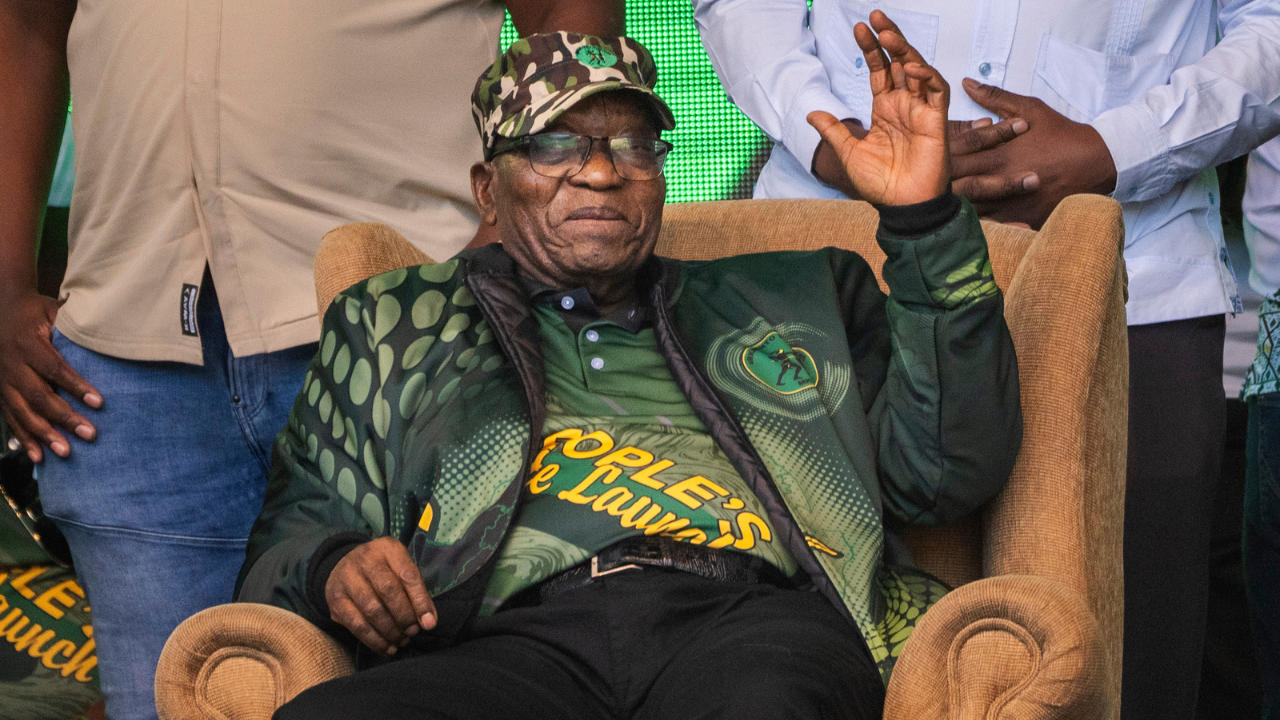
Former South African President Jacob Zuma was disqualified from the upcoming national election due to a prior criminal conviction by the Constitutional Court. Zuma’s conviction for contempt, resulting in a 15-month prison sentence, triggered his disqualification under a constitutional provision that prohibits individuals who have been sentenced to more than 12 months in prison without the option of a fine from running for office. As a result, Zuma is ineligible to stand for Parliament for five years after completing his sentence.
The decision by the Constitutional Court to disqualify Zuma from the election is expected to raise political tensions ahead of the pivotal vote. Zuma, who served as South African president from 2009-2018, resigned under a cloud of corruption allegations. Despite his disqualification from the election, Zuma has made a return to politics with a new party and has been critical of the ruling African National Congress party, which he once led. The election is anticipated to be a tough test for the ANC, which has been in power for 30 years since the end of apartheid. There is a possibility that the ruling party could lose its majority, resulting in the formation of a national coalition government for the first time in South Africa’s history.
Zuma’s new MK Party is expected to attract support from some parts of the country due to his popularity, potentially eroding the ANC’s vote share. Additionally, Zuma was in line to make a contentious return to Parliament six years after being forced to step down as president by the ANC following allegations of widespread government corruption during his tenure. Zuma is also facing corruption charges in a separate case, with his trial scheduled to begin in April. Despite pleading not guilty, his legal troubles continue to overshadow his political ambitions.
The case over Zuma’s disqualification from the election stemmed from his refusal to testify at a judicial inquiry into government corruption, which led to his contempt conviction. The Constitutional Court’s ruling overturned an earlier decision by the Electoral Court, which had granted Zuma the right to run for office based on the lack of appeal options against his contempt ruling. With this latest ruling, Zuma is prohibited from seeking a position in Parliament for the next five years following the completion of his sentence, further complicating his political future.
The decision to disqualify Zuma from the election is likely to have far-reaching implications for South African politics, particularly as the country faces significant challenges related to corruption, economic inequality, and governance. With Zuma’s disqualification, the election landscape is set to change, potentially leading to a shift in power dynamics and the emergence of new political alliances. As the country prepares to vote in a closely watched election, the disqualification of a former president highlights the ongoing struggle to address systemic issues of corruption and accountability within South Africa’s political system.
Zuma’s disqualification comes at a critical moment for South Africa, as the country grapples with the legacy of apartheid and strives to build a more inclusive and equitable society. The upcoming election will test the resilience of the ruling party, while also presenting an opportunity for new voices and perspectives to emerge in the political arena. Zuma’s legal and political battles continue to captivate public attention, underscoring the complexities of governance and accountability in a country that is still grappling with the challenges of its past.