




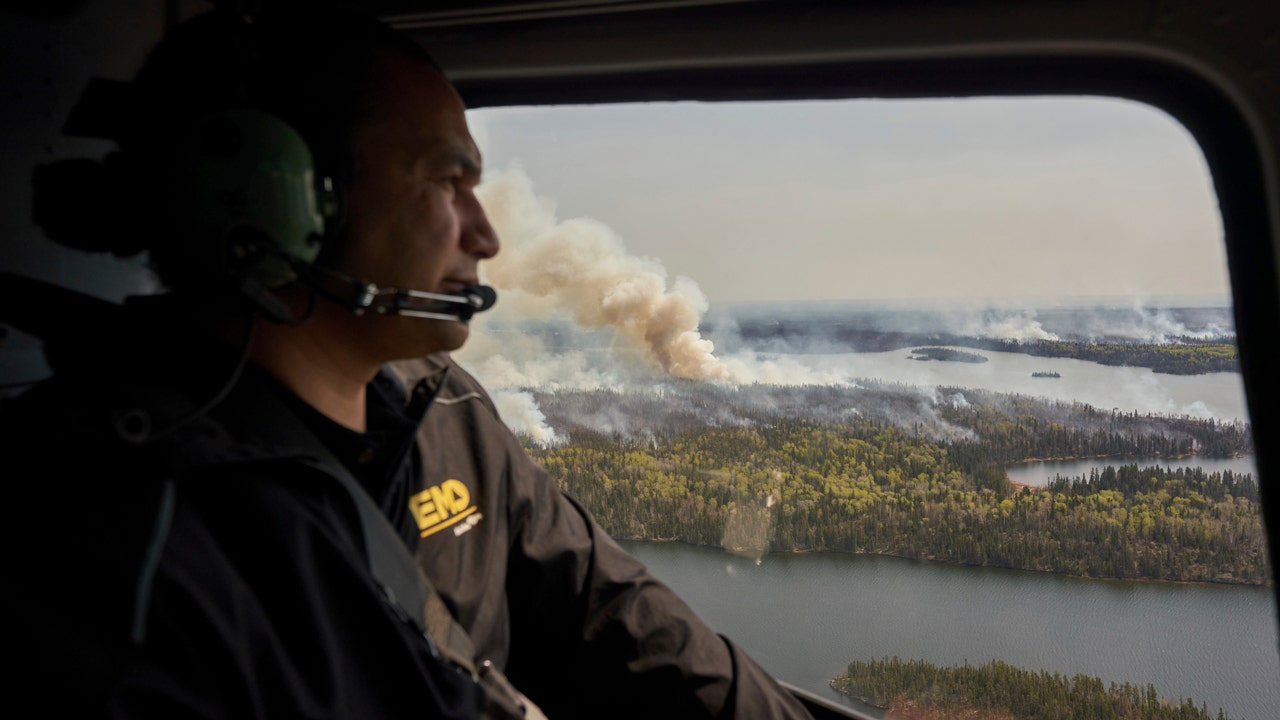
The threat from a wildfire near Canada’s oil sands hub of Fort McMurray, Alberta, appeared to be easing on Wednesday, leading to the evacuation of thousands of residents. Favorable winds were expected to push the fire away from the city of about 68,000, relieving concerns in a region where many residents work in the nearby oil industry. This fire comes as Canada enters a new fire season after record wildfires last year forced more than 235,000 Canadians to evacuate as smoke blanketed parts of the U.S. But there is no clear indication that smoke will be as big of an issue this year as last year, due to different weather patterns.
The city of Fort McMurray has seen this type of devastation before, with a catastrophic blaze in 2016 destroying thousands of homes and causing the evacuation of over 80,000 people. Jay Telegdi, who lost his home during that fire, described the current situation as apocalyptic, with the sky turning orange and black and smoke blocking out the entire sky. Despite the impact of wildfires, the city continues to thrive on oil production, contributing to Canada’s status as the fourth-largest oil producer and fifth-largest gas producer in the world.
Wildfires in Canada last year burned a larger area than the state of New York, releasing emissions nearly three times that of the country’s entire economy in a year and sending dangerous air quality south to U.S. cities. Factors such as drought, higher temperatures, and “zombie fires” from the previous year are contributing to the ongoing wildfire season in Western Canada. Oil-rich provinces like Alberta face challenges balancing revenue from the fossil fuel industry with environmental protection and climate change commitments.
Evacuation orders remain in place in Fort McMurray, with fire officials expecting them to last until at least Tuesday, although operations outside the city for companies like Suncor Energy have not been impacted. In British Columbia, a low-pressure system moving into the province is expected to help dampen activity at a blaze near Fort Nelson that has forced several thousand people to evacuate. In Manitoba, a large fire in the northwestern community of Cranberry Portage is about 80% contained, with residents potentially returning home this weekend.
The issue of climate change and the impacts of the fossil fuel industry on the environment are also coming to the forefront in Canada, with criticism directed at oil companies like Exxon Mobil and Shell for not being forthright with communities like Fort McMurray about the consequences of peak CO2 levels. The country is grappling with the balance of economic benefits from oil production with the risks of intensifying wildfires and climate change. As the 2024 wildfire season in Canada approaches, experts are closely monitoring the factors contributing to the fires, such as weather patterns, drought, and the impact of previous years’ fires on new seasons.