





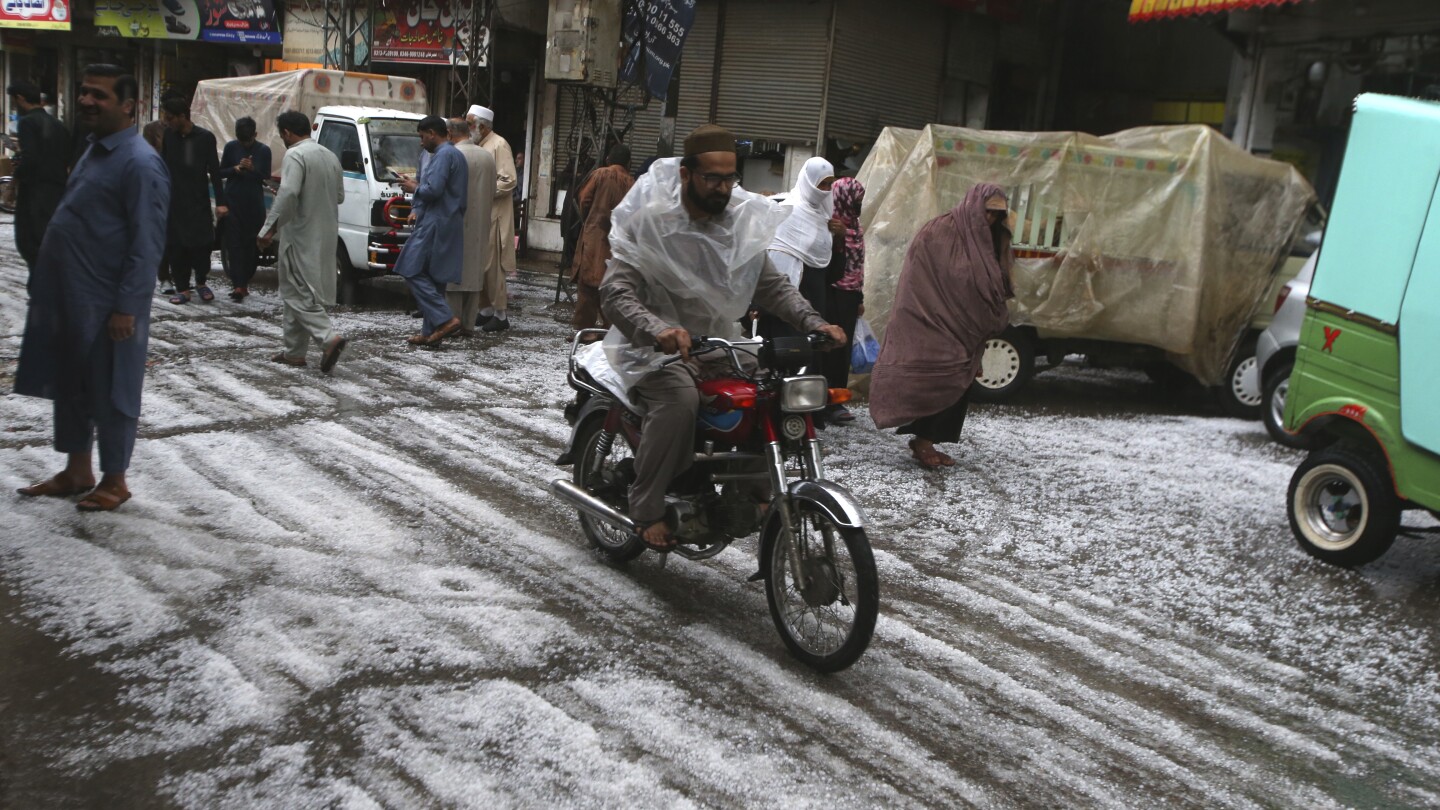
Heavy rains in Pakistan’s northwest have resulted in the deaths of eight people, mostly children, and injuries to 12 others. The heavy downpours caused rooms to collapse in different districts of Khyber Pakhtunkhwa province, crushing those inside. Anwar Shahzad, a spokesperson for the local disaster management authority, reported that three of the deceased were siblings between the ages of 3 and 7 from the same family. The casualties occurred in the last 24 hours, highlighting the devastating impact of the delayed winter rains that began in February this year instead of November as usual. Monsoon and winter rains are known to cause damage in Pakistan every year, with earlier incidents this month resulting in around 30 deaths in the northwest.
Meanwhile, across the border in Afghanistan, heavy rainfall on March 29 and 30 caused widespread destruction. More than 1,500 acres of agricultural land were destroyed, and hundreds of homes and critical infrastructure such as bridges and roads were severely damaged in seven provinces, according to the U.N. Office for the Coordination of Humanitarian Affairs. The provinces most affected by the heavy rainfall include northern Faryab, eastern Nangarhar, and central Daikundi. The northern region has experienced flooding for the third time in less than a month, resulting in seven deaths and affecting 384 families. The situation underscores the urgent need for humanitarian assistance to help those affected by the ongoing natural disasters in the region.
The impact of heavy rains in the region has been devastating, with the loss of lives and damage to property and infrastructure. In Pakistan, the delayed onset of winter rains this year has caught many off guard, leading to tragic incidents such as the recent deaths of children in collapsing rooms. The government and humanitarian agencies are working to respond to the crisis and provide assistance to those affected. In Afghanistan, the repeated flooding in the northern region has exacerbated the already challenging situation, with hundreds of families coping with the loss of livelihoods and homes.
The U.N. agency has called for international support to address the humanitarian crisis in Afghanistan and Pakistan. The ongoing natural disasters, including heavy rains and flooding, have taken a toll on communities in both countries, and urgent action is needed to provide relief and aid to those affected. The coordination of efforts between government agencies, humanitarian organizations, and international partners is crucial to ensuring a swift and effective response to the crisis. As the region continues to grapple with the aftermath of the heavy rains, the focus remains on meeting the immediate needs of those affected and supporting their recovery and rebuilding efforts.
The recent incidents of heavy rains and flooding serve as a stark reminder of the vulnerability of communities in South Asia to the impacts of climate change. The frequent occurrence of natural disasters, such as heavy rains and flooding, highlights the need for stronger disaster preparedness and mitigation measures in the region. Governments and organizations must work together to build resilience in communities and improve early warning systems to reduce the risk of future disasters. The impact of climate change is compounding the challenges faced by communities in Afghanistan and Pakistan, making it essential to prioritize sustainable development and climate adaptation strategies to protect lives and livelihoods in the long term.
As the region grapples with the aftermath of the heavy rains, the focus remains on providing immediate assistance to those affected and supporting their recovery efforts. The loss of lives and damage to property and infrastructure in Pakistan and Afghanistan underscore the urgent need for coordinated humanitarian assistance. The international community must come together to support the affected communities and help them rebuild their lives in the wake of the natural disasters. By working together to address the immediate needs and foster long-term resilience, we can mitigate the impact of climate change and ensure the well-being of vulnerable populations in the region.