





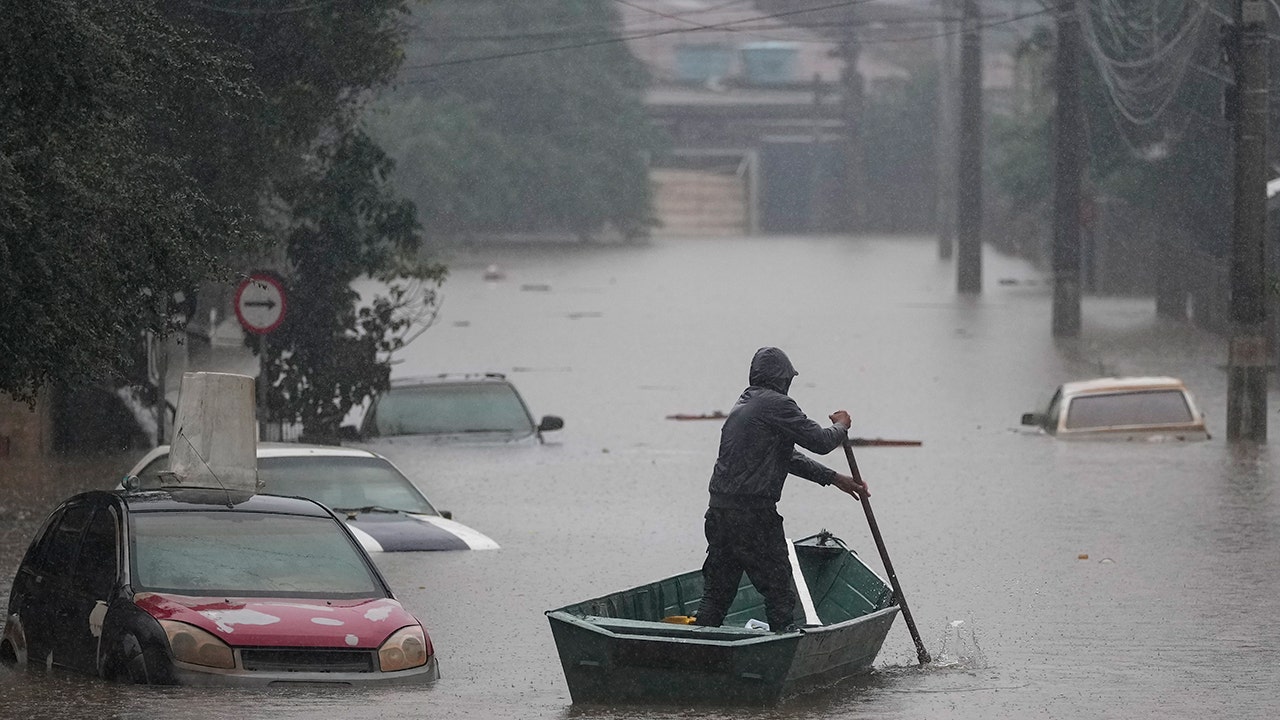
The recent flooding in Brazil’s Rio Grande do Sul state has caused unprecedented destruction, affecting almost all aspects of economic activity in the region. The environmental catastrophe has disrupted transportation, commerce, and agriculture, leading to significant financial losses. The governor of Rio Grande do Sul has called for a “Marshall Plan” to rebuild the state, but an exact strategy focusing on reducing the risks of future climate disasters is yet to be determined. The flooding has caused widespread devastation comparable to Hurricane Katrina and is expected to result in a significant economic downturn for the state.
The economic impact of the flooding is extensive, with most of the state’s municipalities affected and financial losses estimated at 10 billion reais. The disruption in economic activity has affected a wide range of industries, including manufacturing, agriculture, and services. The state’s economy had been growing before the disaster but is now forecasted to contract significantly, affecting not only the region but also the national economy. The rebuilding process is expected to take years, with many businesses facing challenges in returning to pre-flood levels of activity.
The human toll of the flooding is also significant, with hundreds of thousands of people displaced from their homes and a rising death toll. The federal government has announced a financial aid package to support employees, companies, and those affected by the disaster. However, the funding needed for reconstruction is expected to increase as the water levels remain high. The rebuilding efforts will require significant investment and coordination between different levels of government to ensure a comprehensive and effective response.
The flooding in Rio Grande do Sul is linked to human-driven climate change, with severe weather events becoming more frequent and destructive. The region has experienced several floods in the past year, highlighting the urgent need for climate action in order to prevent future disasters. The rebuilding process must take into account climate vulnerability and incorporate measures to reduce the risks of similar events in the future. Investments in infrastructure and environmental protection are necessary to mitigate the impacts of climate change and prevent further tragedies.
Long-term success in rebuilding Rio Grande do Sul will require global cooperation and action to address climate change, including reducing greenhouse gas emissions and investing in sustainable energy solutions. The disaster has highlighted the importance of proactive measures to build resilience and adapt to a changing climate. Politicians and experts are discussing strategies to rebuild the state in a way that reduces vulnerability and protects the environment. The reconstruction efforts will need to prioritize sustainable development and climate resilience to ensure a more secure future for the region and its inhabitants.