





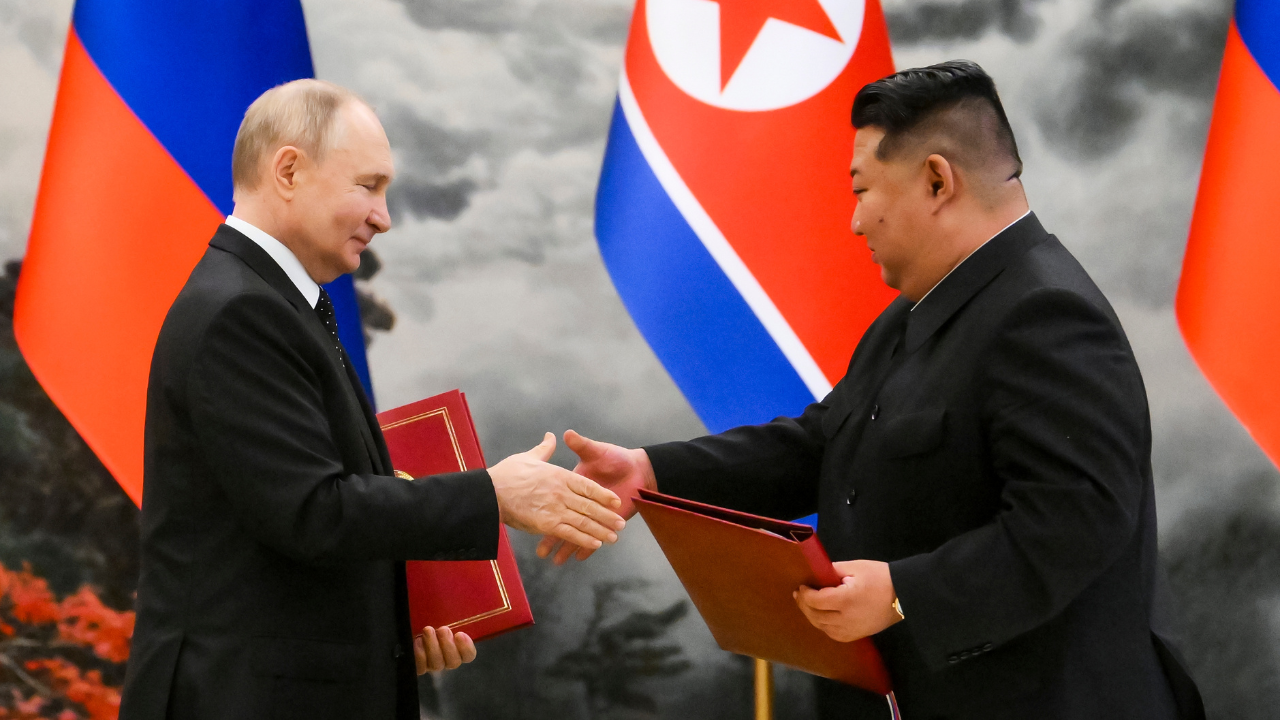
China is refraining from taking a stance on the new defense pact between Russia and North Korea, which experts believe may upset regional power dynamics. Chinese leaders are concerned about the potential loss of influence over North Korea and the instability on the Korean Peninsula that may ensue. The United States has raised concerns about the pact violating U.N. Security Council resolutions and affecting global stability. China appears to be keeping its distance, as Russia and North Korea forge closer ties through the defense pact, altering the balance of power among the three authoritarian states.
Experts suggest that China’s leaders are likely worried about losing influence over North Korea following the signing of the defense pact between Kim Jong Un and Vladimir Putin. China may be struggling to formulate a response due to conflicting goals- maintaining peace in the Koreas while countering the U.S. and Western allies globally. Beijing has not officially commented on the deal but has reaffirmed its commitment to peace and stability on the Korean Peninsula and promoting a political resolution to the North-South divide.
The Chinese response to the Russia-North Korea partnership has been described as weak by some experts, signaling a lack of clarity on how to proceed. While some in Beijing may view the partnership as a means of challenging America’s global dominance, there is also discomfort in losing influence over North Korea to Russia and facing a destabilizing nuclear power on its doorstep. Despite these concerns, China has not addressed them publicly to avoid pushing North Korea closer to Russia.
China’s Foreign Ministry spokesperson declined to comment on the new agreement, citing it as a matter between the two sovereign states. The White House has expressed concern about the pact violating U.N. Security Council resolutions and impacting global stability. One area of concern for China is whether Russia will share advanced technology with North Korea, potentially aiding its weapons program.
The relationship between Russia, North Korea, and China adds complexity to the political and military dynamics in East Asia, with China emerging as a leading power with influence over both North Korea and Russia. The U.S. has raised alarms about the possibility of China challenging the U.S.-led world order by aligning itself with countries like Russia, North Korea, and Iran. However, Beijing has denied these allegations, emphasizing the need to avoid a new Cold War and maintain relationships with various countries.
The rapprochement between North Korea and Russia presents uncertainties and potentials for China, but it is unclear if China’s national interests are being compromised. The closer ties between Putin and Kim could weaken China’s influence, leaving it as the “biggest loser” in the situation. With Russia’s support, North Korea may disregard China’s calls for restraint, creating instability at a time when China seeks stability. China’s strategic goals of maintaining relationships with various countries may be at odds with forming a three-way alliance with North Korea and Russia.