





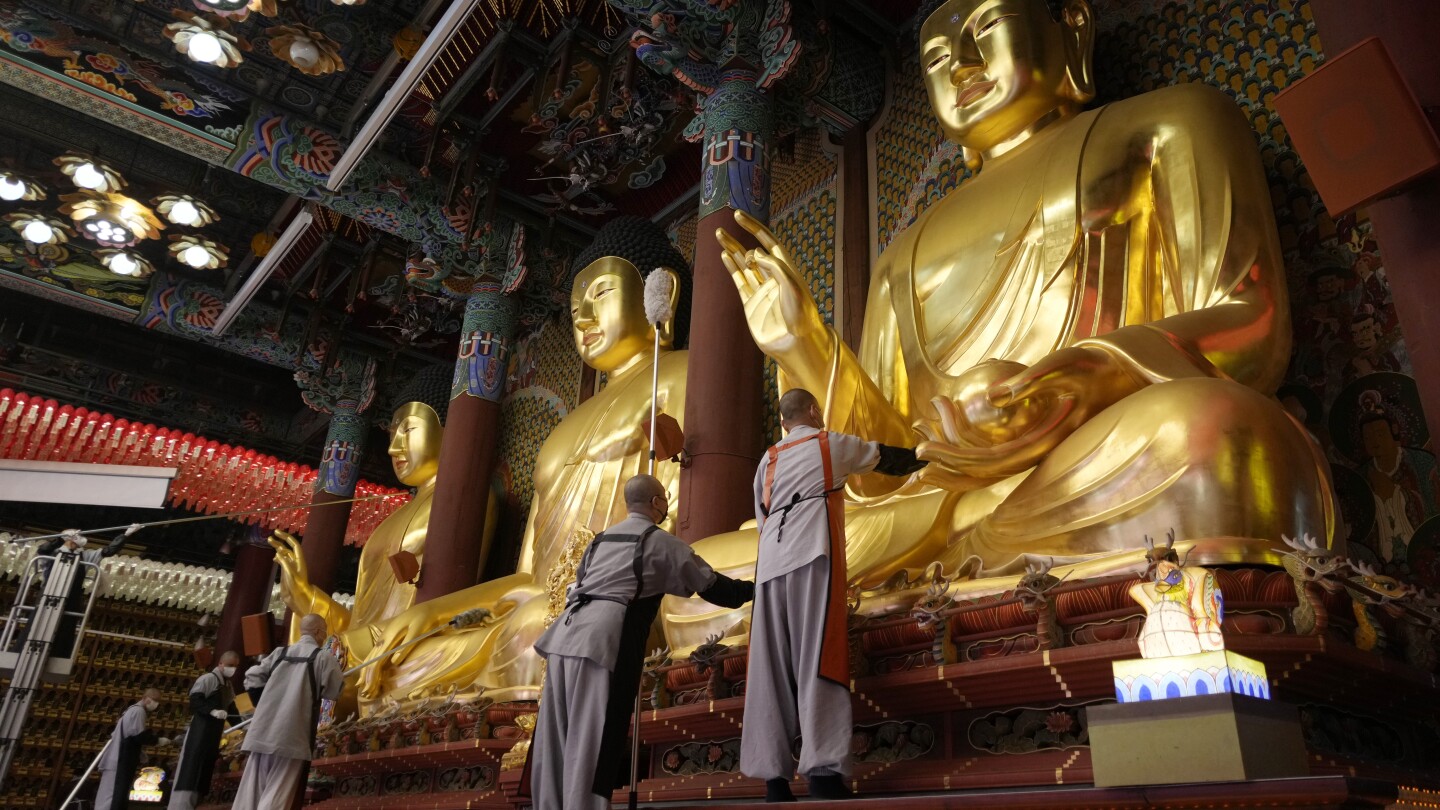
The birthday of the historical Buddha, known as Vesak, is celebrated by Buddhists around the world. This holy occasion marks the birth of Prince Siddhartha and is observed on different dates depending on the school of Buddhism or country. In several Asian countries, it is celebrated on the eighth day of the fourth month of the lunisolar calendar, falling this year on May 15. In South and Southeast Asian countries, it is celebrated on the first full moon of May, falling on May 23.
Siddhartha, who later became known as the Buddha, was born in Lumbini to Queen Maya and King Suddhodana. Upon his birth, it is said that the queen dreamed of an auspicious white elephant entering her womb. The child took seven steps soon after being born, and was believed to have received a cleansing bath from the gods. Despite his father’s efforts to shield him from pain and suffering, Siddhartha began to reflect on the impermanence of life after witnessing sickness, old age, and death. He eventually attained enlightenment at the age of 35 in Bodh Gaya.
During Buddha’s birthday celebrations, Buddhists reflect on his teachings and what it means to practice the faith. In many parts of Asia, the day marks not only his birth but also his enlightenment and passing. Buddhists visit temples, participate in chanting and meditation, and engage in festivities. Families decorate their homes with lanterns and gather for feasts to commemorate the occasion.
In South Korea, Buddha’s birthday is a national holiday and is celebrated with the lotus lantern festival called Yeondeunghoe. Thousands of colorful paper lanterns shaped like lotus flowers are hung in temples and streets, and free meals and tea are provided to all visitors. Festivities include traditional games and performing arts displays. In China, a bathing ceremony is conducted where blessed water is poured over a statue of the infant Buddha, symbolizing rebirth. In Japan, Buddha’s birthday is observed as Hana Matsuri, the flower festival, where devotees pour sweet tea on the head of a statue of the baby Buddha.
Countries in South and Southeast Asia celebrate Buddha’s birthday on the full moon of the second lunar month, known as Vesakha or Vaisakha. The Mahabodhi Temple in Bodh Gaya is decorated, and devotees perform special prayers under the bodhi tree. In India and Nepal, sweet rice porridge is served to recall the story of Sujata, a maiden who offered the Buddha a bowl of milk porridge. Different customs are observed in various countries, such as setting free caged animals in Malaysia and Vietnam, and decorating homes with candles and lanterns in Sri Lanka. Despite variations in how Buddha’s birthday is celebrated, the central theme remains one of reflection, devotion, and joy in honoring the teachings of the Buddha.