




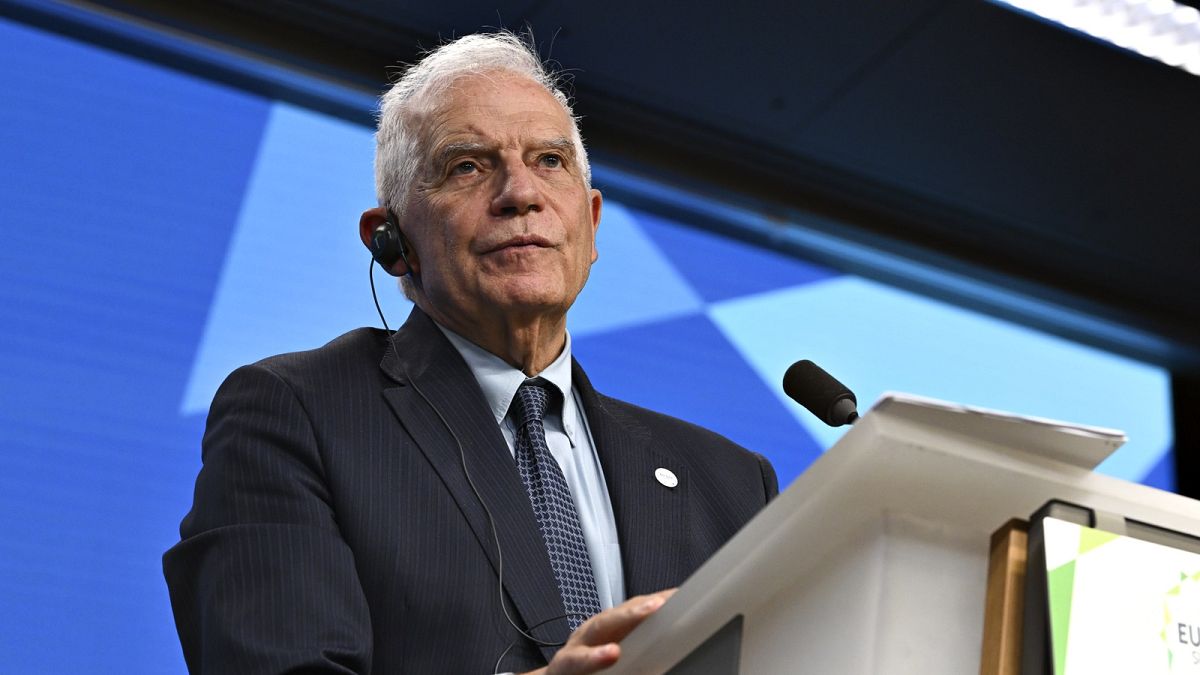
Josep Borrell, the European Union’s foreign policy chief, has proposed to suspend political dialogue with Israel due to the country’s alleged violations of human rights and international law in the Gaza Strip. The proposal, which was raised during a meeting of ambassadors, will be officially submitted to foreign affairs ministers in Brussels. However, the suspension of political dialogue requires unanimity among member states, making it highly likely to be vetoed given the sharp divisions over the Israel-Hamas conflict. Many member states, including Germany, Austria, the Czech Republic, and others, have expressed opposition to the proposal, viewing it as a surprise and unnecessary.
Although the suspension of political dialogue may not be the primary objective of Borrell, it serves as a political signal to highlight concerns about Israel’s conduct and to prompt member states to declare their stance on the issue. Borrell’s proposal is based on the EU-Israel Association Agreement, which includes binding provisions on human rights. Earlier this year, Spain and Ireland called for an urgent review of the agreement in response to the humanitarian crisis in Gaza caused by Israel’s military campaign. The move faced resistance from countries such as Germany, Czechia, and Austria, which are known for their support of Israel within the EU.
With the ongoing Israel-Hamas conflict resulting in numerous casualties, including many Palestinian children, criticism has been directed towards Israel for impeding humanitarian aid and UNRWA’s operations in Gaza. The UN relief agency for Palestinian refugees, UNRWA, is facing challenges due to restrictions imposed by the Israeli government. Scott Anderson, director of UNRWA affairs in Gaza, emphasized the lack of safe zones in Gaza, noting that even hospitals and schools are not respected as protected spaces for civilians by all parties involved in the conflict. The situation in Gaza remains precarious, with ongoing violence and obstacles to humanitarian assistance exacerbating the crisis.
Borrell’s efforts to address human rights violations in Israel through the EU’s political dialogue suspension highlight the importance of upholding international law and human rights standards. Despite facing opposition from several member states within the EU, his proposal aims to hold Israel accountable for its actions and comply with the EU-Israel Association Agreement. The proposal serves as a means to compel member states to clarify their position on Israel’s conduct and demonstrate a unified stance on human rights abuses. The ongoing conflict in Gaza underscores the urgent need for international intervention to protect civilians and ensure humanitarian access in the region.
The diverging perspectives within the EU regarding the proposal to suspend political dialogue with Israel reflect the complexities of balancing political interests and human rights considerations. While some member states support a tougher stance on Israel’s actions in Gaza, others prioritize maintaining strong relations with the country. The EU’s response to human rights violations in Israel underscores the challenges of addressing such issues within a politically diverse and diplomatically sensitive framework. Borrell’s initiative to address human rights concerns through the EU’s political channels highlights the importance of international cooperation in promoting accountability and upholding human rights standards in conflict-affected regions like Gaza.