





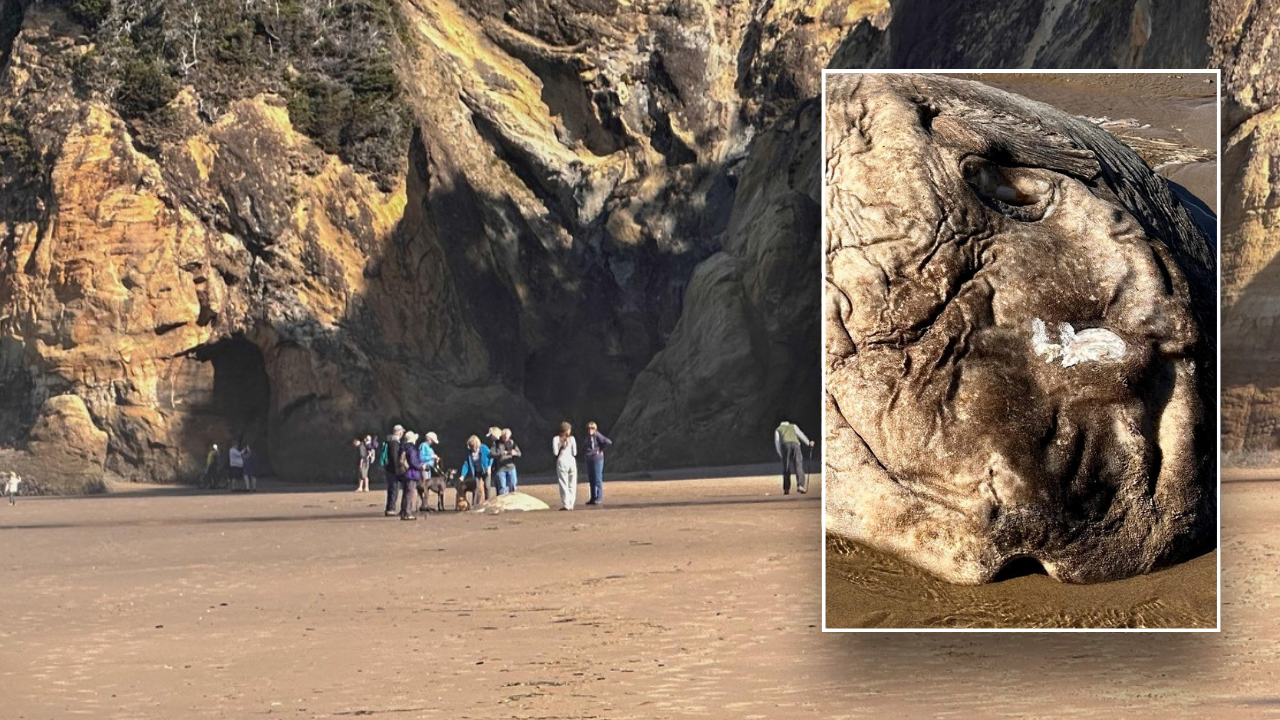
A 7-foot-long ocean sunfish, also known as a Mola mola, was recently found washed ashore at Hug Point State Park in Arch Cape, Oregon. The discovery attracted the attention of local aquatic experts, who took note of the creature’s large size. The Seaside Aquarium shared pictures of the dead fish on Facebook, sparking interest among the public. The aquarium reported that the sunfish was 6.9 feet long, which is an average size for this species. Sunfish can grow up to 10 feet long and weigh up to 5,000 pounds. According to the aquarium, these fish feed heavily on jellyfish, which are abundant during this time of year.
Pictures shared by Seaside Aquarium showed the gray, wrinkled fish in a state of decay. The aquarium mentioned that three sunfish had washed ashore in Clatsop County since June, including the 7.3-foot-long hoodwinker sunfish, also known as a Mola tecta. This particular sunfish is a unique species that was only described in the past decade. It is believed to have been one of the largest hoodwinker sunfish ever seen by humans. The presence of these sunfish along the Oregon Coast is not unusual, according to the aquarium. The recent sightings may be due to increased awareness following the discovery of the Mola tecta, which was the first of its kind documented in Oregon.
People who had seen the sunfish in person shared their experiences on social media. Some mentioned the strong odor coming from the decaying fish, which had now washed to the south end of Hug Point beach. Despite its deteriorating state, the sunfish continued to attract attention from locals and visitors. The Seaside Aquarium encouraged the public to visit the site at low tide and explore the area where the fish had washed ashore. The interest in documenting these strandings and collecting information about them was evident in the response from the community. The discovery of the sunfish served as a reminder of the diverse marine life found along the Oregon Coast.
The presence of sunfish like the Mola mola and the hoodwinker sunfish highlights the rich ecosystem of the Oregon Coast. These creatures, known for their large size and unique appearance, play a vital role in the marine environment. Sunfish are known to feed heavily on jellyfish, helping to control their populations. The recent strandings of sunfish in Clatsop County served as a valuable opportunity for local aquatic experts to study these creatures up close. By documenting and observing these strandings, researchers can learn more about the behavior, distribution, and ecology of sunfish in the region.
The discovery of multiple sunfish washed ashore in Oregon raised awareness about these fascinating creatures among the public. The interesting sightings of the Mola mola and the hoodwinker sunfish sparked curiosity and discussion within the community. The unique appearance and size of these sunfish, as well as their feeding habits, make them a subject of interest for both experts and enthusiasts. The information gathered from these strandings contributes to our understanding of sunfish species and their role in the marine ecosystem. Continued monitoring and research into these magnificent creatures will help ensure their conservation for future generations to appreciate.
Overall, the recent discovery of multiple sunfish along the Oregon Coast serves as a reminder of the diverse marine life found in this region. The sighting of these large, unique creatures, such as the Mola mola and the hoodwinker sunfish, provides valuable insights into their behavior and ecology. The interest generated by these strandings highlights the importance of studying and protecting marine species like sunfish. By raising awareness and encouraging public engagement, researchers and conservationists can work together to safeguard the rich biodiversity of the Oregon Coast and promote the sustainable management of marine resources.