




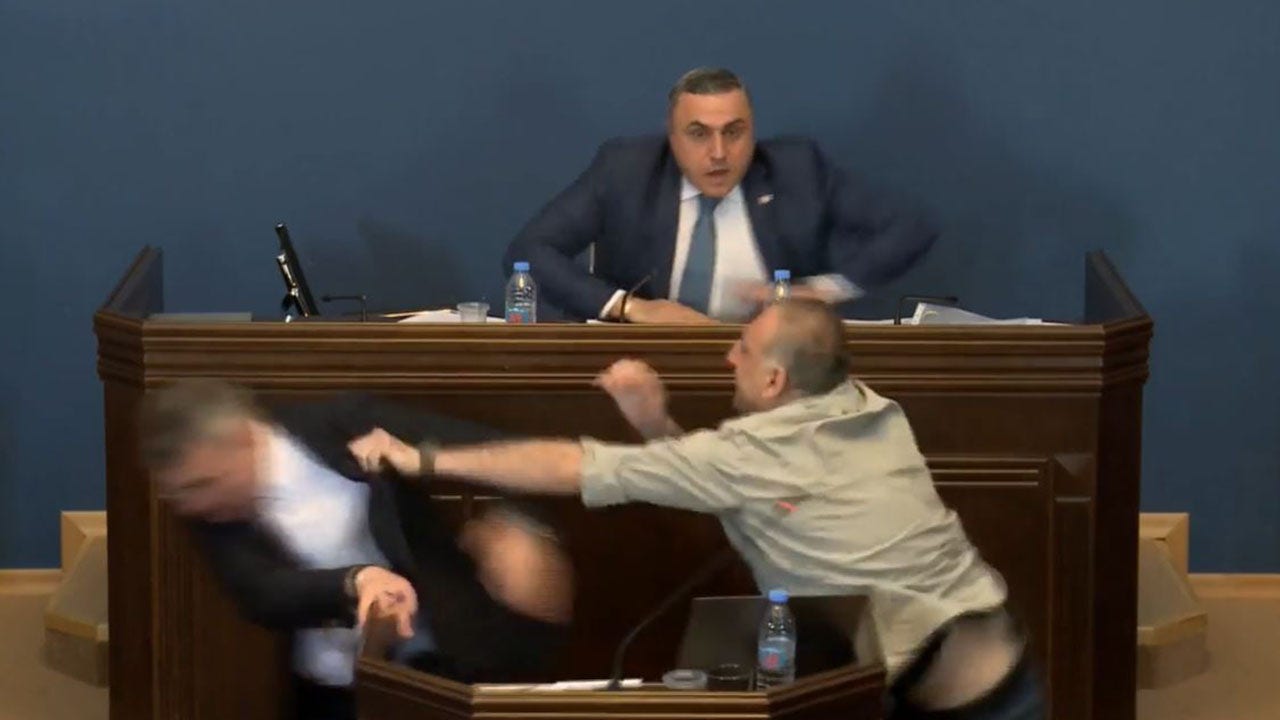
Georgia’s parliament was thrown into chaos after Mamuka Mdinaradze, the leader of the ruling Georgian Dream party’s parliamentary faction, was punched in the face by opposition MP Aleko Elisashvili while discussing a controversial law on “foreign agents.” The incident was captured on video, showing Mdinaradze being punched and several other MPs joining the melee. Elisashvili was later greeted with cheers by protesters outside the parliament building. The “foreign agents” bill has been criticized as a “Putin-style” import from Russia, requiring media and non-commercial organizations to register as being under foreign influence if they receive more than 20% of their budget from abroad. The governing Georgian Dream party has insisted that the law is necessary to combat foreign influence and promote transparency, while Georgian critics have labeled it as the “Russian law.”
Opponents of the law have argued that it could complicate Georgia’s aim of joining the European Union, which issued the country long-desired candidate status last year. The EU has expressed concern about the law, stating that it is incompatible with the block’s values. The EU foreign-policy arm’s spokesman, Peter Stano, emphasized the importance of creating and maintaining an enabling environment for civil society organizations and ensuring media freedom for the democracy and EU accession process. The Georgian Dream party, despite its aspirations to join the EU and NATO, is perceived as deepening ties with Russia, raising concerns about the direction of the country’s foreign policy.
Georgian Prime Minister Irakli Kobakhidze was in discussions with ambassadors from the EU, the U.K., and the U.S. regarding the legislation when the brawl broke out in parliament. President Salome Zourabichvili’s parliamentary representative, Girogi Mskhiladze, stated that she would veto the law if it is passed by parliament, but her term ends this year, and the next president will be named by an electoral college that includes all members of parliament. The controversial law has sparked widespread debate and protests within Georgia, with critics viewing it as an attempt to stifle dissent and limit freedom of expression. The incident involving the physical altercation between MPs underscores the deep divisions and tensions surrounding the legislation.
The Georgian Dream party’s insistence on the necessity of the “foreign agents” law as a means to combat alleged foreign interference and promote transparency has been met with skepticism and criticism both domestically and internationally. Critics have likened the proposed law to Russia’s crackdown on dissidents and labeled it as the “Russian law,” drawing parallels between Georgia’s current political climate and the authoritarian tactics employed by the Kremlin. As the debate over the legislation continues, there are concerns about the potential impact on Georgia’s democratic institutions, its relationship with the EU, and its aspirations for further integration into Western alliances.
The violent altercation in parliament reflects the heightened emotions and stark divisions among lawmakers over the contentious “foreign agents” bill in Georgia. The clash between members of the ruling party and the opposition underscores the deep-seated tensions and political polarization within the country over issues of foreign influence, democracy, and freedom of expression. The incident has garnered international attention, with the EU expressing its reservations about the law and its implications for civil society organizations and media freedom. The future trajectory of Georgia’s political landscape and foreign policy direction remains uncertain as the debate over the controversial legislation continues to unfold.