



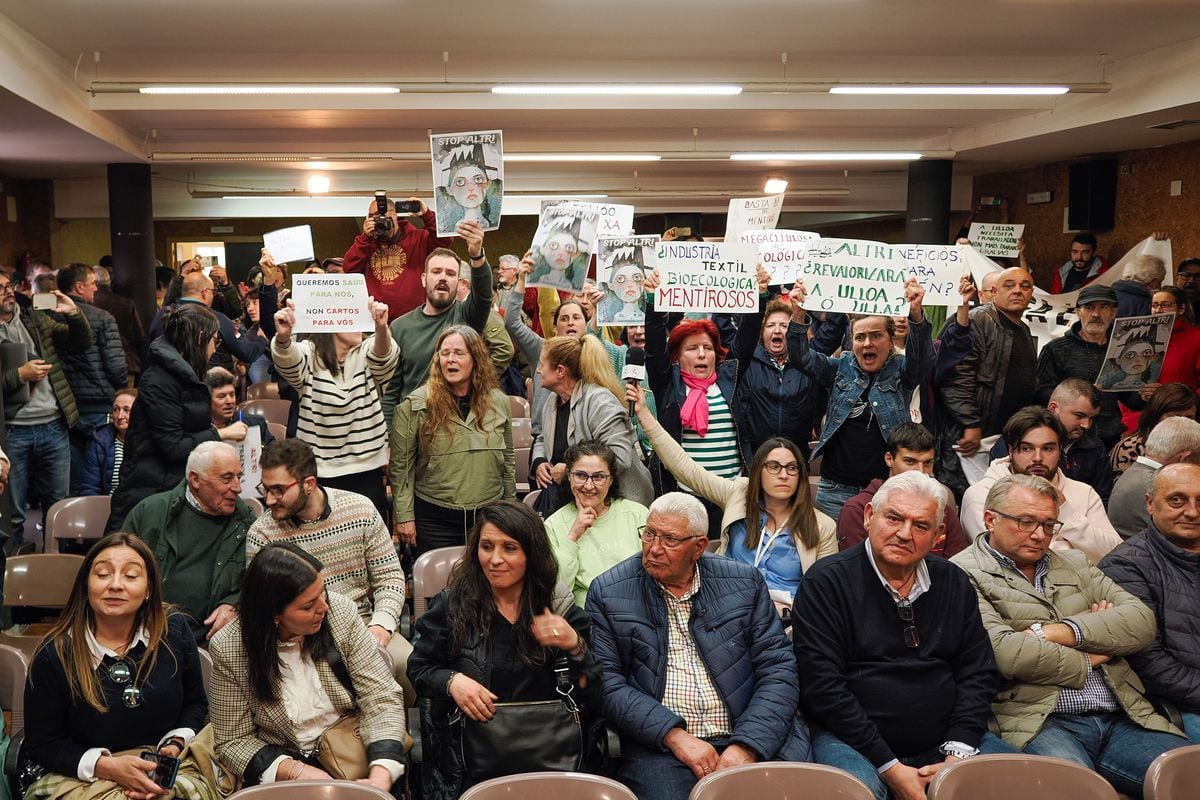
Alberto Núñez Feijóo bid farewell to Galicia heading to Madrid to sponsor a “sustainable” factory. The Portuguese company Altri was planning to build an innovative factory in the land of Inditex that would transform eucalyptus wood into textile fibers, a controversial tree species that has been expanding in Galician forests. During the worst moments of the pandemic, the economic outlook looked bleak, and the Xunta and entrepreneurs were hoping to secure a large portion of the Next Generation funds. This project, proclaimed by the then President of the Galician Government, was given top priority. Even the regional parliament unanimously approved it. However, with the plant in the processing stage, the BNG party now considers it an “environmental bomb,” rejection is growing within the PSdeG-PSOE party, and the promoting company has suspended talks with residents to explain its operation due to significant public discontent expressed at the only meeting held.
The project was conceived amidst applause. The chosen location was Palas de Rei, in the desolate interior of Lugo. It sounded promising. The plan was to produce 200,000 tons of “sustainable” textile fibers annually, equivalent to 3% of the global market, to make fabrics of the future such as lyocell or viscose, which aim to replace cotton and polyester on store shelves. The idea originated from the public-private partnership Impulsa Galicia, an entity controlled by the Xunta and Abanca, the main bank in the region, aimed at designing “leading entrepreneurial initiatives” that could be funded by the Next Generation funds. It was this entity that selected Altri to carry out the project. Initially, the Xunta mentioned 1,500 direct jobs and 6,500 indirect jobs. However, six months later, the numbers were revised down to 500 direct jobs and 2,000 indirect jobs. The investment is expected to reach 900 million euros, with Altri only willing to contribute a portion, insisting on receiving 250 million euros in European funds through the PERTE industrial decarbonization program.
The citizen opposition to the factory is growing. A group of residents formed the Ulloa Viva platform five months ago, after the Xunta and Altri refused to participate in meetings organized by them to explain the project details that are now known. They now have a thousand registered members, as well as support from various associations. Their spokesperson, Marta Gontá, highlights the strong social pressure within this region, where the majority of voters support the PP party. Concerns are raised about the plant discharging water into the Ulla River daily with an organic nitrate load equivalent to 28,000 fattening pigs’ waste, which eventually flows into the Arousa estuary, a water source for 11 Galician municipalities. Local politicians are also expressing doubts and opposition, emphasizing the risks posed by the factory to the environment and the community.
The changes in the project, backed entirely by the Galician PP party, also include new business partnerships. Altri has gained a partner: Manuel García Pardo, owner of Greenalia, a company in A Coruña where former Xunta Environment Counselor Beatriz Mato is a board member. Greenalia hired Mato after her nine years in Feijóo’s government and her failed bid for mayor of A Coruña. In July, during the general election campaign, Altri’s project was transferred to a new company called Greenfiber, jointly owned by the Portuguese firm and García Pardo. The role of the central government in the future of this cellulose factory is significant, as the Ministry of Industry must determine whether it meets the requirements for receiving Next Generation funds to be decided upon project review.
Environmental organizations have raised concerns about the factory, with Amigos de la Tierra, Ecologistas en Acción, Greenpeace, SEO/BirdLife, and WWF writing to the central government warning against using European funds for unsustainable projects. They criticize the factory’s water consumption and emissions, including sulfur, nitrogen oxides, carbon monoxide, and particulate matter. They warn of potential damage to three Natura 2000 sites and highlight the contradictory situation where the Galician government under Feijóo had deemed the area needing protection under this designation, a process that was never completed despite European Commission criticism. The debate and opposition to the factory continue to escalate as concerns about environmental impact and community well-being intensify.