






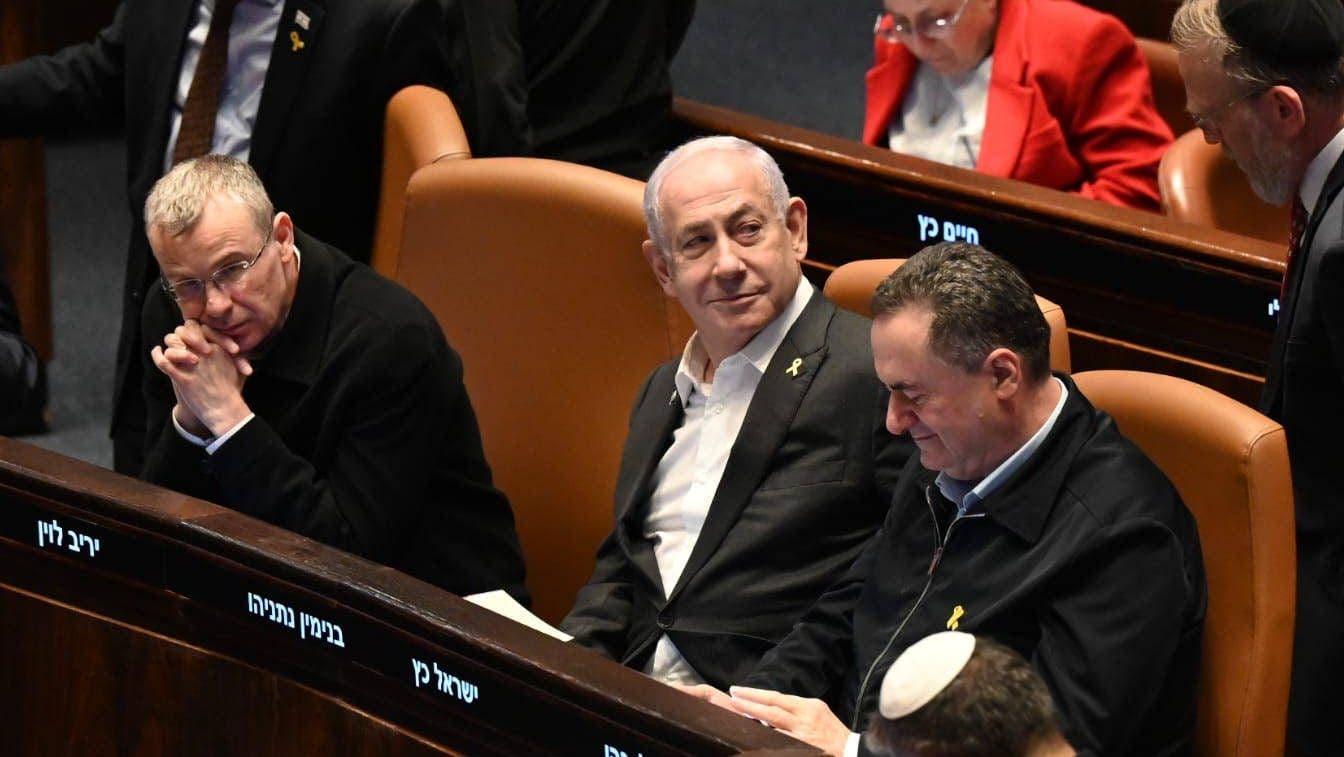
Israeli Prime Minister Benjamin Netanyahu recently underwent prostate surgery after being diagnosed with a urinary tract infection. Despite doctor’s orders to rest following the surgery, Netanyahu appeared in the Israeli parliament for a crucial budget-related vote. The vote revolved around the “Trapped Profits Law,” which would allow the government to tax profits retained by corporations for reinvestment. Failure to pass the bill could jeopardize the approval of the state budget, leading to national elections as a result.
Two parties in Israel’s governing coalition, the United Torah Judaism (UTJ) party and the Otzma Yehudit party, are threatening to vote against the bill. The UTJ party is pushing for legislation exempting Haredi citizens from military service, while the Otzma Yehudit party is demanding an increased budget for essential services. Netanyahu’s government consists of seven parties with a total of 68 seats in the Knesset, making it essential to secure the votes needed to pass crucial legislation such as the “Trapped Profits Law.”
Netanyahu’s recent health issues come amid ongoing political challenges, including his ongoing corruption case in Israel. Despite these challenges, Netanyahu continues to lead the Israeli Defense Forces (IDF) in targeting Iranian terrorists and their proxies in the Middle East. The IDF recently launched strikes against Houthi rebels in Yemen, with the support of U.S. Central Command forces conducting precision strikes to degrade Iran-backed Houthi efforts to threaten regional partners and military vessels in the region.
Netanyahu, who is 75 years old, has experienced several health procedures in recent years, including hernia surgery and the implantation of a pacemaker. Despite his health challenges, Netanyahu remains active in both domestic politics and military operations in the Middle East. His recent surgery comes as he is expected to continue testifying in his corruption case in the coming year. Netanyahu’s leadership is crucial in addressing security threats in the region, including ongoing tensions with Iran and terrorist groups like the Houthis.
The UTJ and Otzma Yehudit parties’ threats to vote against the “Trapped Profits Law” highlight the challenges facing Netanyahu’s government in passing crucial legislation. The coalition of seven parties must navigate these internal disagreements to secure the necessary votes to pass the state budget and avoid triggering national elections. Netanyahu’s leadership is essential in managing these political challenges while also addressing security threats in the region, including ongoing military operations against Iranian proxies and terrorist groups like the Houthis in Yemen.
Despite his recent health issues and ongoing legal challenges, Netanyahu remains actively involved in domestic politics and military operations in the Middle East. His leadership is critical in addressing security threats in the region, including the ongoing targeting of Iranian terrorists and their proxies. Netanyahu’s ability to navigate political challenges within his coalition government will be essential in passing critical legislation such as the “Trapped Profits Law” and securing the approval of the state budget to avoid triggering national elections.