




The U.S. Census Bureau is currently gathering public input on how to categorize people into new race and ethnicity groups. This follows recent changes made by the U.S. government to better count residents who identify as Hispanic and of Middle Eastern and North African heritage. The revisions involve combining race and ethnicity questions into a single question, allowing respondents to select multiple categories simultaneously. Research has shown that many Hispanic individuals struggle to answer the race question when it is asked separately, often opting for “some other race” or leaving the question unanswered.
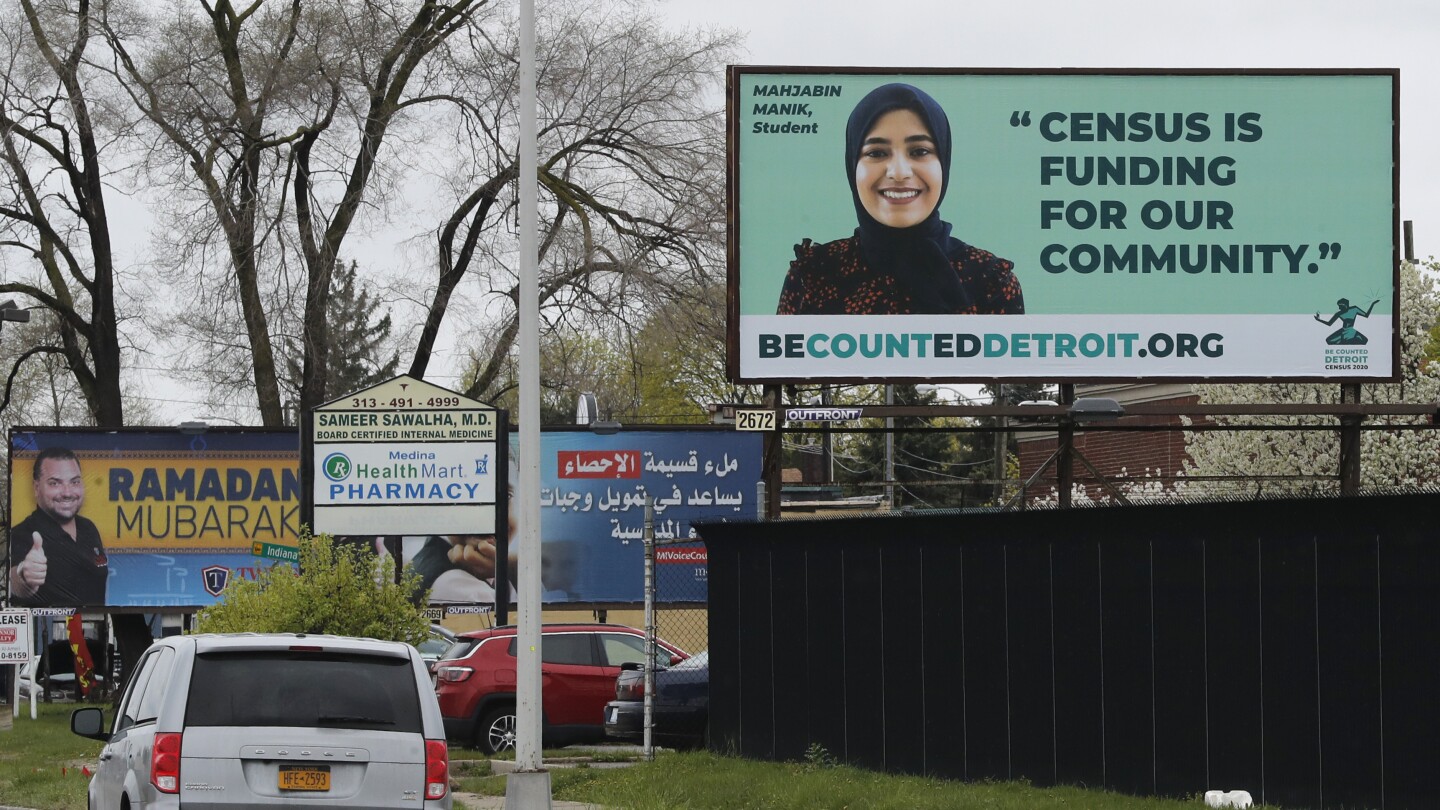
One notable addition to the race and ethnicity categories is the inclusion of a Middle Eastern and North African group. Previously, people from these regions were encouraged to identify as white, but can now choose to identify with the new MENA category. Results from the 2020 census indicated that over 3.1 million U.S. residents identify as Middle Eastern and North African. The Census Bureau’s recent research revealed that a significant majority of individuals who identified as MENA on the 2020 census categorized themselves as white, with smaller percentages identifying as “some other race,” Asian, or Black.
The research also highlighted variations in racial identity among different Hispanic groups in the 2020 census. Responses such as “some other race” and American Indian and Alaska Native were more common among individuals from Central America, while white and “some other race” responses were prevalent among South American residents. Black alone responses were more common among individuals from the Caribbean. Variations were also evident by region and state, with the Northeast and West having higher rates of Hispanic respondents reporting as “some other race” alone, while the South had a larger share of individuals identifying as white alone or “white and some other race”.
The new race and ethnicity categories will be implemented by the Census Bureau for the 2027 American Community Survey and the 2030 census, which have significant impacts on congressional representation and Electoral College votes. The agency is actively seeking feedback from the public, particularly from groups who feel misclassified and those who believe additional groups should be included in the list of codes used for tallying race and ethnicity. This feedback will help ensure a more accurate and inclusive representation of the diverse population in the United States.