




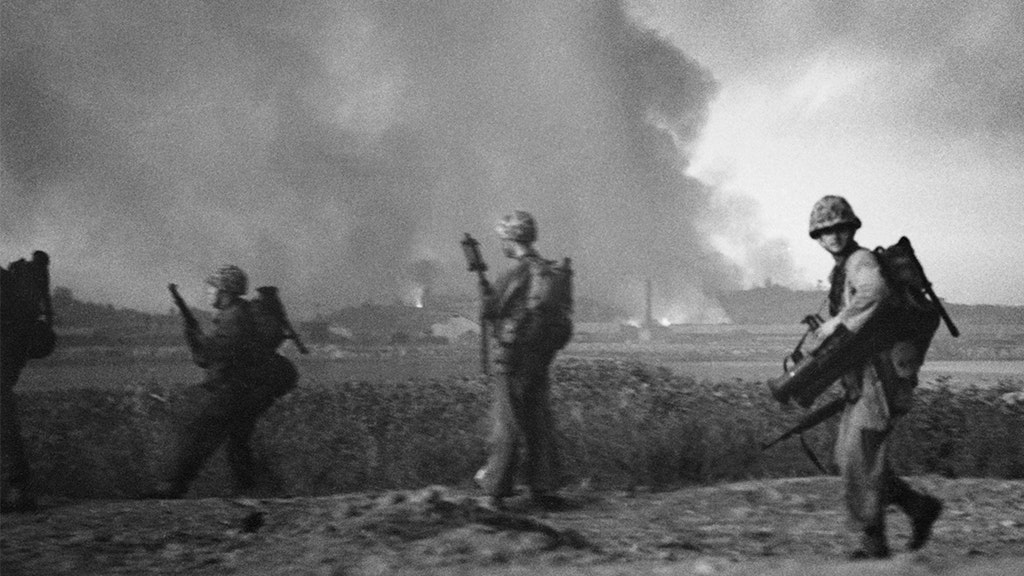
On September 15, 1950, the United States of America, led by General Douglas MacArthur, executed a risky and audacious landing operation at Inchon during the Korean War. Despite initial skepticism, the U.S. Marines successfully landed at Inchon, cutting the North Korean forces in two and recapturing Seoul, the South Korean capital that had fallen to the communists. This operation, known as Operation Chromite, was epic in scale and altered the course of the Korean War, highlighting the importance of projecting sea power ashore and showcasing the capabilities of the Navy and Marine Corps.
The success of the Inchon invasion validated the importance of amphibious assaults and marked the Cold War rebirth of the U.S. Navy and Marine Corps. General MacArthur’s strategic decision to land at Inchon behind the lines of the Korean People’s Army was met with initial skepticism, but ultimately proved to be a decisive turning point in the war. The operation disrupted North Korea’s supply and communication lines and paved the way for the U.N. forces to push inland and secure victory.
Despite facing moderate resistance, the Marines were able to secure Inchon and push inland to recapture Seoul, marking a significant achievement in the Korean War. The operation cut off North Korea’s troops and led to the capture of 125,000 enemy soldiers. The audacious nature of the landing plan, which involved coordination of forces by air, land, and sea, demonstrated the capabilities and effectiveness of the U.S. military in executing complex operations in challenging environments.
General MacArthur’s bold decision to carry out the Inchon landing played a crucial role in turning the tide of the Korean War and limiting the conflict to the Korean Peninsula. His faith in the Navy and Marine Corps, and his strategic vision for the operation, were instrumental in achieving a decisive victory. The success of the Inchon invasion showcased the importance of projecting sea power ashore and highlighted the capabilities of the U.S. military in executing large-scale amphibious assaults.
The Korean War began in June 1950 when North Korea invaded South Korea, pushing the latter back on its heels. However, the tide began to turn on September 15, 1950, with the successful execution of the MacArthur-envisioned plan at Inchon. The operation demonstrated the effectiveness of combining air, land, and sea forces to achieve strategic objectives and paved the way for the recapture of Seoul. General MacArthur’s decisive leadership and strategic vision were critical in achieving victory and altering the course of the Korean War.
In conclusion, the successful landing at Inchon during the Korean War on September 15, 1950, marked a significant turning point in the conflict and demonstrated the effectiveness of U.S. military strategy and coordination. General MacArthur’s bold decision to carry out the operation behind enemy lines proved to be a strategic masterstroke, leading to the recapture of Seoul and cutting off North Korea’s troops. The legacy of Operation Chromite continues to highlight the importance of projecting sea power ashore and the capabilities of the U.S. Navy and Marine Corps in executing complex and audacious amphibious assaults.