





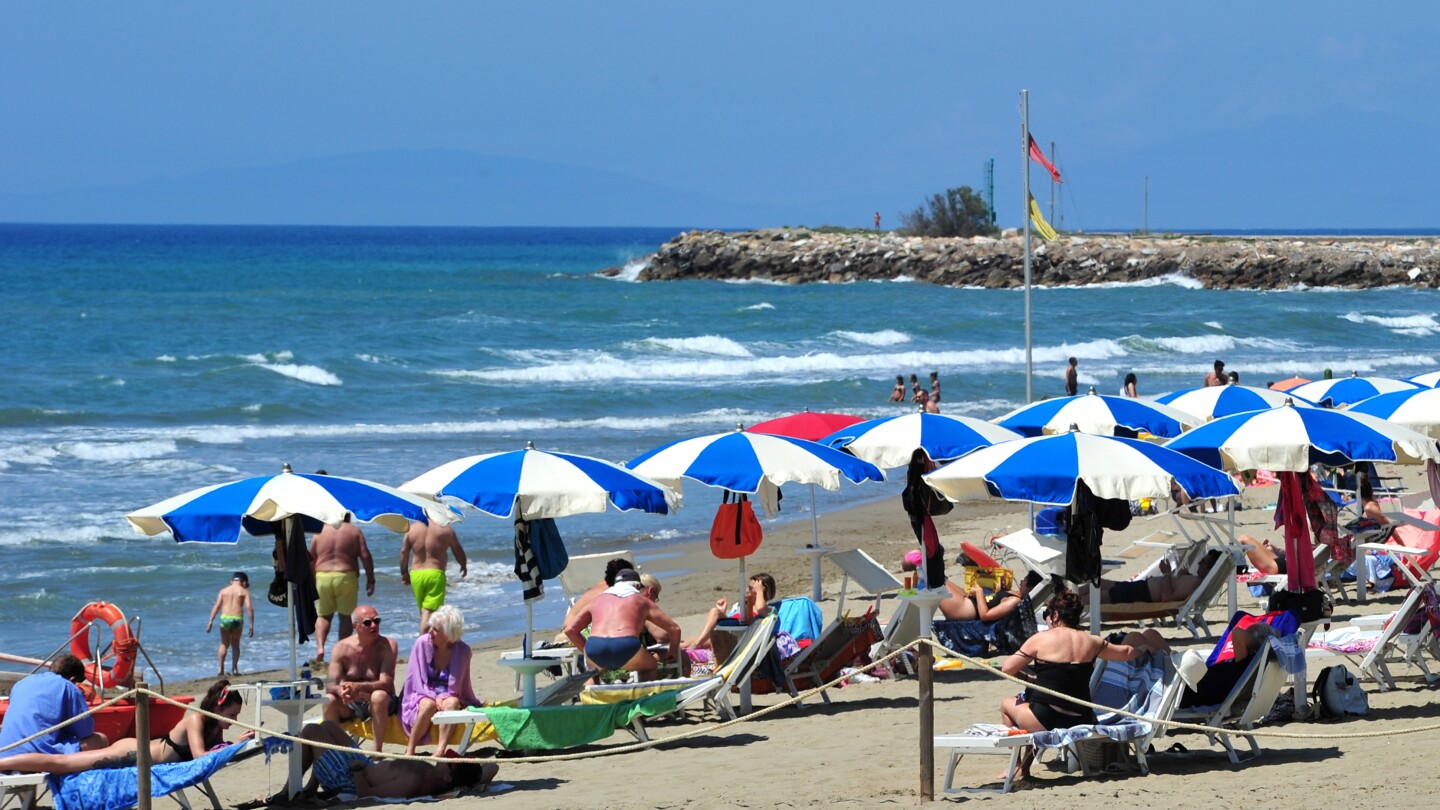
The Italian beach establishments recently went on strike for two hours to protest the potential enactment of a decades-old EU directive that would allow more competition in the sector. With 6,500 beach concessions in Italy generating around 1.4 billion euros in annual revenues, the issue is causing tension between existing owners who fear losing their investments and potential newcomers who feel blocked from entering the lucrative market. The beach concessions often include amenities like bars, restaurants, and changing rooms, and are typically passed down through generations within families. This situation has been exacerbated by a court ruling that extended licenses only until the end of this year, putting pressure on Premier Giorgia Meloni’s government to find a resolution.
The sector was originally liberalized under an EU directive in 2006, but successive Italian governments have avoided implementing it. Owners like Maurizio Pasqualoni, who runs the “La Conghiglia” establishment in Ostia, near Rome, are worried about the uncertainty of their future if they are forced to compete through a bidding process. Pasqualoni, the third generation in his family to run the business, expresses concern about the lack of clarity and stability in the sector, especially after the end of each season. The current situation has left many establishments in limbo, unsure of what steps to take next.
Government auditors have highlighted that the beach concessions pay only 120 million euros in licensing fees to operate on Italy’s public beaches, leading to calls for more transparency and fairness in the sector. While existing owners argue that they risk losing their family businesses under a new competitive system, those looking to enter the market point out the lack of opportunities for new players. The issue has become a symbol of Italy’s struggle to reform its economy and modernize various sectors, including tourism and leisure. The government is facing mounting pressure to address the concerns of both sides and find a solution that balances the interests of all stakeholders.
The strike by Italian beach establishments serves as a symbolic gesture to draw attention to the ongoing debate over liberalizing the sector and the implications it could have on the future of beach concessions in the country. With billions in annual revenues at stake, the decision on whether to enforce the EU directive or find an alternative solution will impact thousands of businesses and families that rely on beach tourism for their livelihoods. The government’s response to this issue will be closely watched by industry players, policymakers, and the public, as it could set a precedent for future reforms in other sectors struggling with similar challenges. The outcome of this dispute will shape the landscape of beach tourism in Italy and determine the direction of economic reforms in the country.
As Premier Meloni’s government faces mounting pressure to address the issue of beach concessions and the potential impact of increased competition, stakeholders on all sides are awaiting a resolution that balances the interests of existing owners, newcomers, and the public. The legacy of family-owned beach establishments, the need for fair competition, and the economic significance of the sector are all factors influencing the ongoing debate and the calls for reform. The symbolic strike by beach establishments showcases the urgency of the situation and highlights the need for a transparent and sustainable solution that ensures the long-term viability of Italy’s beach tourism industry. With the fate of thousands of businesses and livelihoods hanging in the balance, the government’s response will shape the future of this iconic sector and its role in Italy’s economy.