



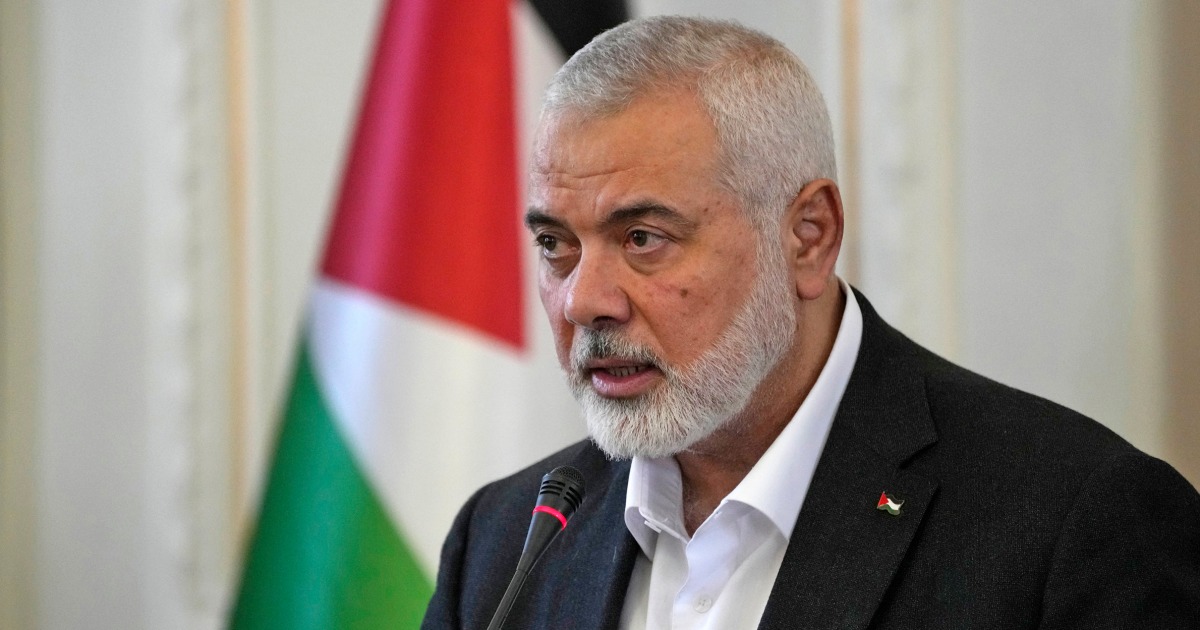
One of Hamas’ top leaders, Ismail Haniyeh, was reportedly killed in an Israeli airstrike in Iran, according to a statement released by the group. Haniyeh was said to have been targeted at his residence in Tehran after attending the inauguration ceremony of new Iranian president Masoud Pezeshkian. Iranian state media also confirmed his death, but did not provide further details. Israel has not yet commented on the incident. This attack comes in the wake of the Israeli military’s claim that it killed Hezbollah leader Fuad Shukr in a strike on a suburb in southern Beirut, where Hezbollah is known to have its headquarters. The strike was supposedly in retaliation for a recent deadly attack on the Israeli-controlled Golan Heights that resulted in 12 casualties.
The killing of Ismail Haniyeh marks a significant development in the ongoing conflict between Israel and Hamas, two key players in the Middle East. Hamas, a militant Palestinian group, has been engaged in numerous clashes with Israel over the years, resulting in countless casualties on both sides. The death of such a high-ranking Hamas official is likely to escalate tensions between the two parties and could potentially lead to further violence in the region. Additionally, the attack on Haniyeh in Iran demonstrates the far-reaching reach of Israel’s military capabilities and its willingness to target key figures of its enemies in foreign territories.
The timing of Haniyeh’s assassination, coming shortly after the killing of Fuad Shukr, raises questions about a possible escalation in the conflict between Israel, Hezbollah, and Hamas. The Israeli military’s assertion that Shukr was responsible for a recent deadly attack on the Golan Heights suggests that Israel is actively targeting individuals involved in attacks against its forces. This targeted approach could signal a shift in Israel’s military strategy, focusing on eliminating key figures in enemy groups rather than engaging in large-scale confrontations. However, such a strategy also carries the risk of triggering retaliatory strikes and escalating violence in the region.
The death of Ismail Haniyeh and Fuad Shukr underscores the complex web of alliances and enmities that define the Middle East conflicts. Hamas and Hezbollah are both considered terrorist organizations by Israel and many Western countries, but they also have strong backing from Iran, a key regional player with its own geopolitical interests. The killing of Haniyeh in Tehran raises questions about the extent of Iran’s involvement in supporting Hamas and other militant groups in the region. It also highlights the interconnected nature of conflicts in the Middle East, where actions taken by one group can have far-reaching consequences for others.
The silence from Israel regarding the killing of Ismail Haniyeh suggests a deliberate decision to not publicly acknowledge or take credit for the attack. This could be a strategic move to avoid further escalation or retaliation from Hamas and its allies. By maintaining ambiguity about its involvement in the assassination, Israel may be seeking to signal its capabilities and willingness to target high-profile figures without openly provoking its adversaries. However, the lack of official confirmation or denial leaves room for speculation and uncertainty about the motives behind the attack and its potential repercussions on the wider regional dynamics.
The deaths of Ismail Haniyeh and Fuad Shukr are likely to reverberate across the Middle East, influencing the actions and strategies of various factions involved in the conflicts. The targeting of key leaders in Hamas and Hezbollah could lead to power vacuums and internal struggles within these organizations, potentially affecting their ability to carry out attacks against Israel. The incidents also serve as a reminder of the volatile and unpredictable nature of the Middle East conflicts, where sudden developments and targeted strikes can have far-reaching consequences. It remains to be seen how the deaths of Haniyeh and Shukr will impact the ongoing power struggles and hostilities in the region, and whether they will lead to a further escalation of violence or potentially open avenues for diplomacy and de-escalation.