





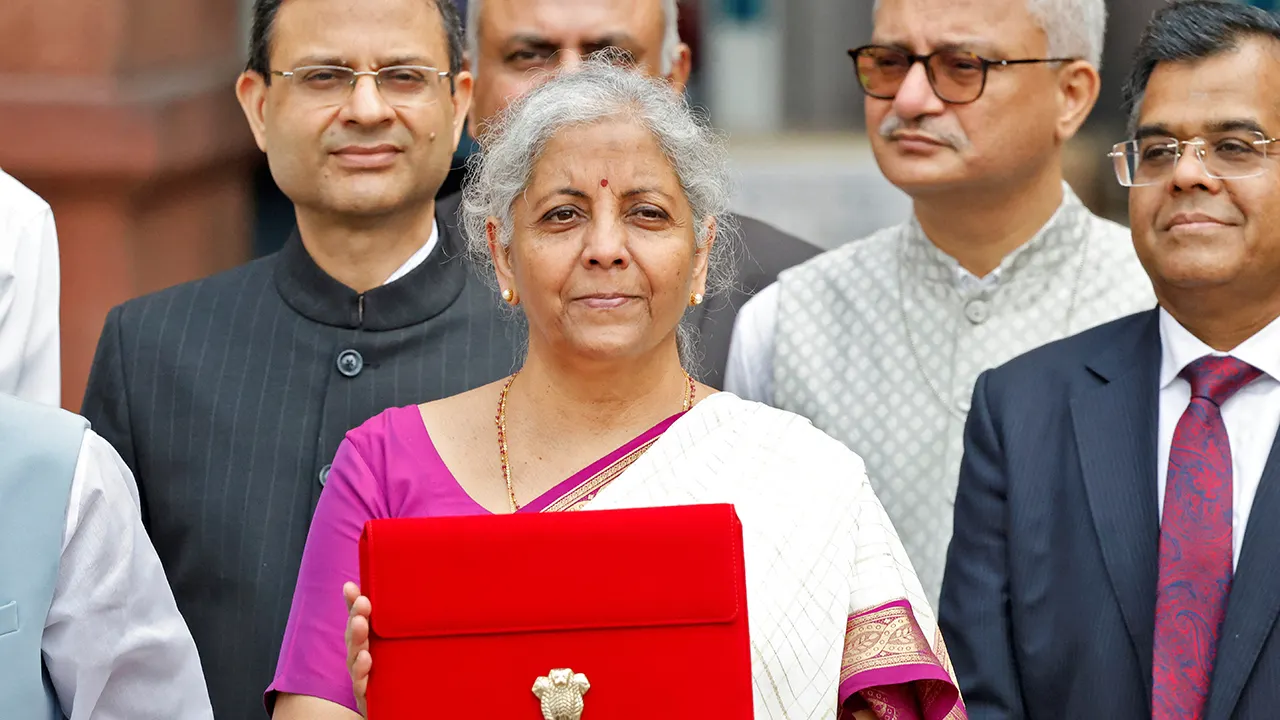
India’s government recently announced a budget aimed at boosting job creation and winning back voters after Prime Minister Narendra Modi’s election setback. The budget included $576 billion in total outlays, with significant allocations for rural programs, job creation over five years, and funding for states ruled by coalition partners. Finance Minister Nirmala Sitharaman highlighted a focus on employment, skilling, small businesses, and the middle class, as well as reforms in land and labor. Despite the increased spending, India cut its fiscal deficit target to 4.9% of GDP, helped by a surplus from the central bank.
The budget also addressed the need for land and labor reforms, identified as crucial for sustaining economic growth. The Indian economy grew by 8.2% in the past fiscal year, with the government projecting growth of 6.5% to 7% this fiscal year. Economist praised the budget for striking a balance between supporting growth and maintaining fiscal discipline. However, Moody’s Ratings warned that implementing more ambitious reforms may be challenging for the coalition government. Past attempts at reforms have faced pushback, particularly from states concerned about potential protests.
Measures in the budget aimed at boosting employment included incentives for companies to train staff and cheaper loans for higher education. The reported urban unemployment rate in India is 6.7%, but some agencies estimate it to be higher, at 8.4%. The budget also continued spending on long-term infrastructure projects and assigned long-term loans to states to fund such expenditures. Sitharaman highlighted the government’s intention to push for reforms in land and labor in its third term. Additionally, loans from multilateral agencies would be expedited for specific states like Bihar and Andhra Pradesh.
Tax changes announced in the budget included an increase in the tax rate for equity investments held for less than a year to 20%, and those held longer than 12 months to 12.5%. The government also raised the tax on equity derivative transactions starting in October. Despite initial declines in shares and the rupee after the announcement, the market eventually recovered, with stock indexes ending the day around 0.13% lower. The changes were seen as a short-term negative but potentially beneficial in the long run, with hopes of stabilizing the market and attracting long-term investors.
Foreign companies saw a reduction in corporate tax rates from 40% to 35%, intended to encourage more investment in India. The budget also aimed to lower the tax burden for lower-income consumers to spur spending, which led to record highs in consumer stocks. Overall, the budget was seen as a mix of policies supporting growth and fiscal discipline. However, the government may face challenges in implementing more ambitious reforms, particularly in areas like land and labor. Despite this, the budget was generally well-received for its focus on employment, skilling, and supporting key sectors of the economy.