




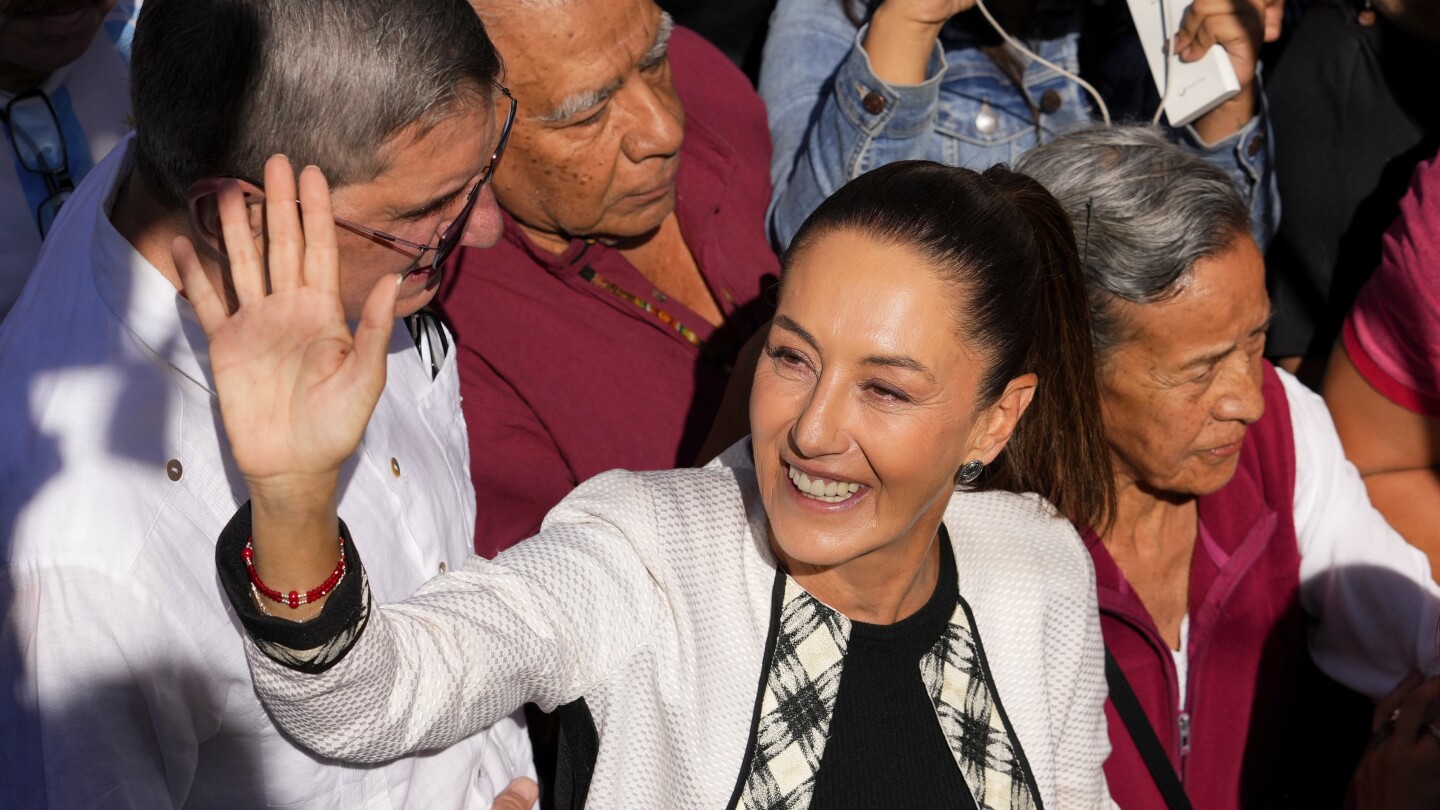
Claudia Sheinbaum has secured the historic victory in Mexico’s presidential elections, becoming the first woman to hold the position. She announced her win with pride, emphasizing the peaceful and democratic nature of the country’s elections. Sheinbaum’s competitors, Xóchitl Gálvez and Jorge Álvarez Máynez, conceded defeat as the official quick count showed Sheinbaum holding an irreversible lead. This victory marks a significant milestone for Mexico as it embraces gender equality in politics.
The elections in Mexico were marked by the themes of gender, democracy, and populism, reflecting the country’s path forward amidst cartel violence. Sheinbaum’s victory was supported by her mentor, President Andrés Manuel López Obrador, who campaigned on continuing the policies set over the last six years. The first woman president of Mexico, Sheinbaum led a spirited campaign against Gálvez, marking the first time in Mexico’s history that the main opponents were women. López Obrador expressed his congratulations to Sheinbaum, recognizing her wide margin of victory.
Despite the celebration of Sheinbaum’s win, there were concerns and challenges looming ahead. Some voters expressed hopes that Sheinbaum would address issues such as the price of gasoline, crime, and drug trafficking, where they felt López Obrador fell short. Criticisms of the outgoing president’s approach to cartel violence were raised, especially by opposition candidate Gálvez, who promised a more aggressive stance against organized crime. The main issues on voters’ minds were the persistent cartel violence and economic performance in Mexico.
The elections in Mexico, which saw nearly 100 million people registered to vote, were significant not only for the presidential race but also for choosing governors in nine states and candidates for both houses of Congress. The turnout appeared slightly lower than in past elections, indicating the challenges in engaging voters in the democratic process. Sheinbaum promised to continue López Obrador’s policies, including social programs for the elderly and youth apprenticeship programs. The elections were seen as a referendum on López Obrador’s tenure as president.
The deep divisions in Mexican society were evident in the polarized public opinion over the direction of the country, particularly regarding security strategy and economic growth. The race for control of Congress and the Mexico City mayorship, now considered equivalent to a governorship, highlighted the importance of local governance in shaping the nation’s future. Sheinbaum’s victory as the latest in a line of Mexico City mayors aspiring for the presidency reflects the interconnectedness of local and national politics. The election results underscore the challenges and opportunities facing Mexico as it navigates its future under new leadership.