




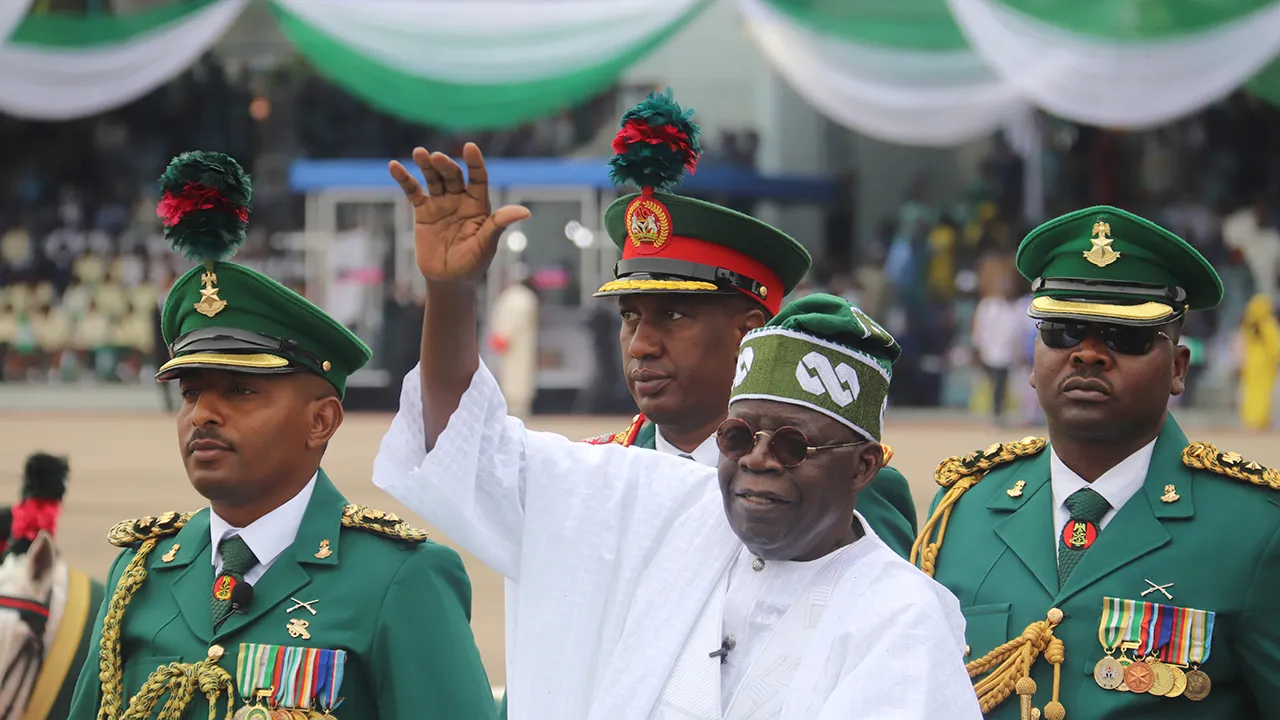
Nigeria recently adopted a new national anthem, replacing the one in use since 1978. The “Arise, O Compatriots” anthem, introduced by the military government, called on Nigerians to serve their fatherland with love and strength. The new version, titled “Nigeria We Hail Thee,” was first introduced in 1960 when Nigeria gained independence from Britain before being dropped by the military. The law replacing the anthem was hastily passed by lawmakers dominant in the governing party, sparking criticism for lack of public input. President Bola Tinubu signed the law the day after it was approved by the National Assembly, with the anthem taking immediate effect.
The swift passage of the bill, less than a week after it was introduced, raised eyebrows as important bills typically take much longer to be considered. Many Nigerians, including former education minister and presidential aspirant Oby Ezekwesili, expressed disapproval of the new anthem on social media, stating they wouldn’t be singing it. Ezekwesili criticized the political class, suggesting they do not prioritize the public’s interests. Despite the backlash, supporters of the new anthem argued it was necessary to move away from an anthem introduced by the military. Public affairs analyst Frank Tietie labeled the military’s change of the anthem as a “sad development” and highlighted the ideological significance of national anthems in fostering focus among the people.
The new anthem was publicly played for the first time at a legislative session attended by President Tinubu, who marked his one year in office on the same day. The anthem, “Nigeria We Hail Thee,” was written by British expatriate Lillian Jean Williams, residing in Nigeria at the time of its inception. The decision to revive the old anthem from 1960 was met with mixed reactions, with some questioning the relevance and appropriateness of the change. The anthem introduced by the military in 1978 had been synonymous with Nigerian identity for over four decades, carrying historical significance from a time when the country was recovering from a brutal civil war. The replacement of the anthem showcased a deliberate effort by the government to redefine national symbols and narratives in line with contemporary values and aspirations.
The controversy surrounding the new national anthem highlighted deeper issues within Nigerian society, including the relationship between the political class and the public. Critics argued that the hurried passage of the law reflected a disregard for democratic processes and public engagement, underscoring a disconnect between the leadership and the citizens. The debate over the anthem also raised questions about national identity and unity, with differing opinions on the choice of lyrics and symbolism that represent Nigeria’s diverse heritage and aspirations. As the country grappled with the implications of the new anthem, discussions around patriotism, history, and governance surfaced, shaping a broader dialogue on the direction of Nigeria’s political and cultural landscape.
Moving forward, the adoption of the new national anthem signaled a shift in Nigeria’s public discourse, with calls for greater transparency and inclusivity in decision-making processes. While the controversy exposed underlying tensions and divisions within society, it also provided an opportunity for reflection and dialogue on the nation’s history, values, and vision for the future. By engaging in constructive conversations and debates around national symbols and narratives, Nigerians could navigate complex issues of identity and belonging, fostering a sense of unity and collective pride. Ultimately, the adoption of the new anthem served as a catalyst for deeper introspection and engagement with the complexities of Nigeria’s past, present, and future, paving the way for a more inclusive and participatory approach to nation-building.