



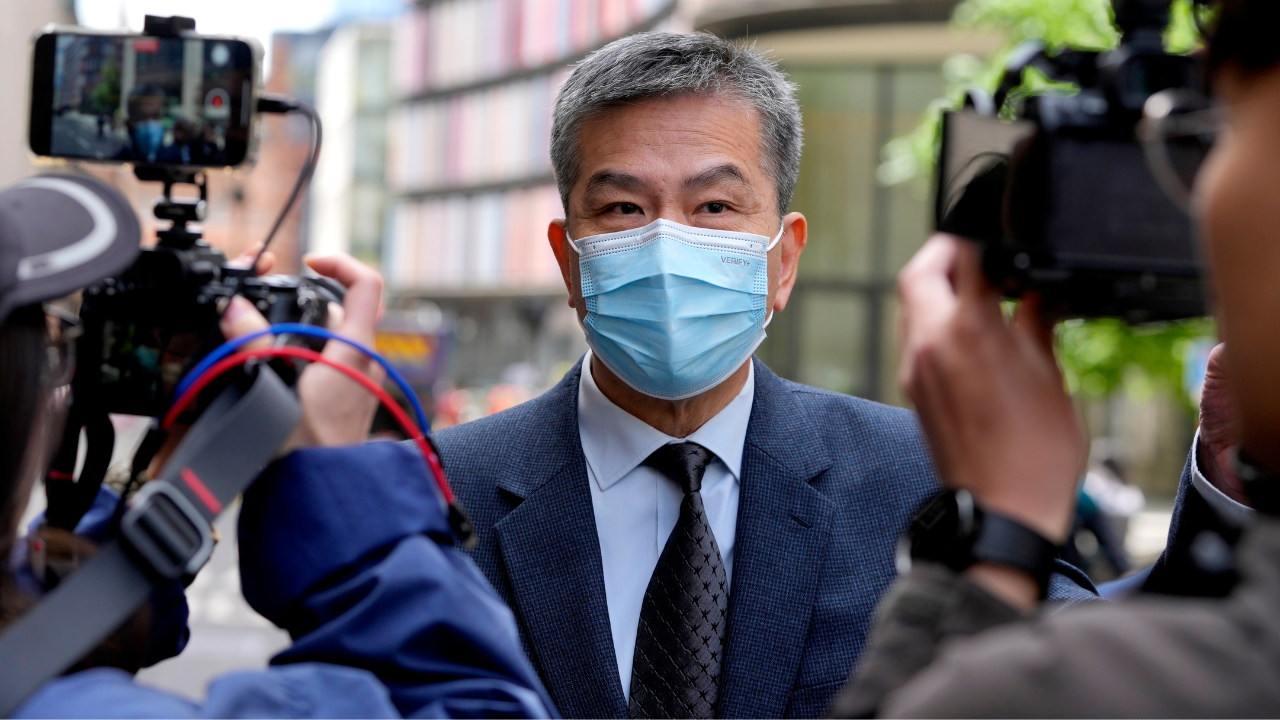
Two men, Chung Biu Yuen, 63, and Chi Leung Peter Wai, 38, will stand trial for allegedly aiding Hong Kong authorities in gathering intelligence in the U.K. They appeared at London’s Central Criminal Court for a preliminary hearing and were charged with agreeing to undertake information gathering, surveillance, and acts of deception that would assist a foreign intelligence service. Yuen was confirmed to be the office manager of the Hong Kong Economic and Trade Office in London. A third suspect, Briton Matthew Trickett, was also charged in the case but was found dead under unexplained circumstances in a park after being charged.
Prosecutors allege that the suspects also forced entry into a U.K. residential address. The three men were charged under Britain’s National Security Act after an investigation by the Metropolitan Police Counter Terrorism Command. They were arrested earlier in London and Yorkshire in northern England by counterterrorism police using provisions of a new law that allows suspects in national security and espionage cases to be detained without a warrant. The case has drawn criticism from both Chinese and Hong Kong officials, with Chinese Foreign Ministry spokesman Wang Wenbin calling it an act of political manipulation that has harmed China-U.K. relations.
The trial is set to begin on February 10 and is expected to last approximately five weeks. Justice Jeremy Baker granted bail to the men with the condition that they observe a set curfew and other restrictions. The case has raised concerns on an international level, with Chinese officials criticizing the charges as damaging to China-U.K. relations. Officials in Hong Kong have also expressed concerns and have urged British authorities to handle the matter fairly to ensure the normal operation of the Hong Kong trade office in London. The situation has strained diplomatic relations between the countries and raised questions about the principles of international law and the norms of international relations.
The charges against the men have sparked a debate over the handling of national security and espionage cases. The arrest of the suspects without a warrant and the subsequent legal proceedings have raised questions about the proper legal process and the rights of the accused. The case has also shed light on the complexities of international diplomacy and the delicate balance between national security interests and human rights considerations. The death of one of the suspects under unexplained circumstances has added an element of mystery to the case and raised further questions about the events leading up to his death.
The fallout from this case has implications beyond the individuals involved, as it has the potential to impact international relations between China, Hong Kong, and the U.K. The accusations of political manipulation and the resulting strained relations could have far-reaching consequences for diplomatic relations and trade agreements between the countries. The case has highlighted the need for transparency and adherence to legal procedures in cases involving national security and espionage. The outcome of the trial and the subsequent actions by both the U.K. and Chinese governments will likely have lasting effects on the bilateral relations between the countries and may shape future interactions between them.